Basilica dei Santi Martiri Anauniesi
The church of Sanzeno dedicated to Sisinio, Martirio and Alessandro, the martyrs of 397, built from 1480
Sanzeno
This page was translated automatically and we are reviewing it. Read the original in Italian
 Valli del Noce
Val di Non
The valleys
La valle dei meleti e dei castelli, con una densita' di manieri rara nelle Alpi.
186 places listed, 186 of them with a written entry
Municipalities: Amblar-Don, Borgo d'Anaunia, Bresimo, Campodenno, Cavareno, Cis, Cles, Contà, Dambel, Denno, Livo, Novella, Predaia, Romeno, Ronzone, Ruffré-Mendola, Rumo, Sanzeno, Sarnonico, Sfruz, Spormaggiore, Sporminore, Ton, Ville d'Anaunia

From above
Val di Non
The church of Sanzeno dedicated to Sisinio, Martirio and Alessandro, the martyrs of 397, built from 1480
Sanzeno
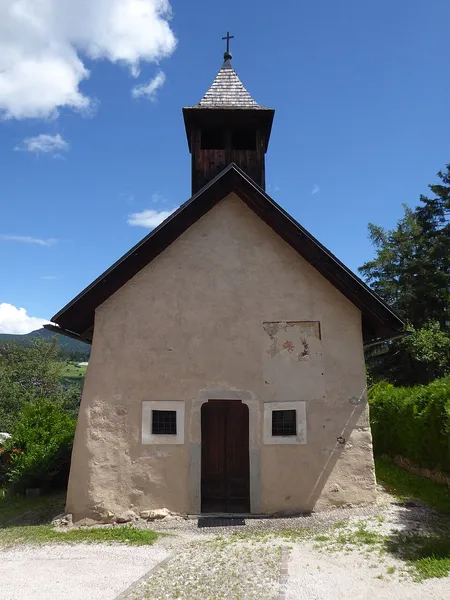
Syrio · CC BY-SA 4.0
Pastoral visitation records call it sometimes the church of Sant'Egidio, sometimes that of Sant'Andrea.
Novella
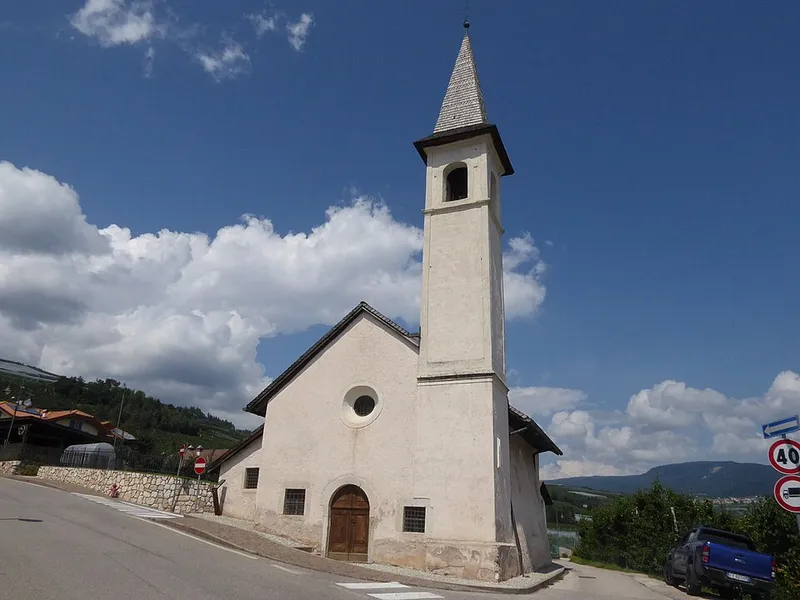
Syrio · CC BY-SA 4.0
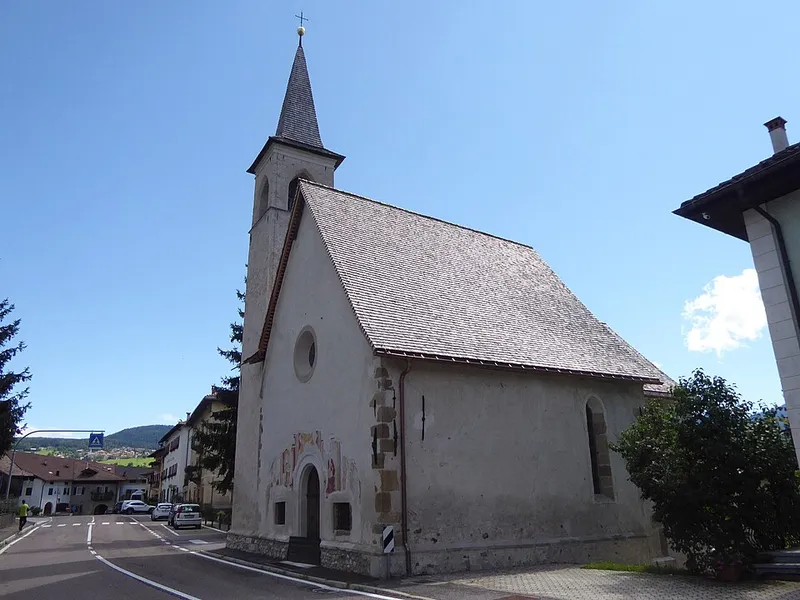
It is its frescoes that make it older than the documents.
Novella
Syrio · CC BY-SA 4.0
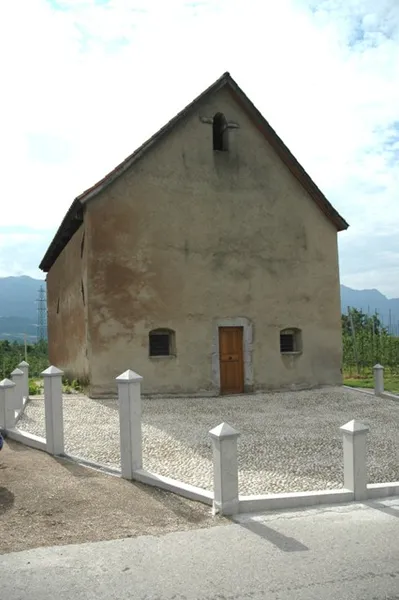
An eighteenth-century chapel remade to resemble the Lourdes grotto.
Novella
Christian Stringari · CC BY-SA 3.0
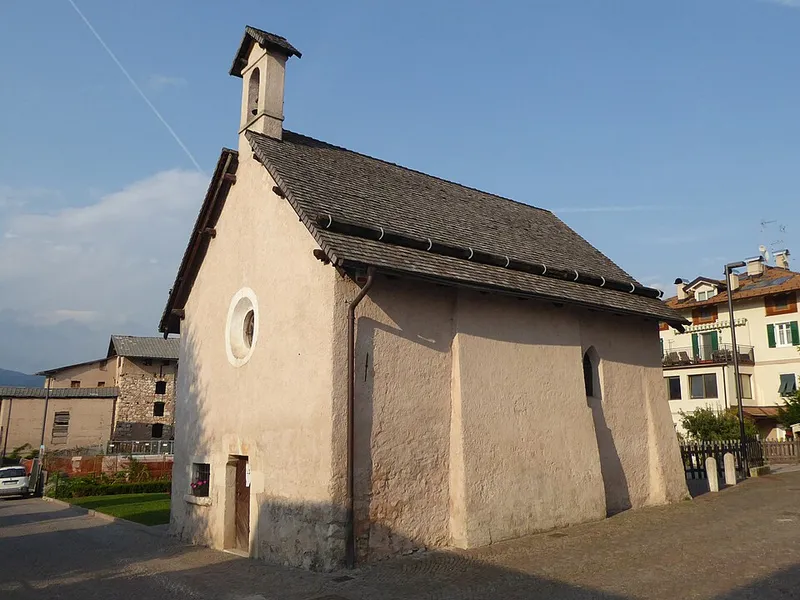
It was dated through studies of the Baschenis frescoes.
Ville d'Anaunia
Syrio · CC BY-SA 4.0
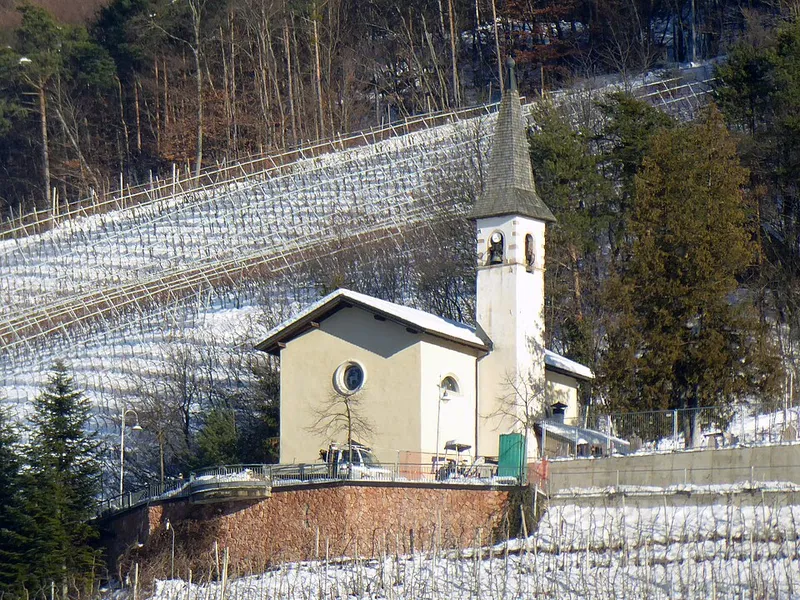
Before Saints Fabiano and Sebastiano, it was the church of San Maurizio.
Cavareno
Syrio · CC BY-SA 4.0
From 1734 the community elected the priest for the morning mass.
Ton
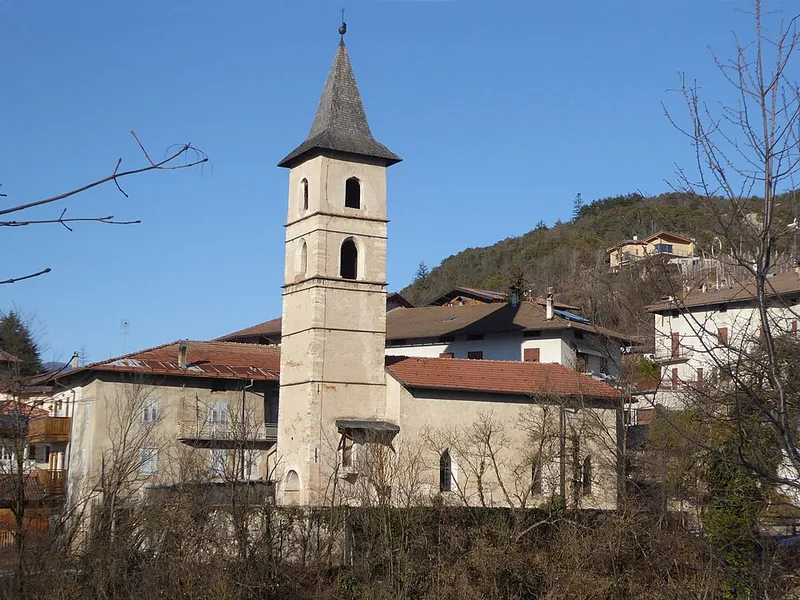
Syrio · CC BY-SA 4.0
In 1621 the vault of its nave collapsed.
Predaia
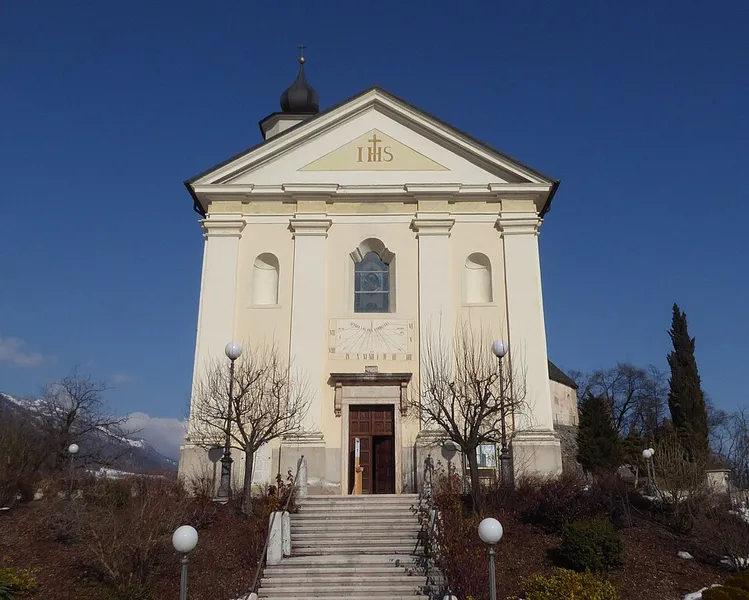
Syrio · CC BY-SA 4.0
A fire in 1802, and a new church in place of the old one.
Contà
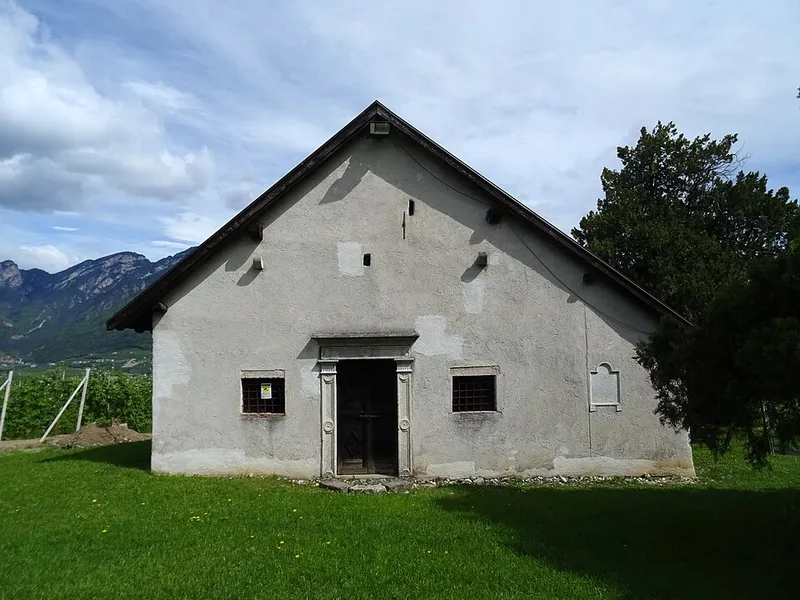
Syrio · CC BY-SA 4.0
Sold at auction for three hundred florins, it was bought back by the counts.
Campodenno
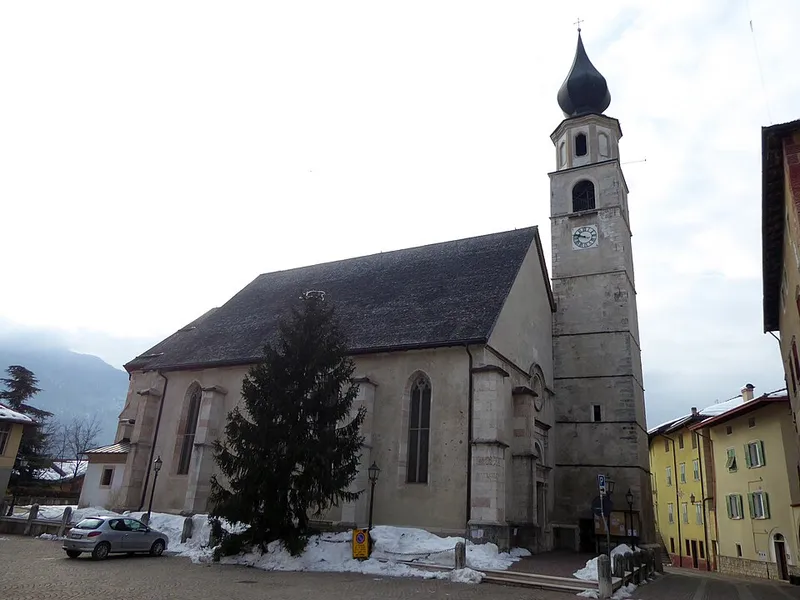
Syrio · CC BY-SA 4.0
Two fires, and the first carried off the village archives.
Denno
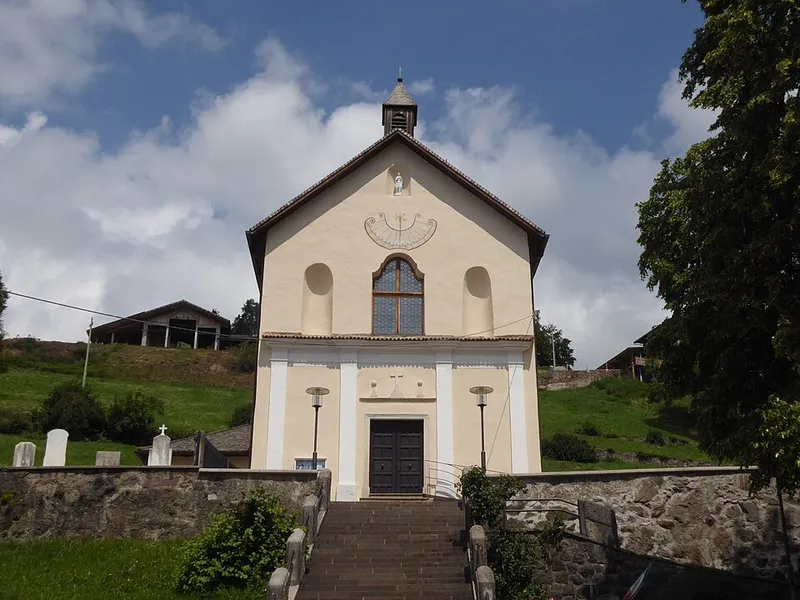
Syrio · CC BY-SA 4.0
Of the old church only the bell tower was saved, and it still serves the new one.
Novella
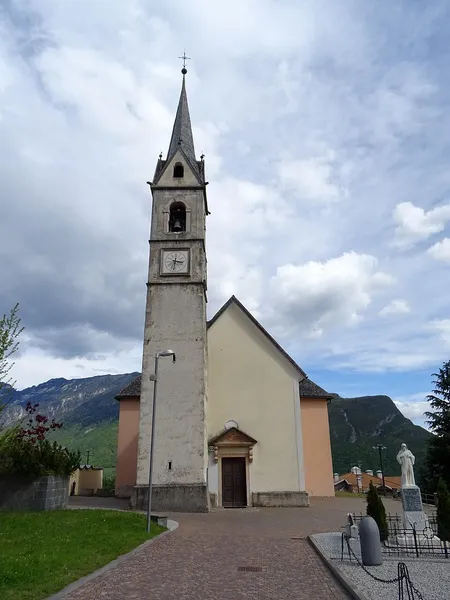
Syrio · CC BY-SA 4.0
In 1449, a census of four measures of wine.
Campodenno
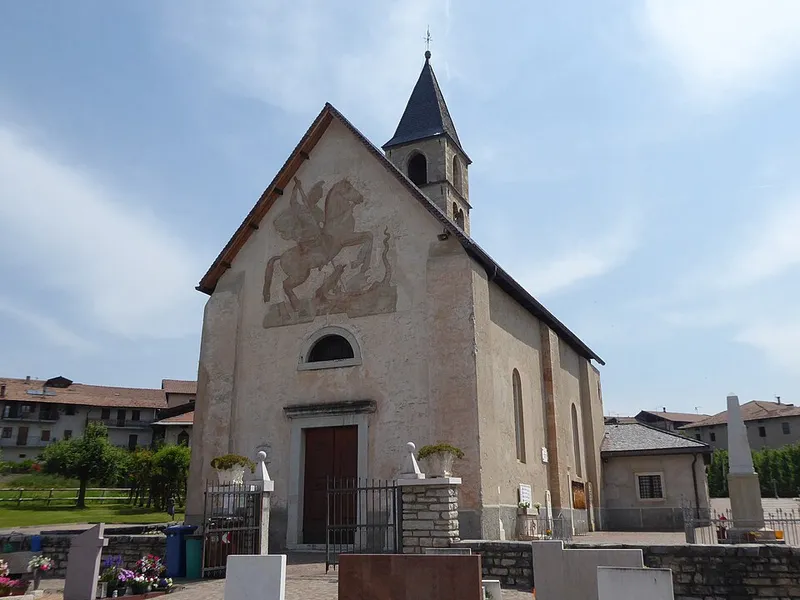
Syrio · CC BY-SA 4.0
In the 17th century its frescoes were whitewashed on the order of a pastoral visitation.
Sanzeno
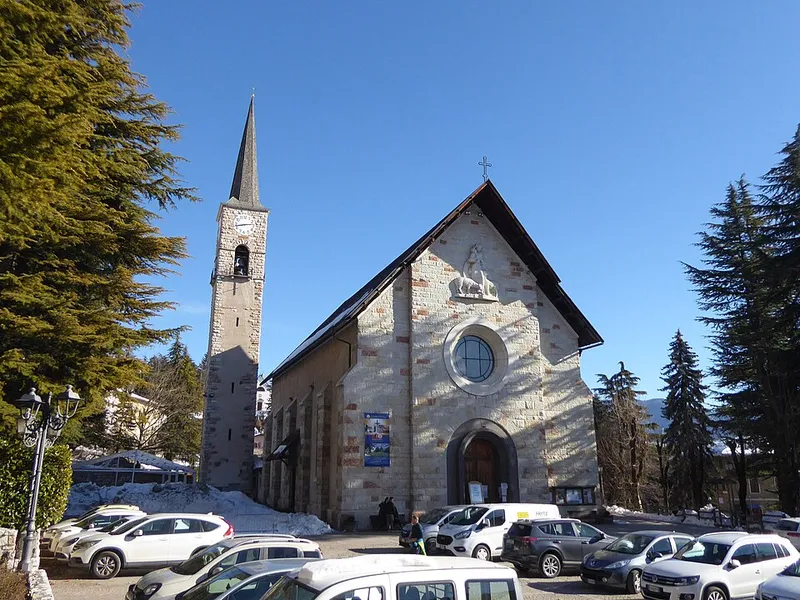
Syrio · CC BY-SA 4.0
Built between 1943 and 1948, with the money and the labour of the village.
Predaia
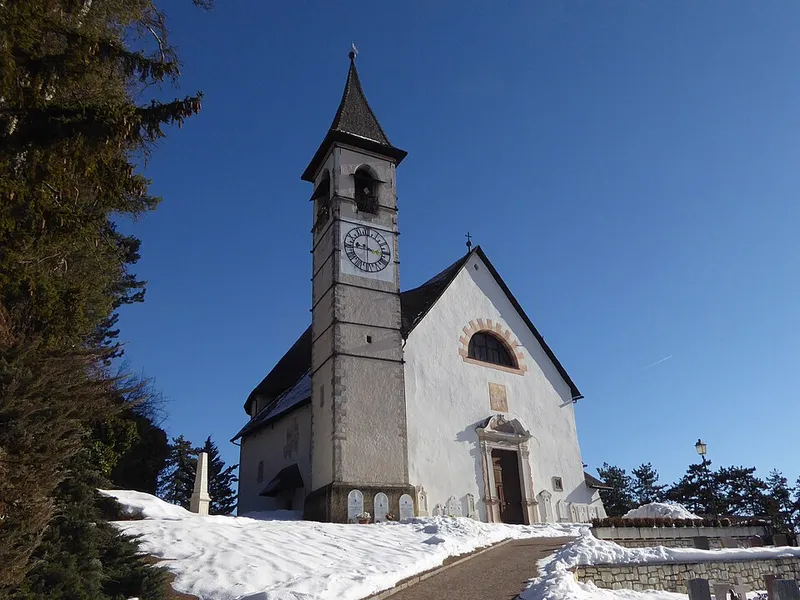
Syrio · CC BY-SA 4.0
In 1611 a fire burned the church and the castle together.
Predaia
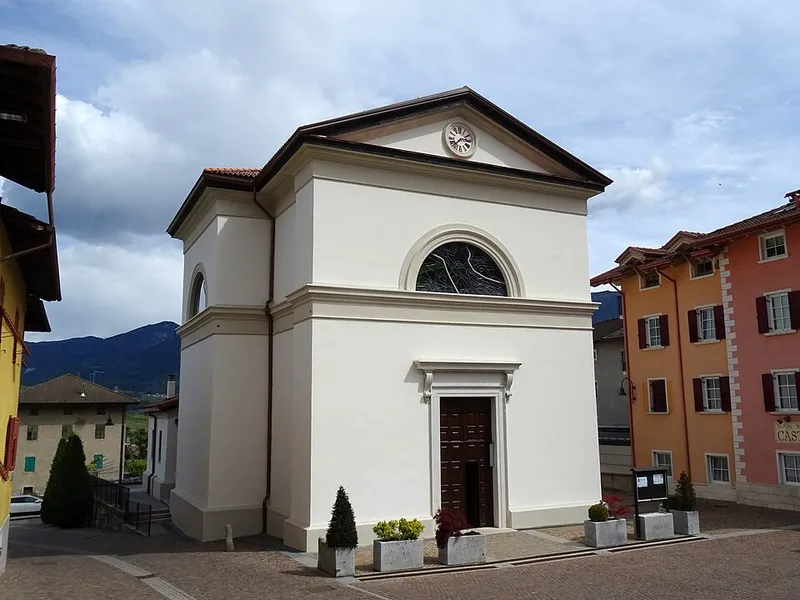
Syrio · CC BY-SA 4.0
The village was divided over where to build it, then cholera arrived.
Contà
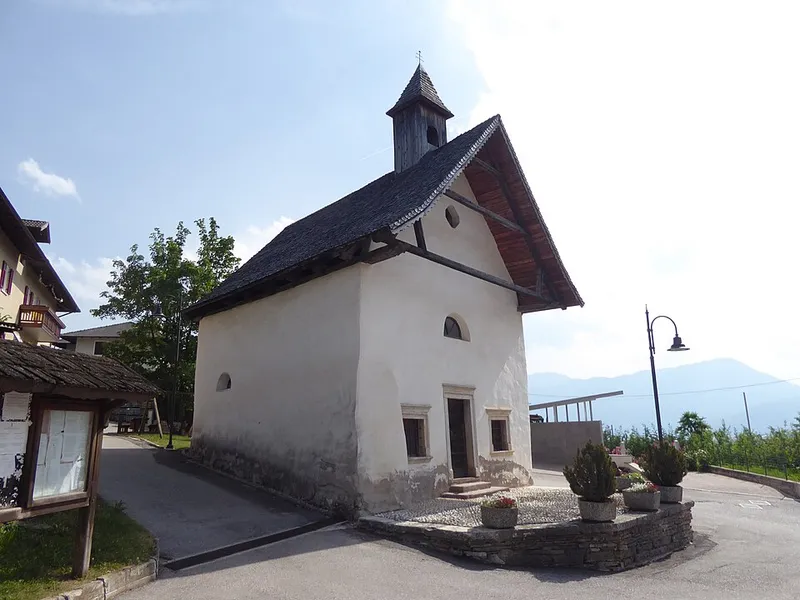
Syrio · CC BY-SA 4.0
The second church of Dambel, mentioned since 1491.
Dambel
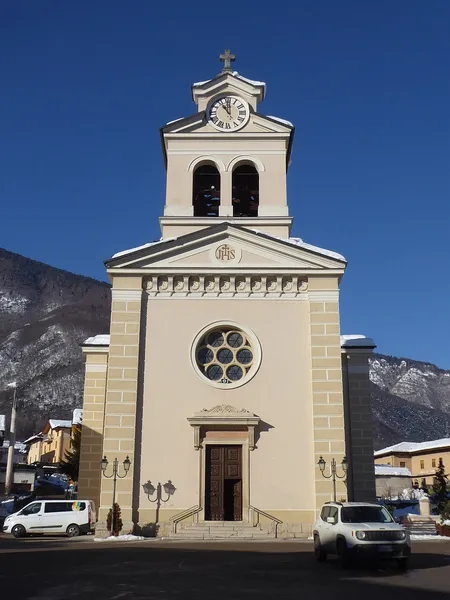
Syrio · CC BY-SA 4.0
The independence of the parish was decided by a court in Vienna.
Sporminore
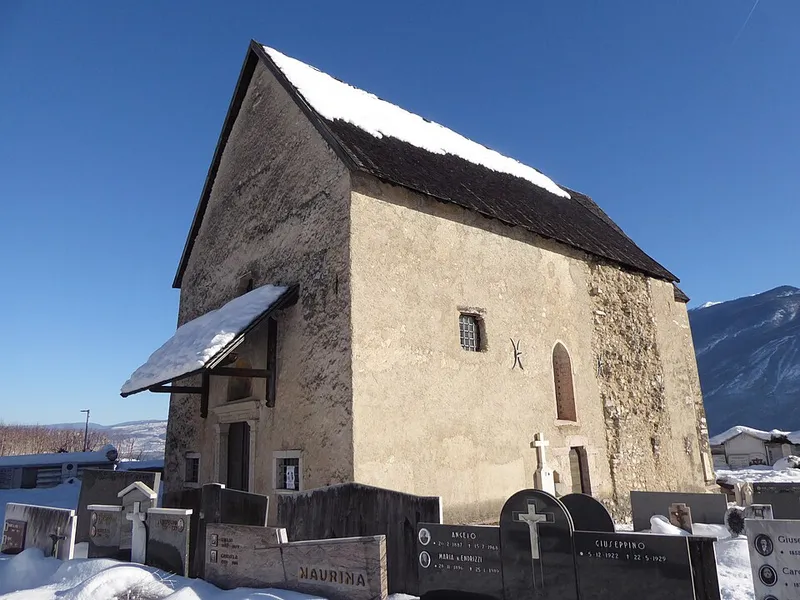
Syrio · CC BY-SA 4.0
A papal indulgence of 1468 to pay for its restoration.
Sporminore
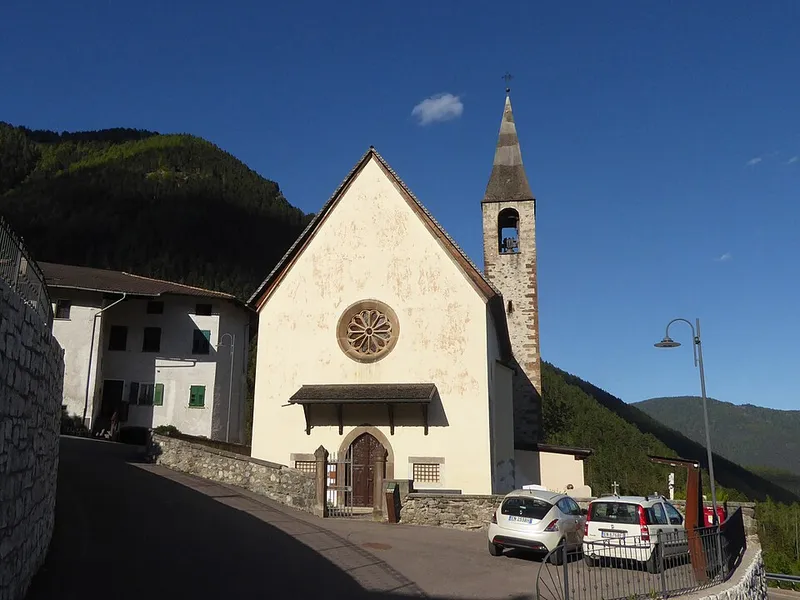
Syrio · CC BY-SA 4.0
The frescoes in the nave are inspired by Dürer's Small Passion.
Bresimo
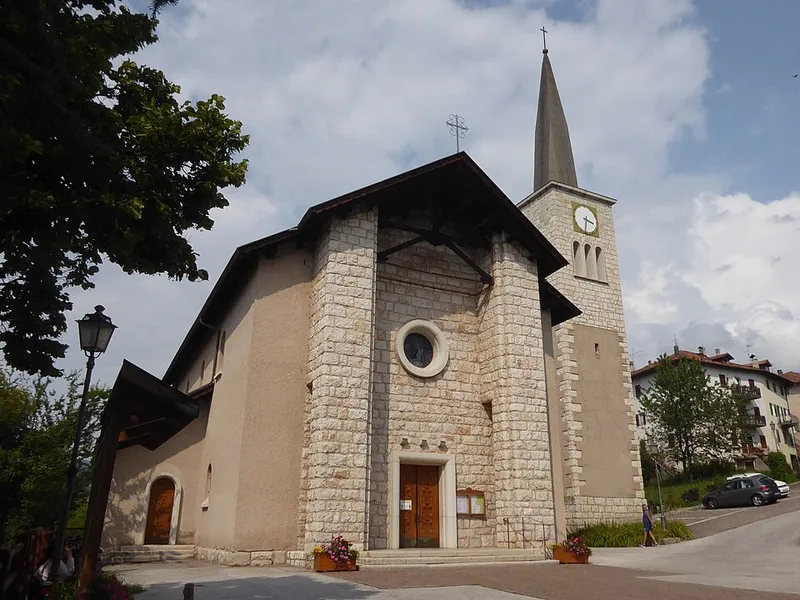
Syrio · CC BY-SA 4.0
The new church took the name of the old one, which had to change its own.
Ronzone
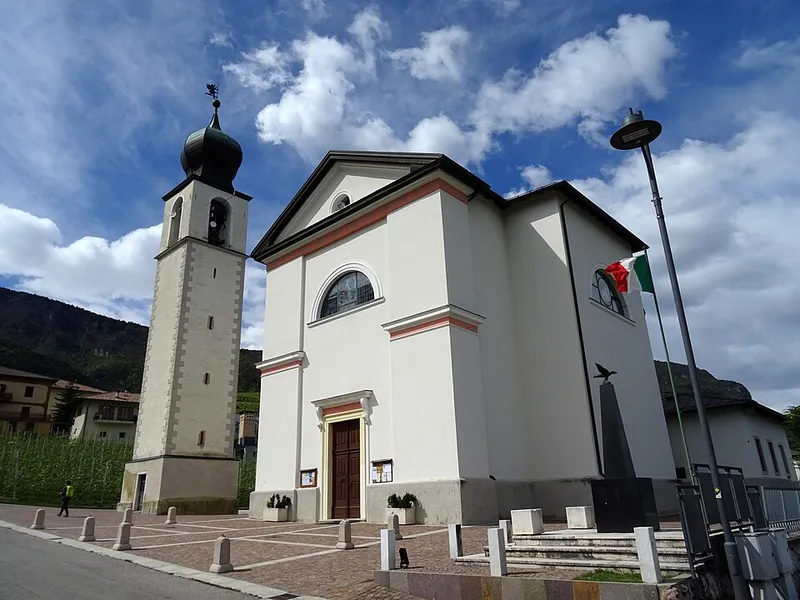
Syrio · CC BY-SA 4.0
A parish priest travelled all over the Tyrol to pay for it, in a year of drought and war.
Campodenno
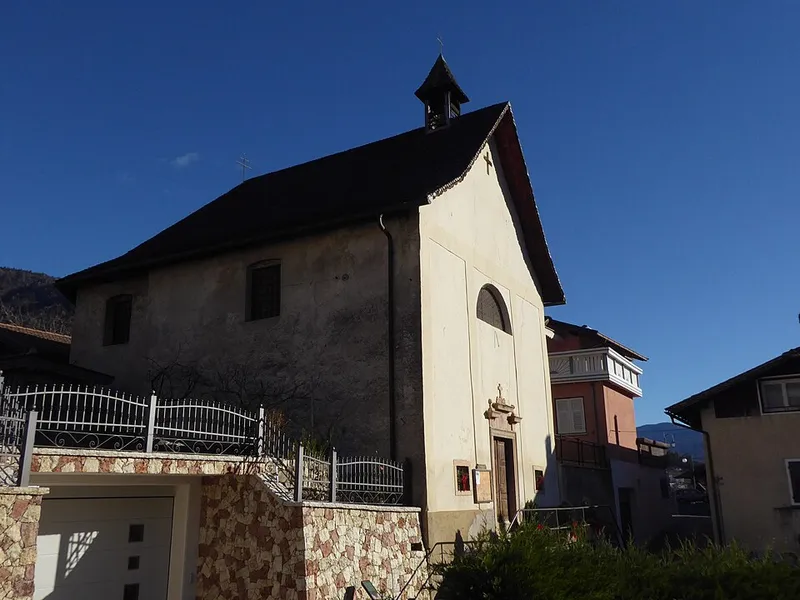
Syrio · CC BY-SA 4.0
In 1815 it was reconsecrated after a profanation about which nothing is known.
Livo
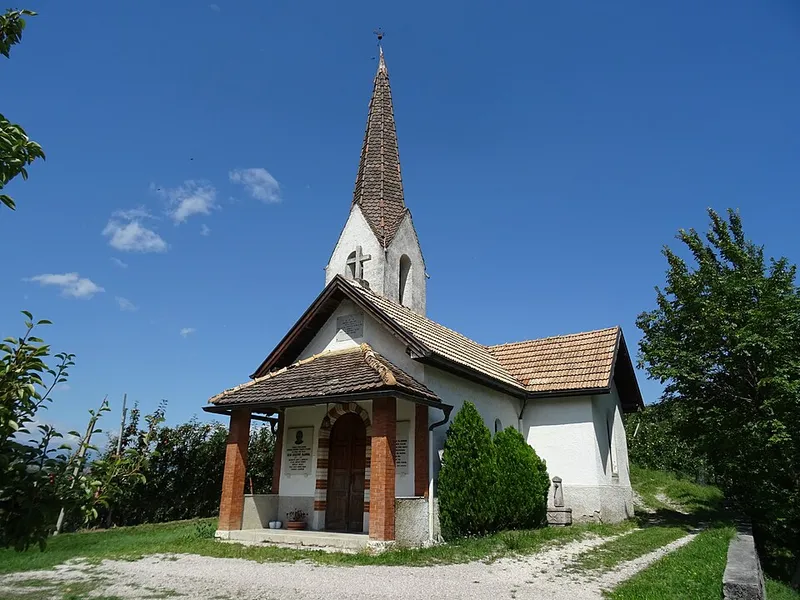
Syrio · CC BY-SA 4.0
It was built for the Holy Year of 1950.
Spormaggiore
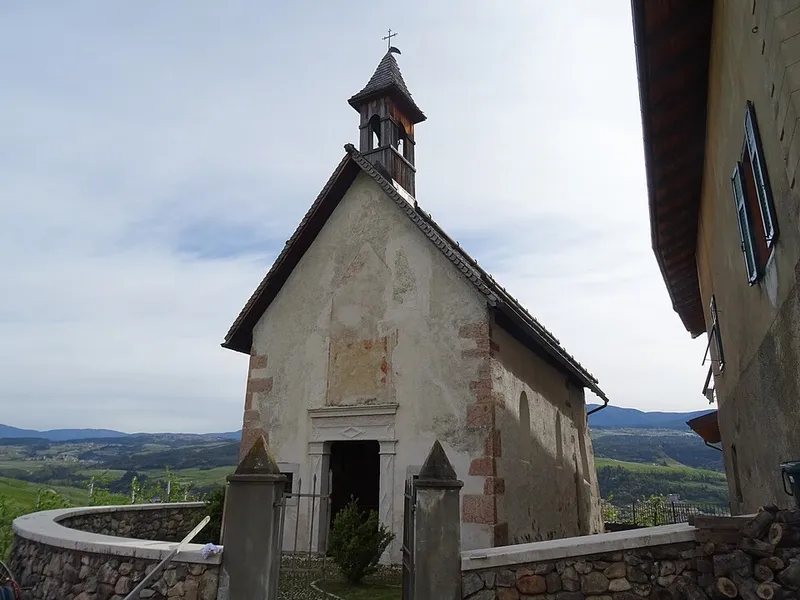
Syrio · CC BY-SA 4.0
In 1579 it was the church where children were buried.
Ville d'Anaunia
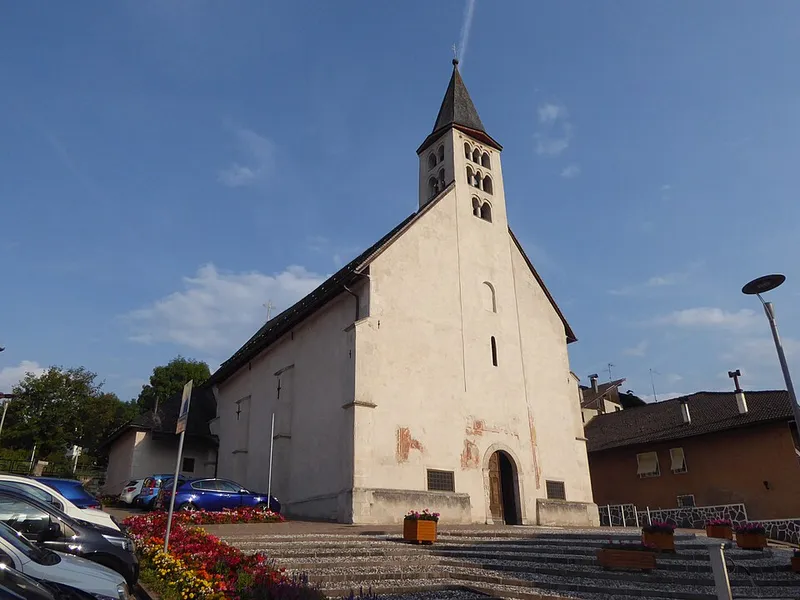
Syrio · CC BY-SA 4.0
It lost importance when the village preferred the larger church.
Sarnonico
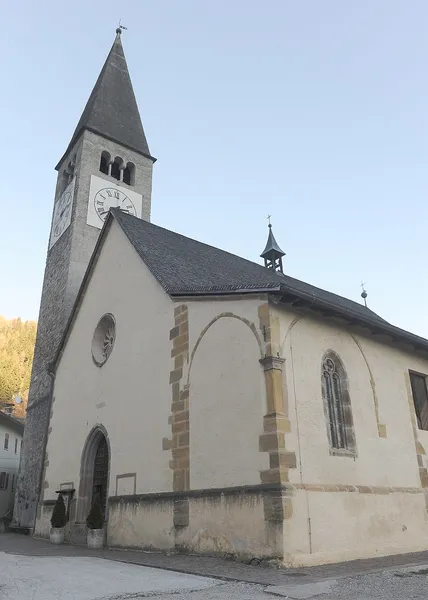
Niccolò Caranti · CC BY-SA 4.0
In 1232 the bishop ordered Revò to send someone to administer the sacraments.
Rumo
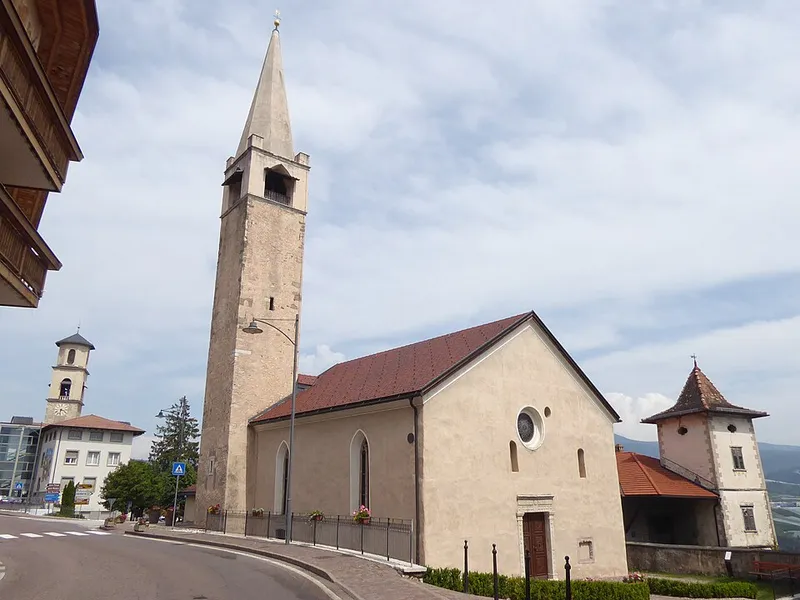
Syrio · CC BY-SA 4.0
It was consecrated when the bell tower was not yet finished.
Novella
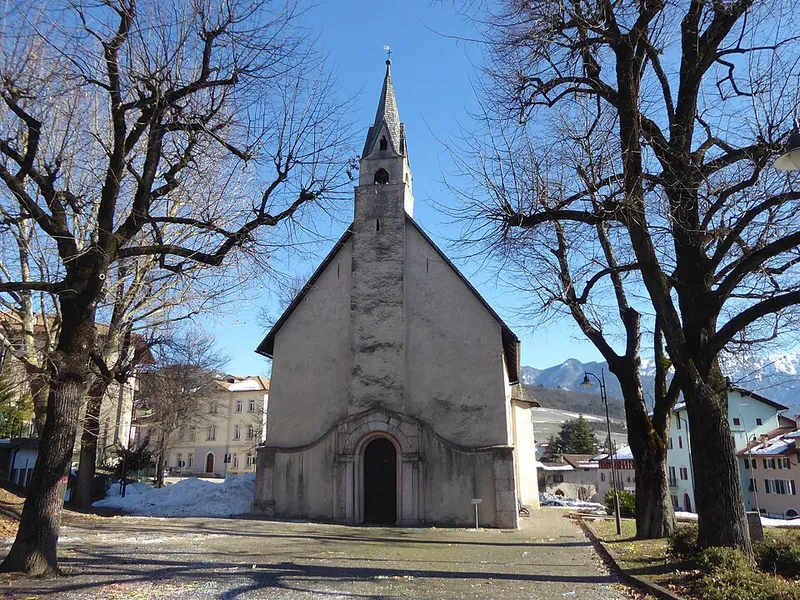
Syrio · CC BY-SA 4.0
Mentioned in 1265, and grown over four centuries in small steps.
Predaia
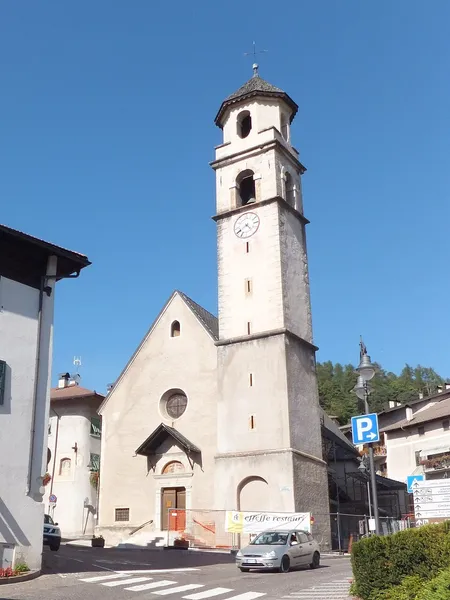
Syrio · CC BY-SA 4.0
It was consecrated three times, in the fifteenth century, in 1649 and in 1886.
Predaia
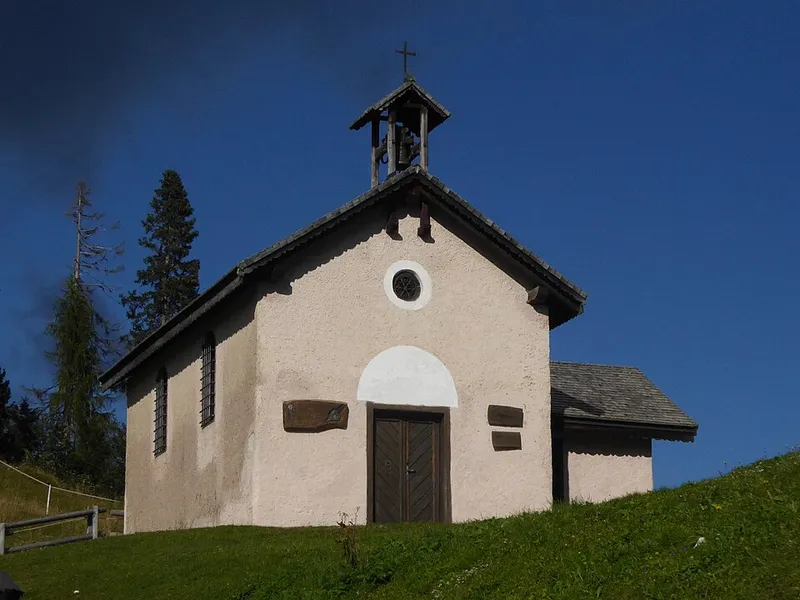
Syrio · CC BY-SA 4.0
It stands near Malga Romeno, which, however, lies within the municipality of Amblar-Don.
Amblar-Don
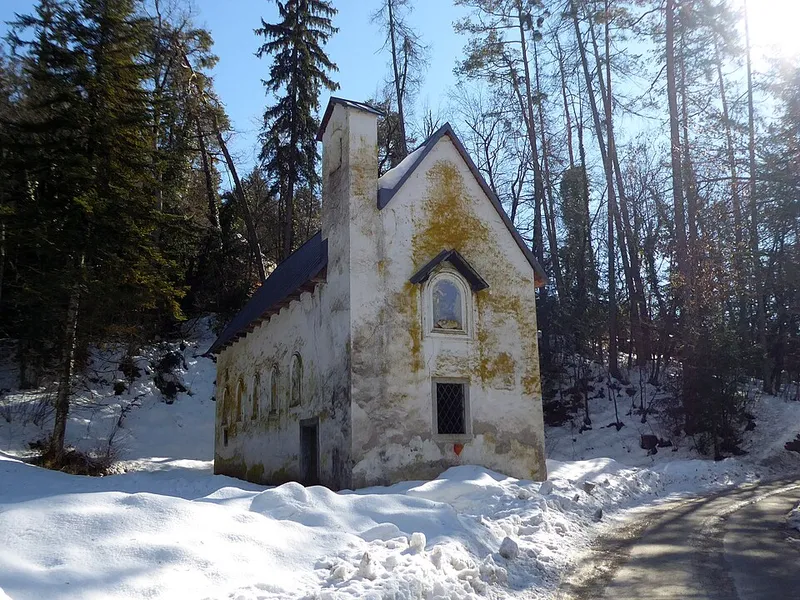
Syrio · CC BY-SA 4.0
It stands near Castel Bragher, held by the Thun family for six hundred years.
Predaia
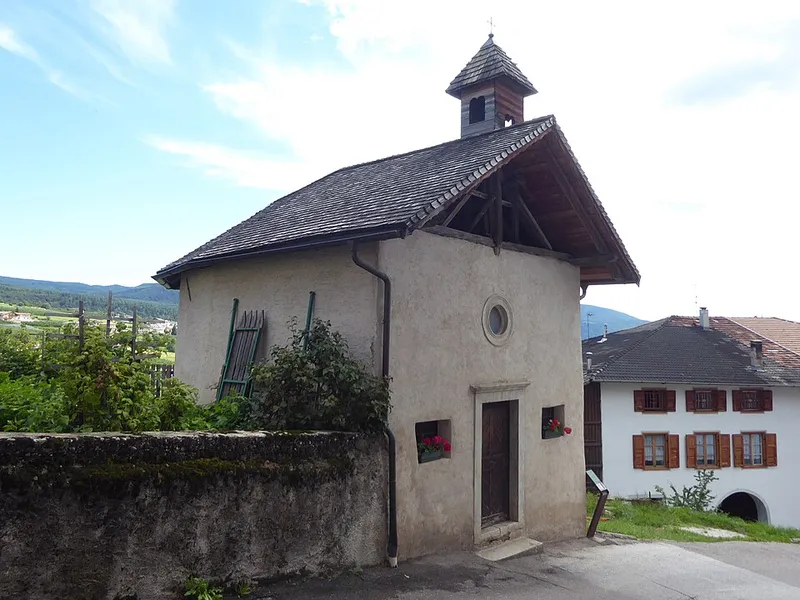
Syrio · CC BY-SA 4.0
Built in 1865, in the locality of Raina.
Borgo d'Anaunia
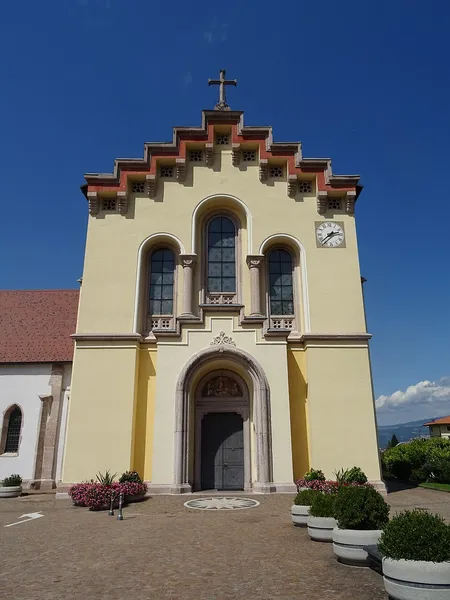
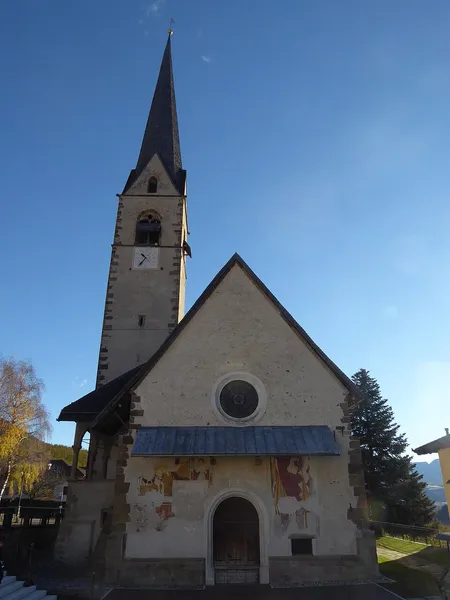
Syrio · CC BY-SA 4.0
Of the five bells, the war left one, the oldest.
Spormaggiore
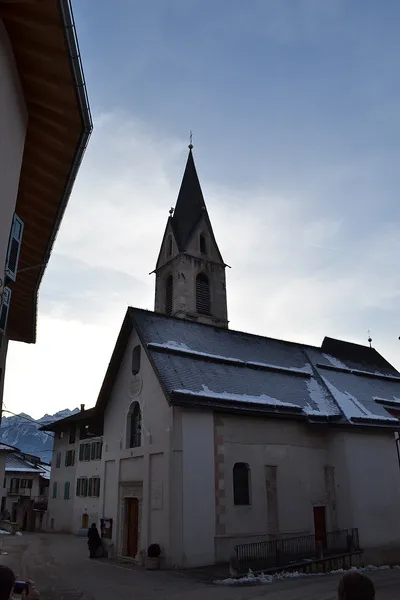
Syrio · CC BY-SA 4.0
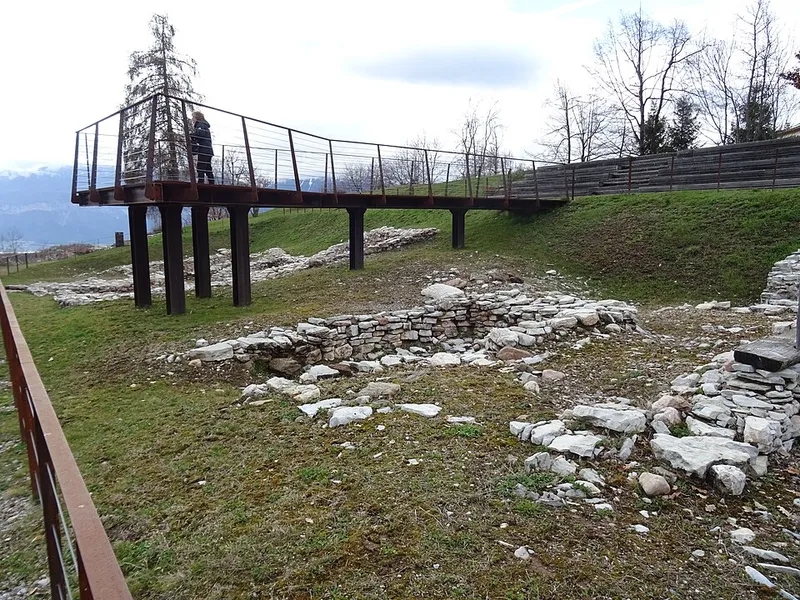
Beneath the church, a Roman watchtower.
Livo
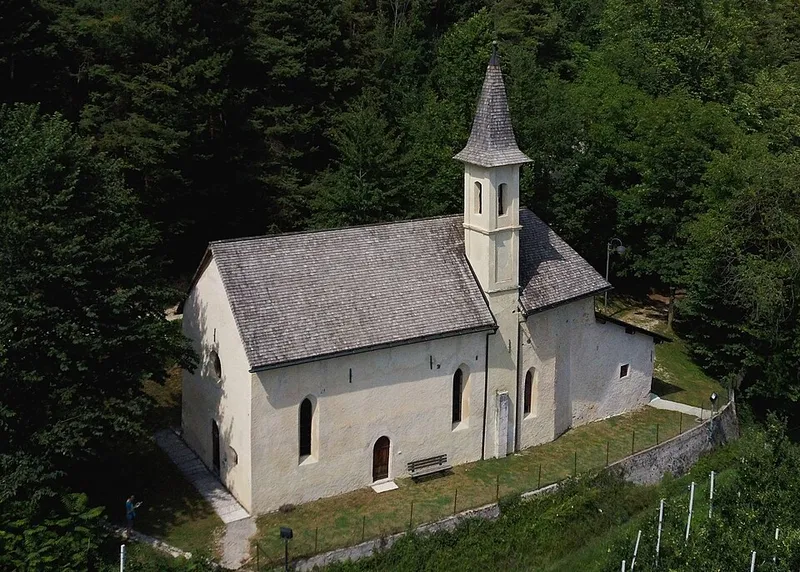
Fringio · CC BY-SA 3.0
In 1558 it was still very small, and it already had three altars.
Predaia
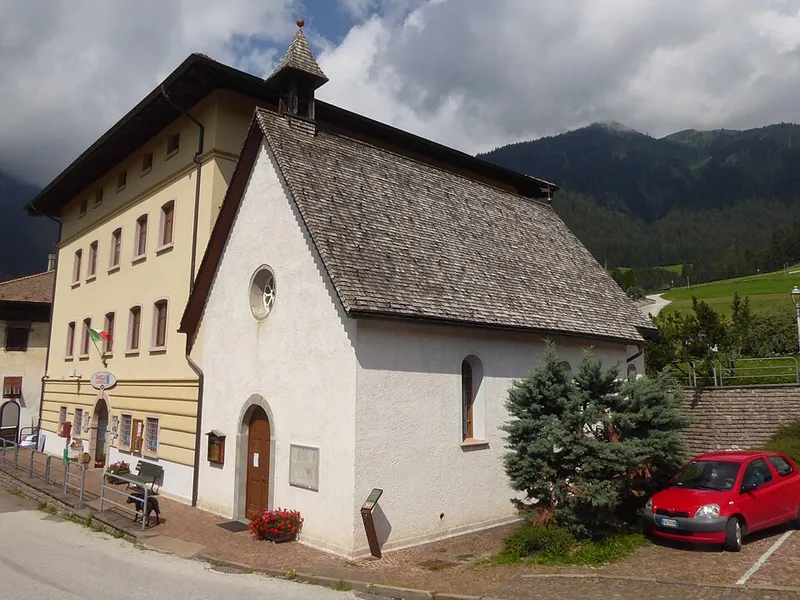
Syrio · CC BY-SA 4.0
The seventeenth-century altar preserves the remains of a Gothic triptych.
Novella
Syrio · CC BY-SA 4.0
Dating from 1910, in the hamlet that shares its parish church with Lanza.
Rumo
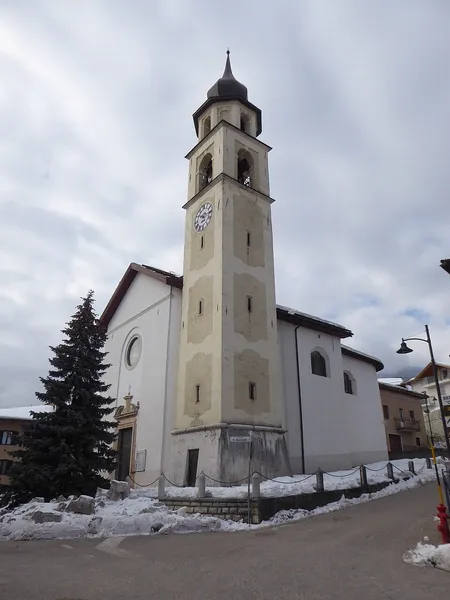
Syrio · CC BY-SA 4.0
In 1395 a man setting out for Jerusalem left it the oil for its lamp.
Campodenno
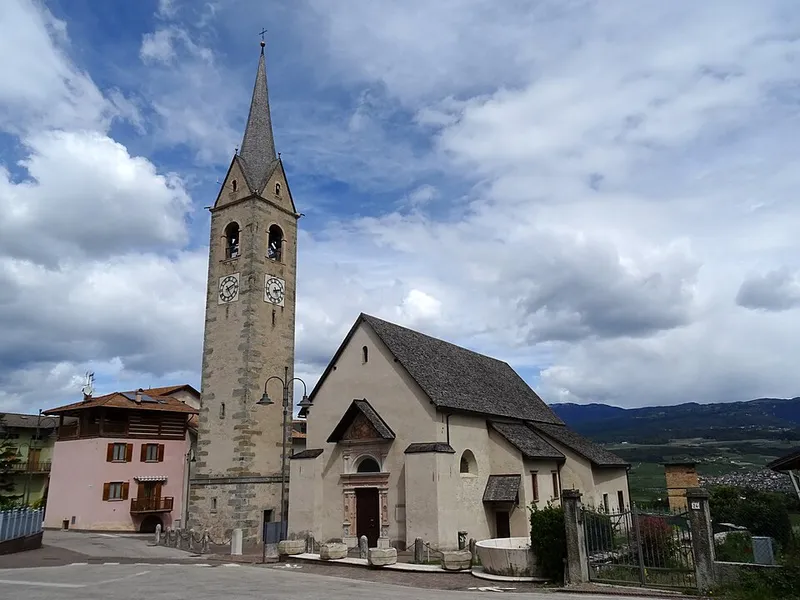
Syrio · CC BY-SA 4.0
In the apse, a cycle of frescoes from 1485, by a Baschenis.
Contà
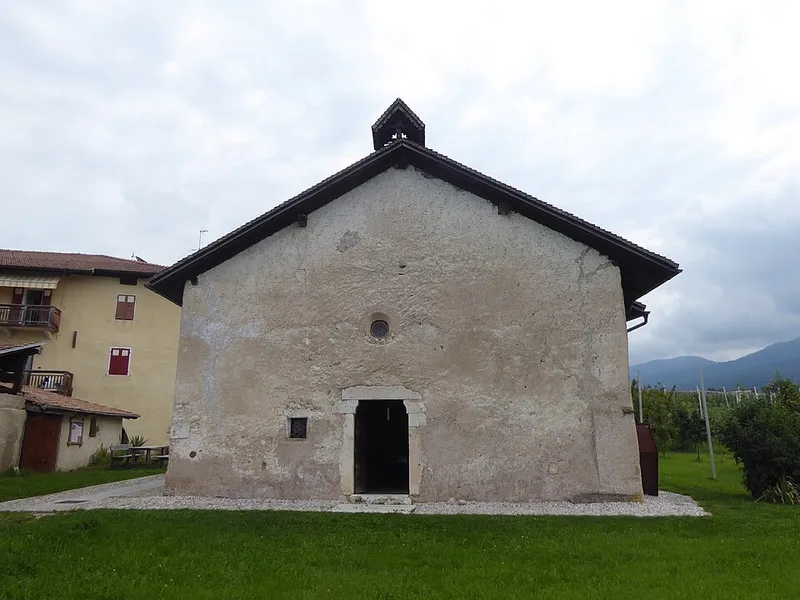
Syrio · CC BY-SA 4.0
In 1830 the bishop had half of it demolished.
Romeno
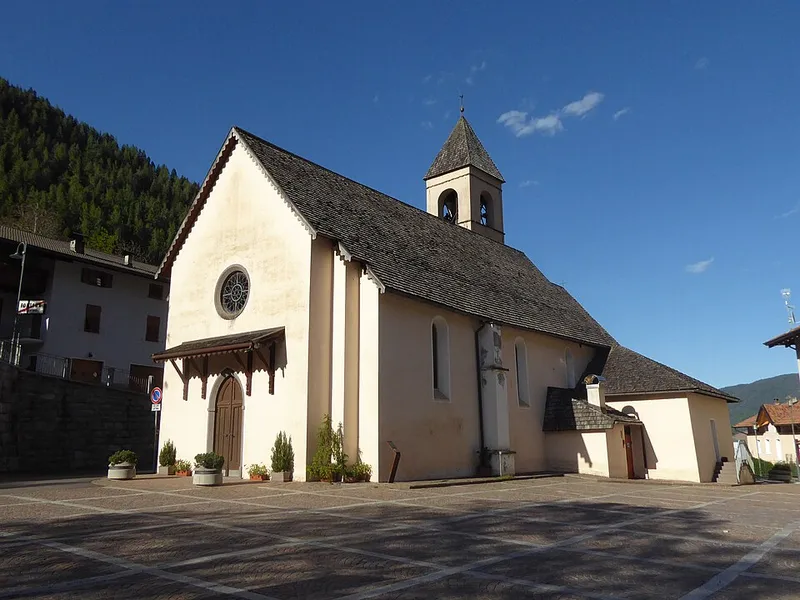
Syrio · CC BY-SA 4.0
In 1741 it received the Eucharistic reservation, but only for part of the year.
Bresimo
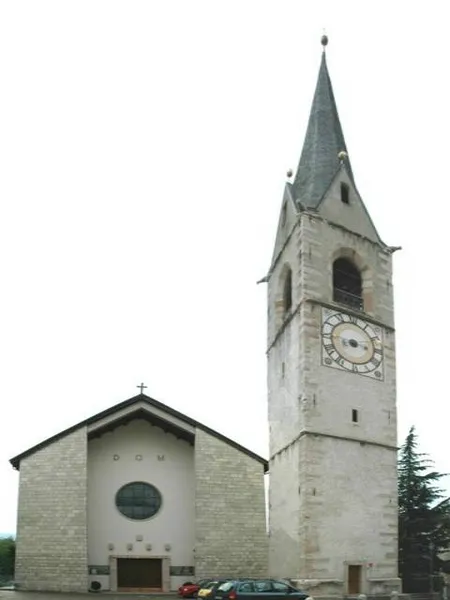
Christian Stringari · CC BY-SA 3.0
The beams were quickly saved from an attack of woodworm.
Ville d'Anaunia
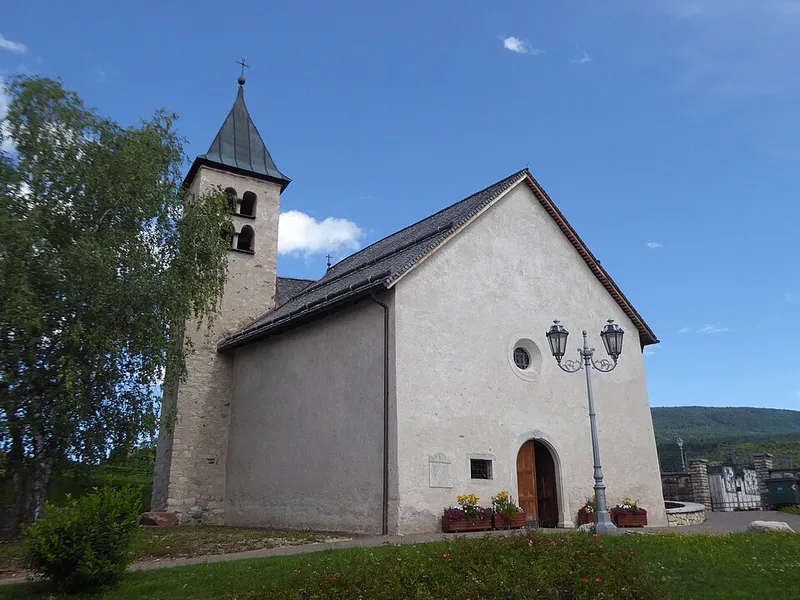
Syrio · CC BY-SA 4.0
In 1537 it was recorded as dedicated to the Blessed Virgin Mary.
Romeno
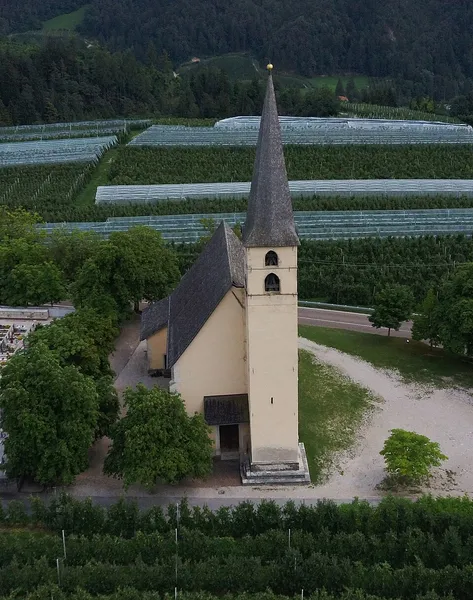
Syrio · CC BY-SA 4.0
In the choir is the name of the man who rebuilt it, with the date: 1512.
Novella
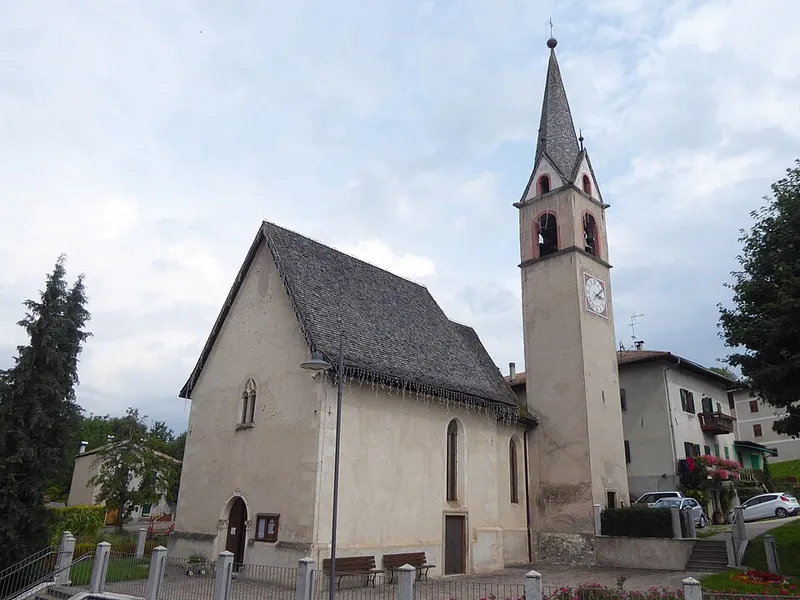
Syrio · CC BY-SA 4.0
Rebuilt twice in two centuries, and consecrated in 1558 like the others here.
Sarnonico
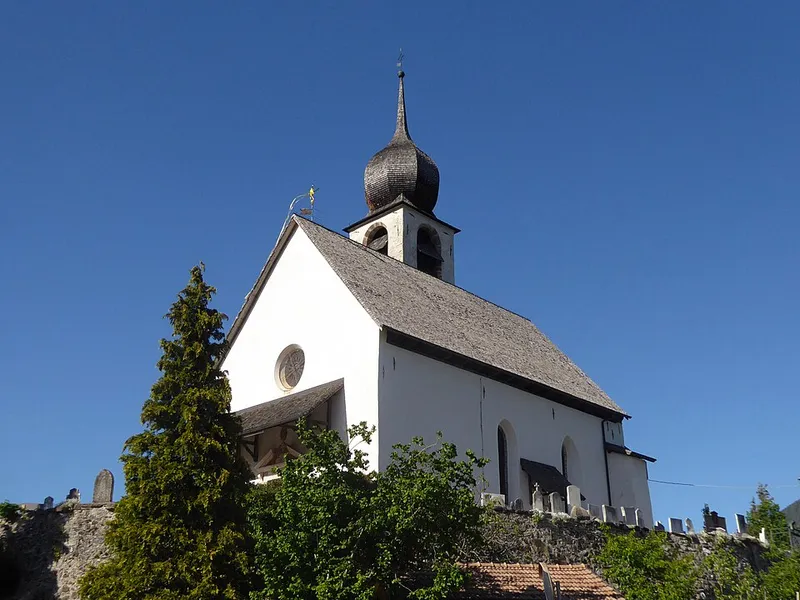
Syrio · CC BY-SA 4.0
Beneath the church stood a Roman temple, and before that, people of the Iron Age.
Cis
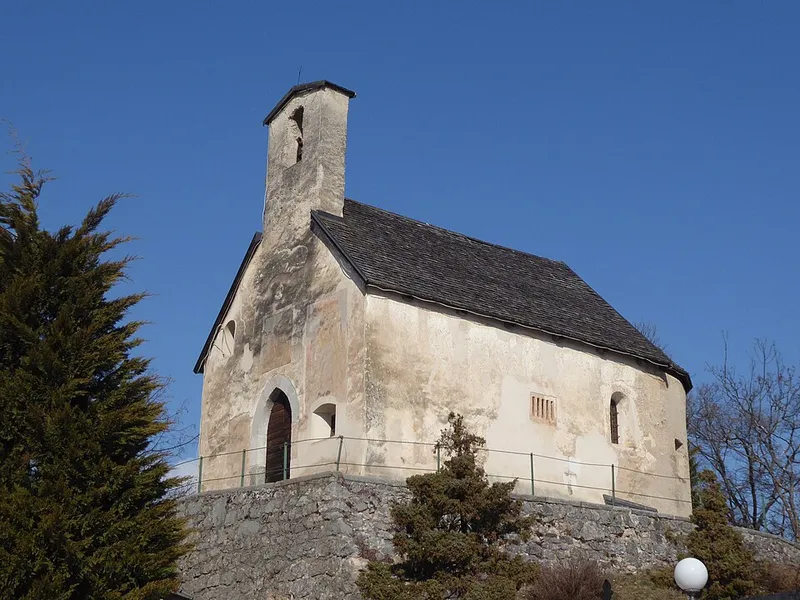
Syrio · CC BY-SA 4.0
Dated by tree rings: after 1150, the oldest in Terres.
Contà
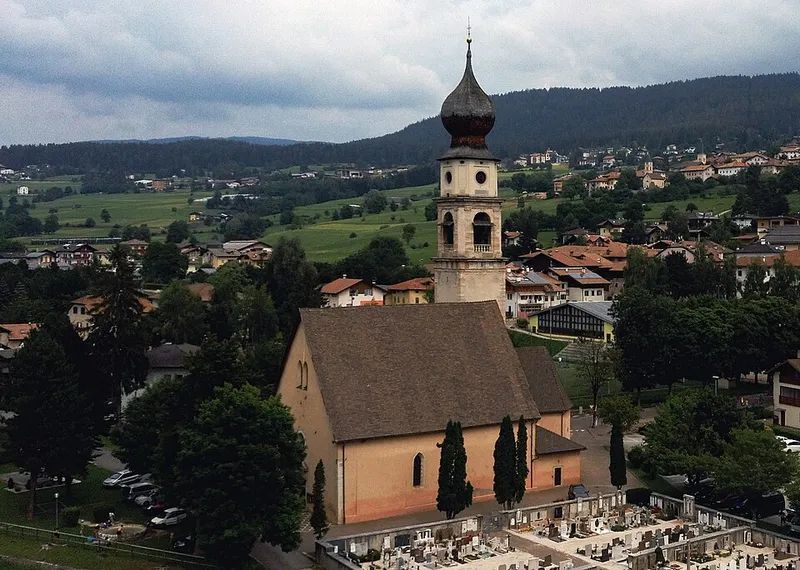
Syrio · CC BY-SA 4.0
In 1977 a theft carried off four wooden works attributed to Ramus.
Sarnonico
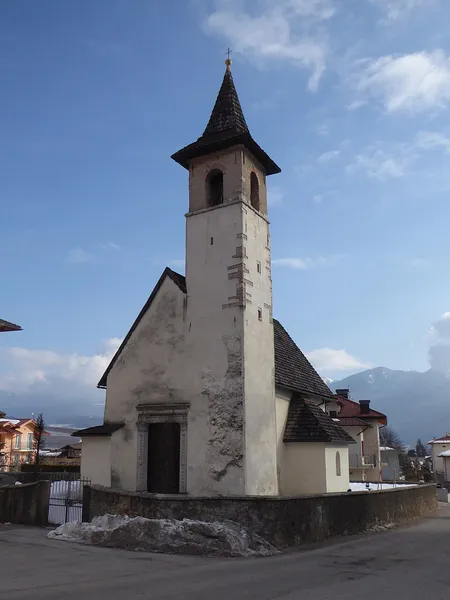
Syrio · CC BY-SA 4.0
Once new, a vault ruined the frescoes of Giovanni Baschenis.
Contà
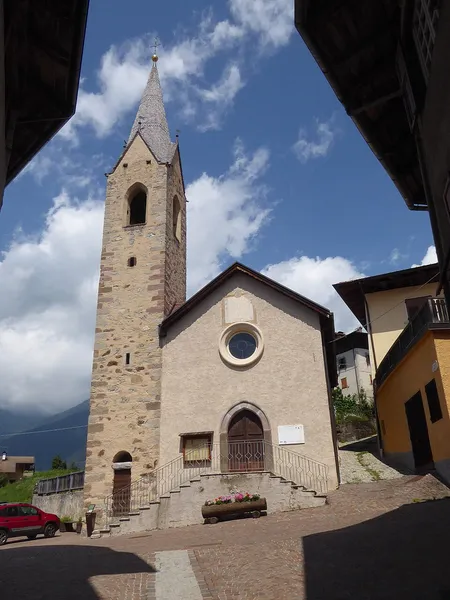
Syrio · CC BY-SA 4.0
In 1506 a landslide carried away part of it.
Rumo
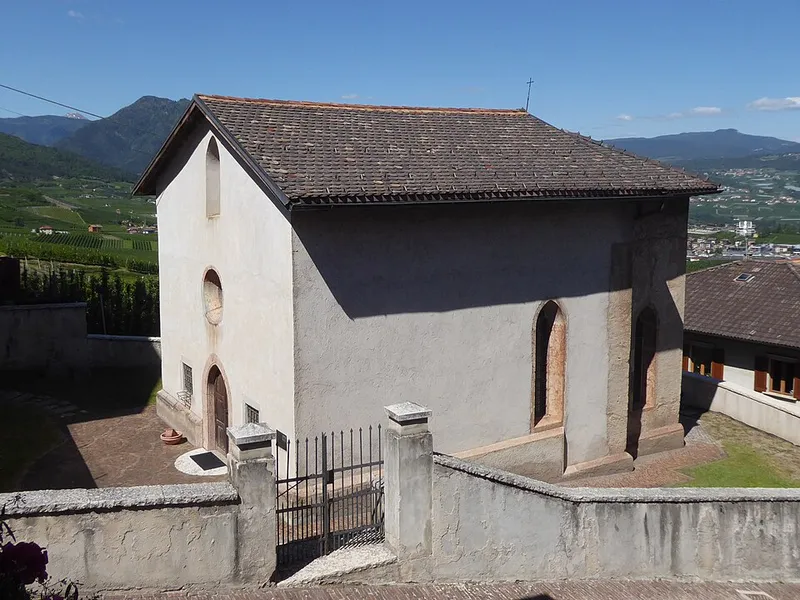
Syrio · CC BY-SA 4.0
It ended up inside Castel Firmian and became its private chapel.
Cles
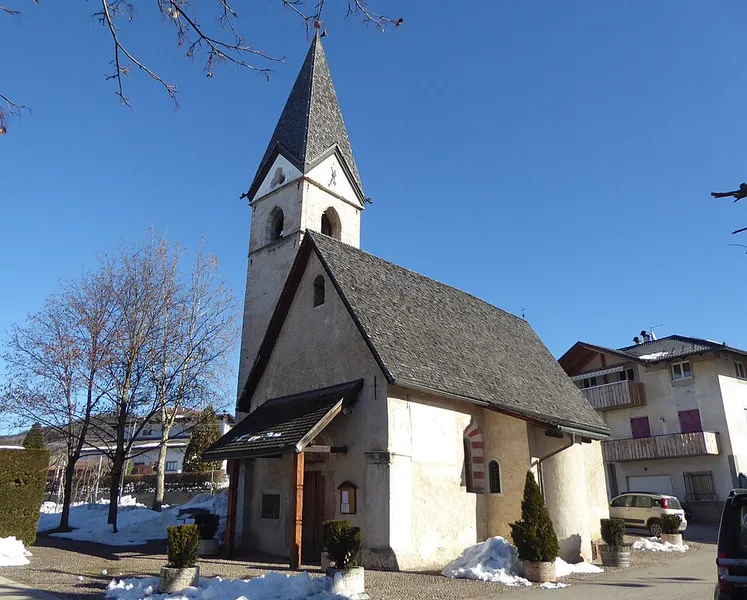
Syrio · CC BY-SA 4.0
The dedication to Saint Marcellus came only with the consecration of 1500.
Predaia
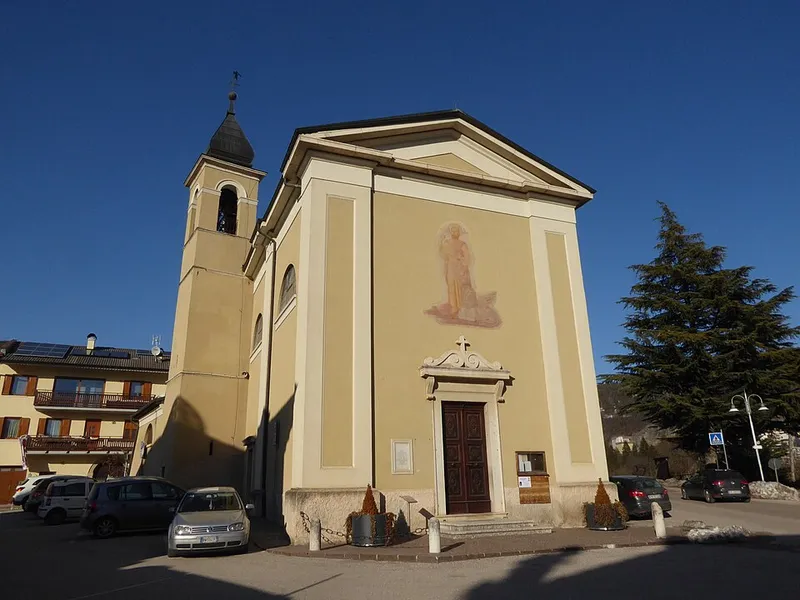
Syrio · CC BY-SA 4.0
Clesio's envoys visited it on 23 June 1537 and found it small.
Predaia
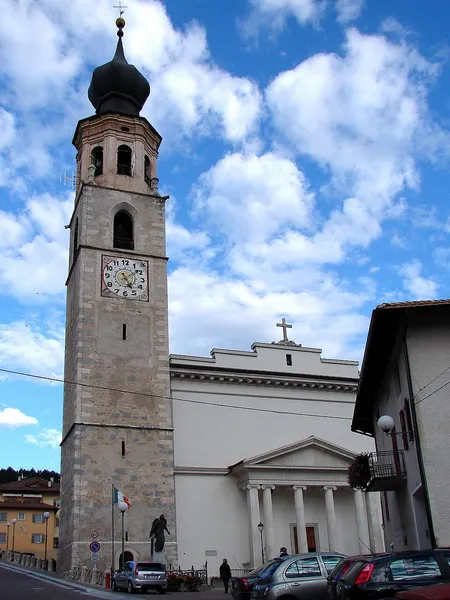
H.Helmlechner · CC BY-SA 4.0
A pieve mentioned in 1184, and a bell tower raised by builders from Val d'Intelvi.
Borgo d'Anaunia
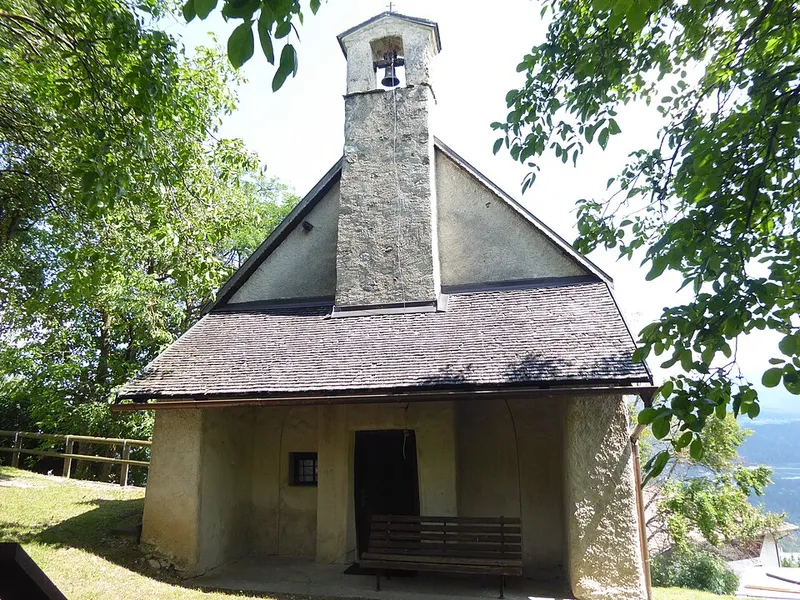
Syrio · CC BY-SA 4.0
The bell tower was built in 1694; the bell arrived in 1762.
Novella
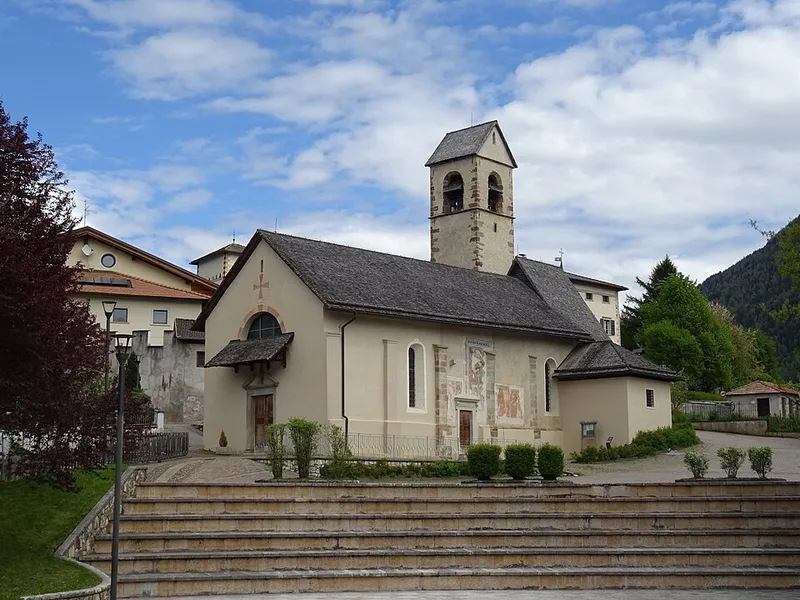
Syrio · CC BY-SA 4.0
To lengthen it by two bays, they had to rebuild its façade.
Livo
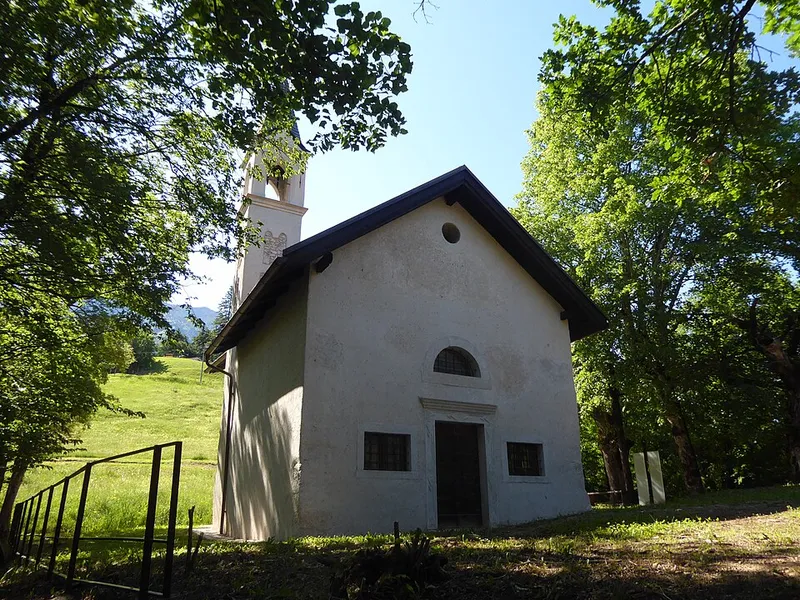
Syrio · CC BY-SA 4.0
Abandoned and restored three times in four centuries.
Ton
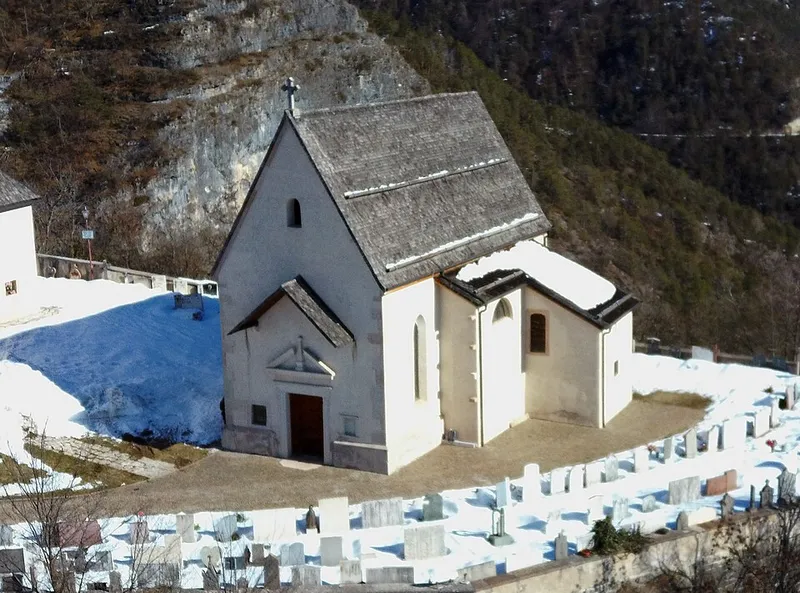
Syrio · CC BY-SA 4.0
For two years it was the seat of the Compagnia dei Battuti.
Predaia
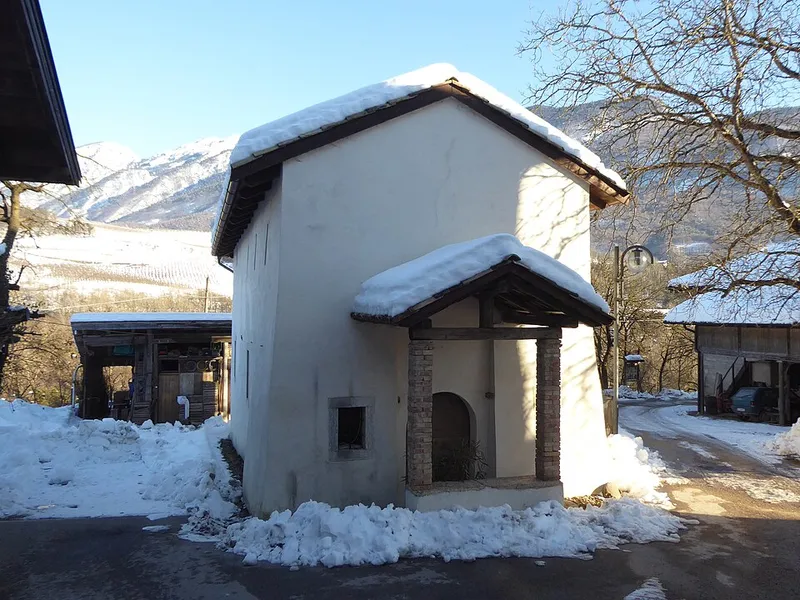
Syrio · CC BY-SA 4.0
It was probably attached to a small monastery, and today it forms part of a maso.
Campodenno
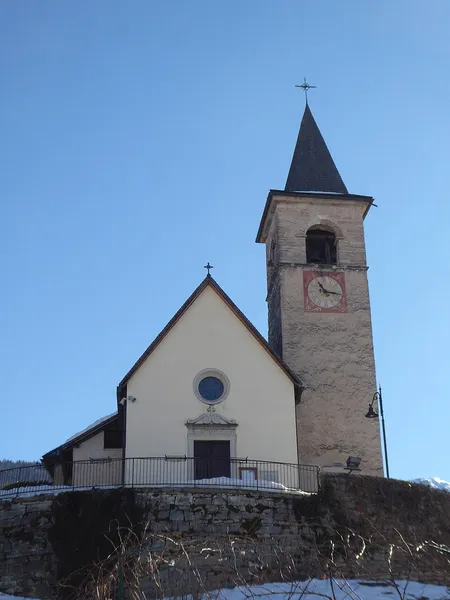
Syrio · CC BY-SA 4.0
Three altars in 1537, two in 1579: even the furnishings have a history.
Predaia
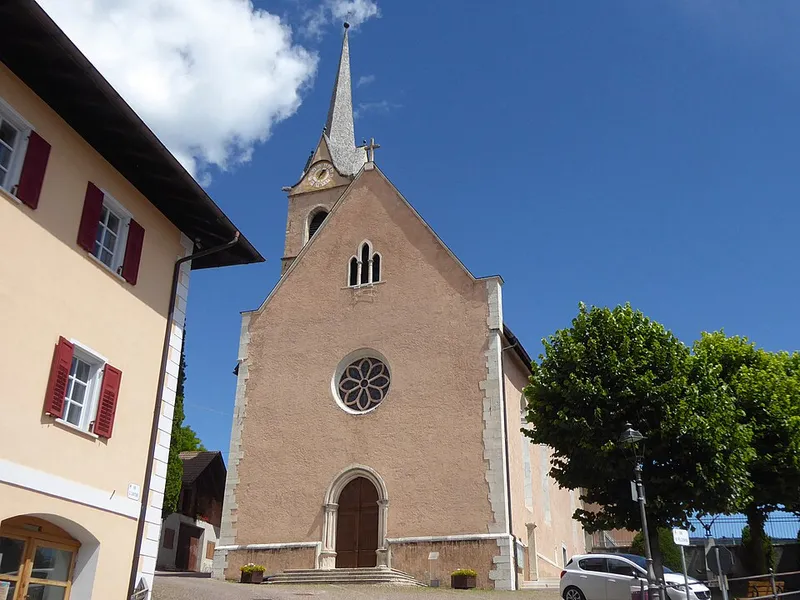
Syrio · CC BY-SA 4.0
It was enlarged in 1420 because the pieve had been damaged in war.
Borgo d'Anaunia
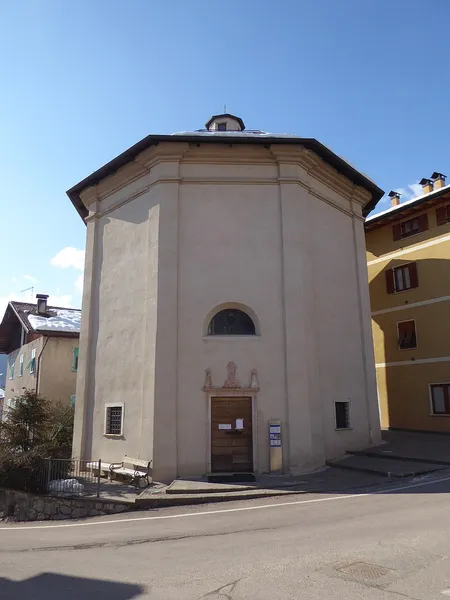
Syrio · CC BY-SA 4.0
It appears in a will of 1486.
Ville d'Anaunia
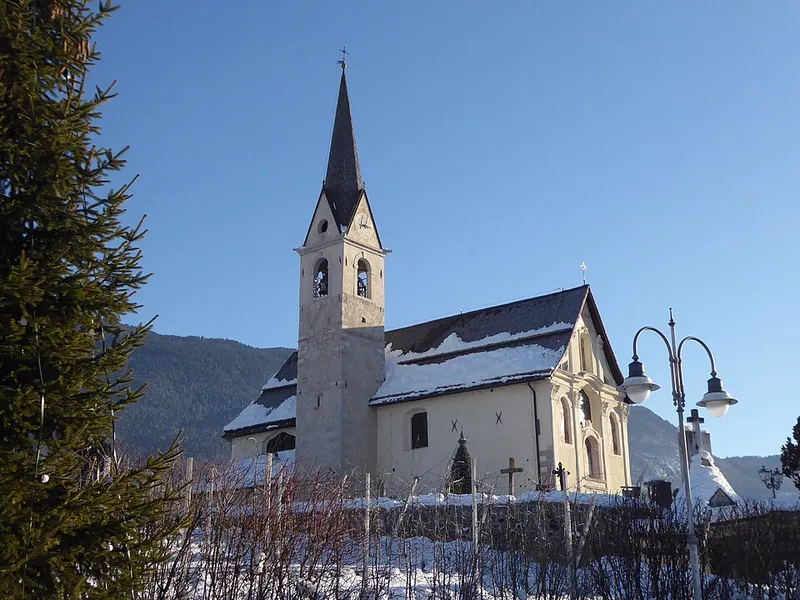
Syrio · CC BY-SA 4.0
In the accounts of 1562 the building work is recorded in dialect.
Ton
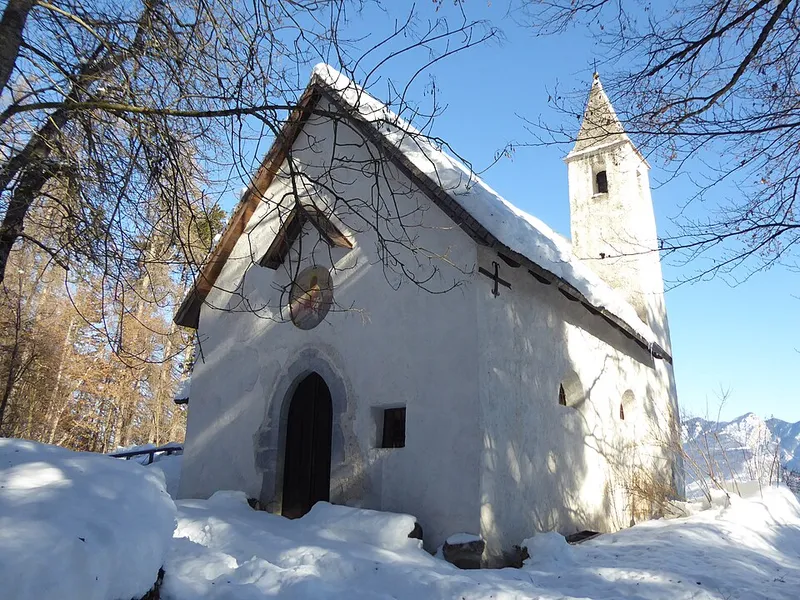
Syrio · CC BY-SA 4.0
A market field on a hill that was once a hill fort.
Campodenno
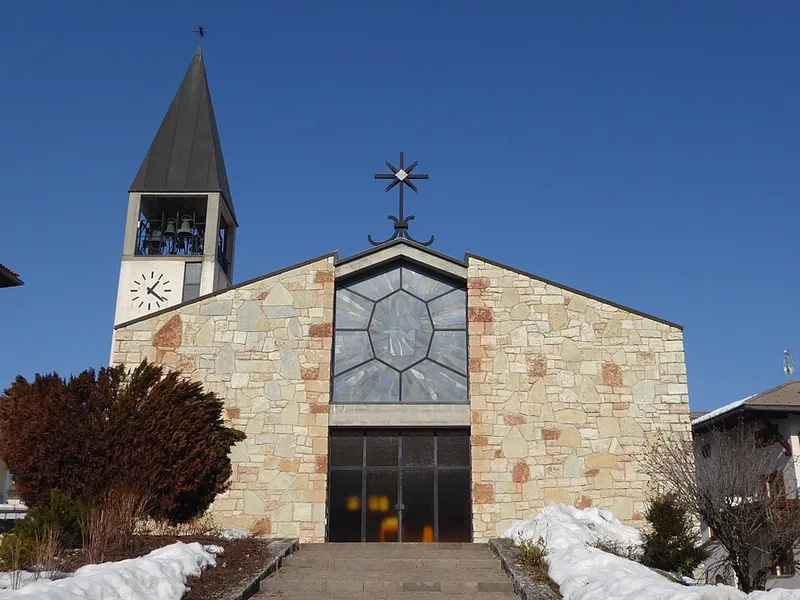
Syrio · CC BY-SA 4.0
It is the new church that made the other one old, and it stands in the same street.
Ville d'Anaunia
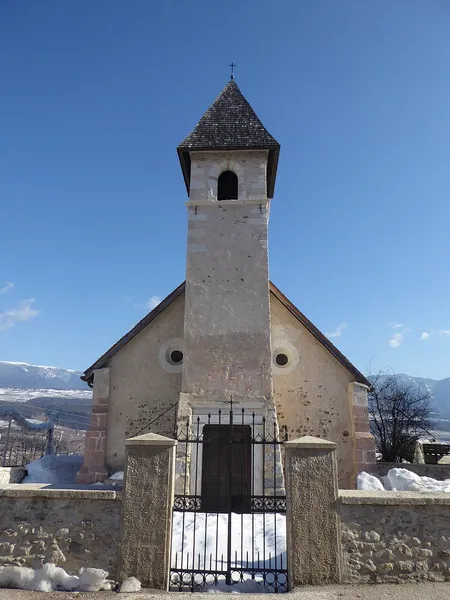
Syrio · CC BY-SA 4.0
The new one was built right beside it, with the same name.
Ville d'Anaunia
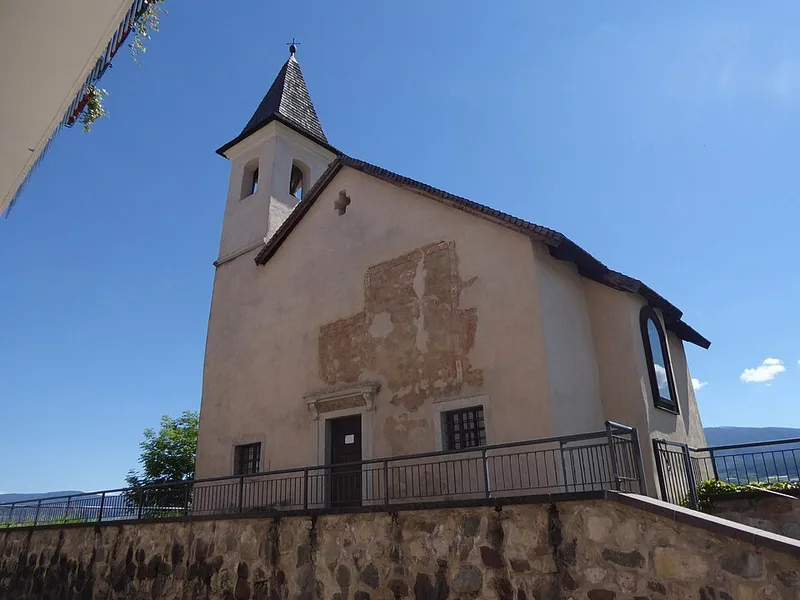
Syrio · CC BY-SA 4.0
The frescoes were already finished in 1399, sixty-eight years before the first mention.
Cles
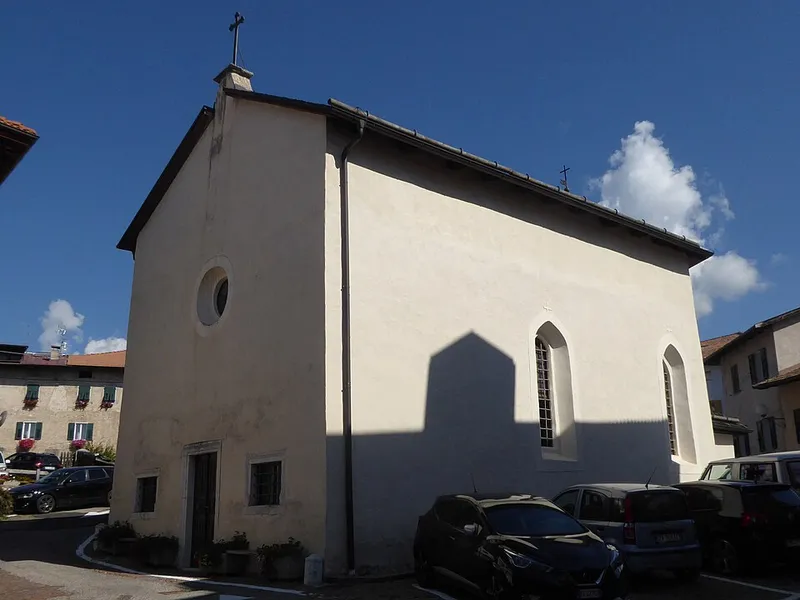
Syrio · CC BY-SA 4.0
Perhaps from 1530, and in 1847 it was put back on its feet after a fire.
Borgo d'Anaunia
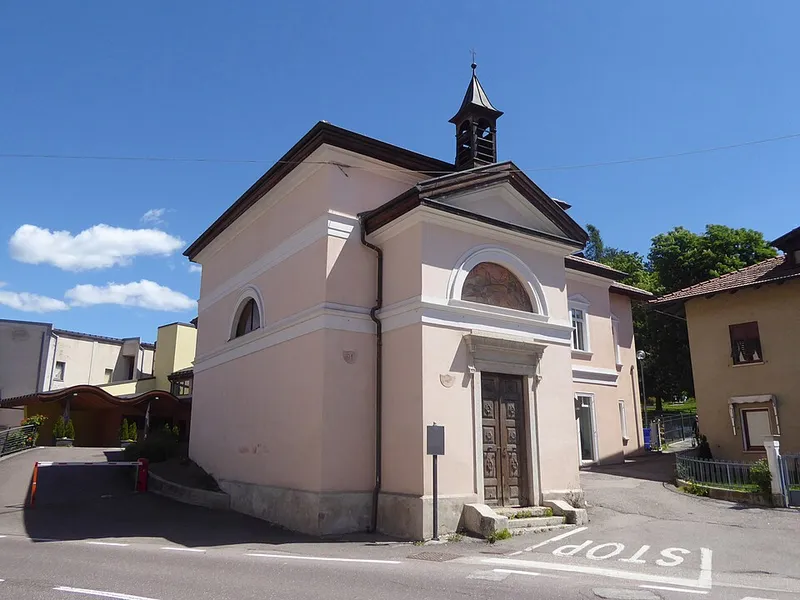
Syrio · CC BY-SA 4.0
The old church was destroyed by arson in 1824.
Cles
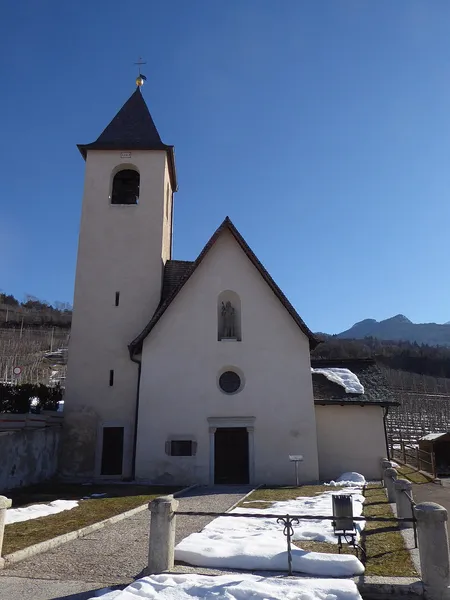
Syrio · CC BY-SA 4.0
During the works of the eighteenth century, a fresco of San Rocco and a coat of arms came to light.
Predaia
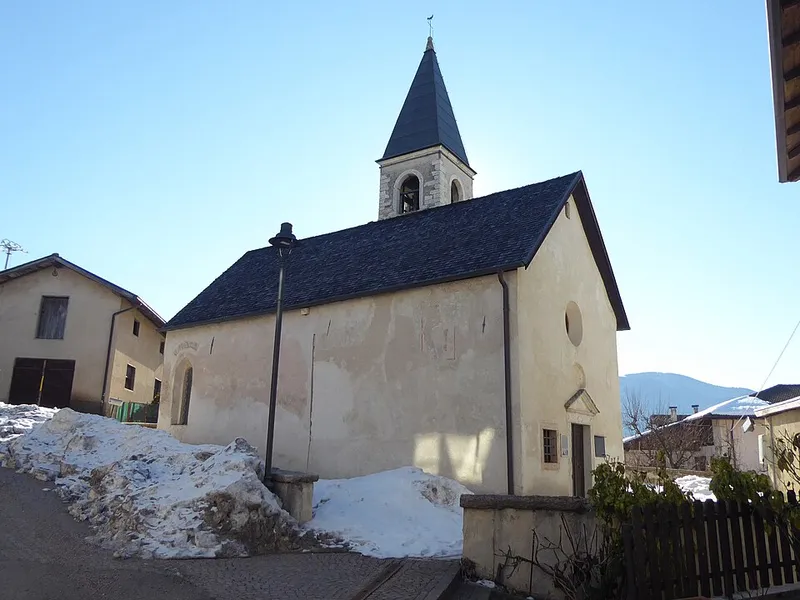
Syrio · CC BY-SA 4.0
First a chapel, then the sacristy, and the bell tower two centuries later.
Predaia
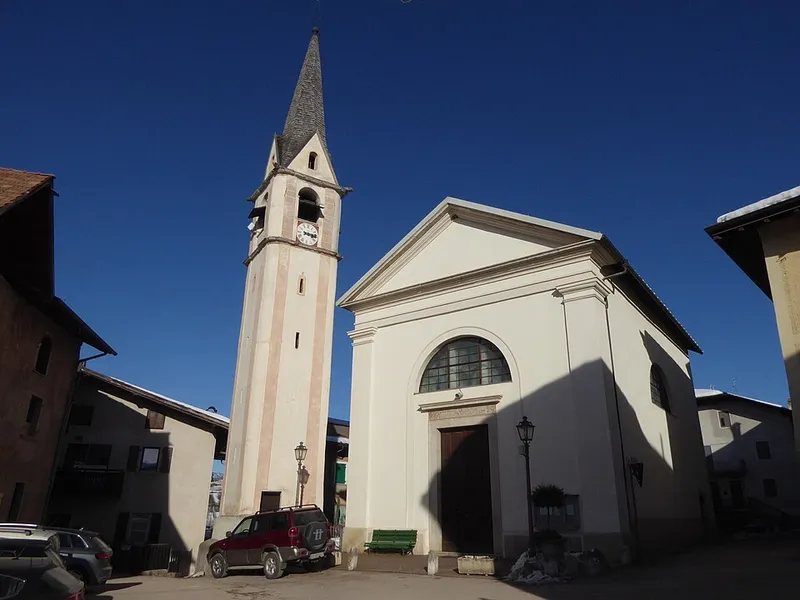
Syrio · CC BY-SA 4.0
The bells requisitioned in the war, recast as soon as peace returned.
Predaia
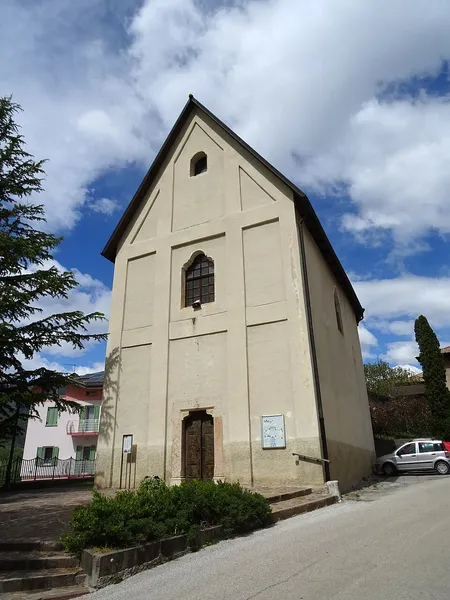
Syrio · CC BY-SA 4.0
In 1579 it was found in very poor condition, and two centuries later it was rebuilt.
Ville d'Anaunia
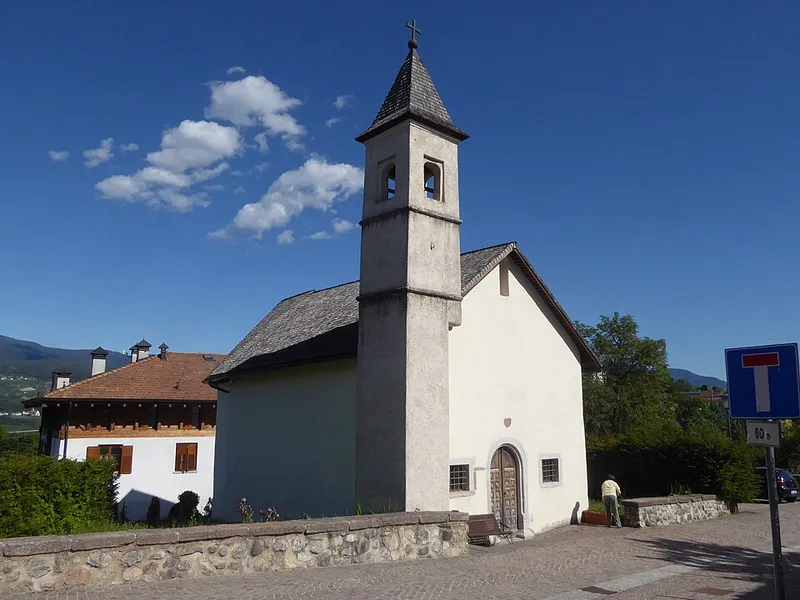
Syrio · CC BY-SA 4.0
Frescoes hidden beneath limewash for four centuries.
Cles
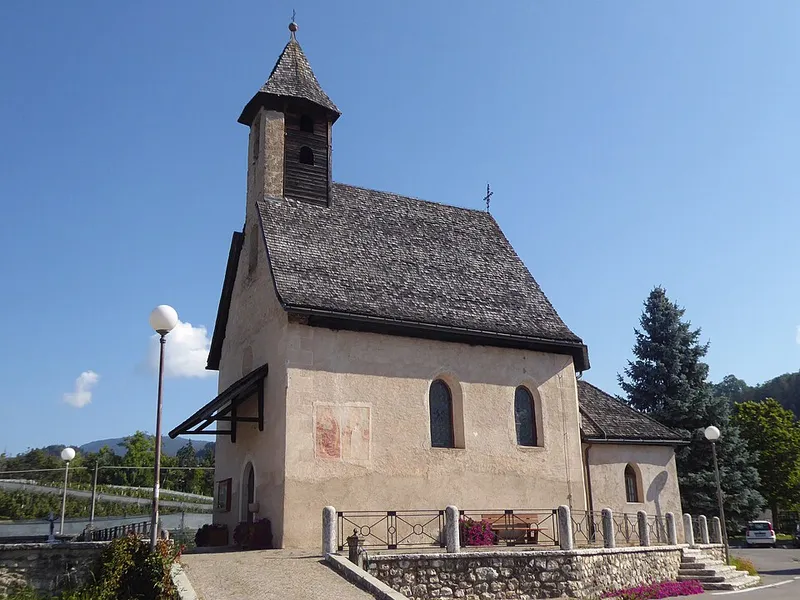
Syrio · CC BY-SA 4.0
The second San Valentino of the valleys, and there is a doubt about the other.
Borgo d'Anaunia
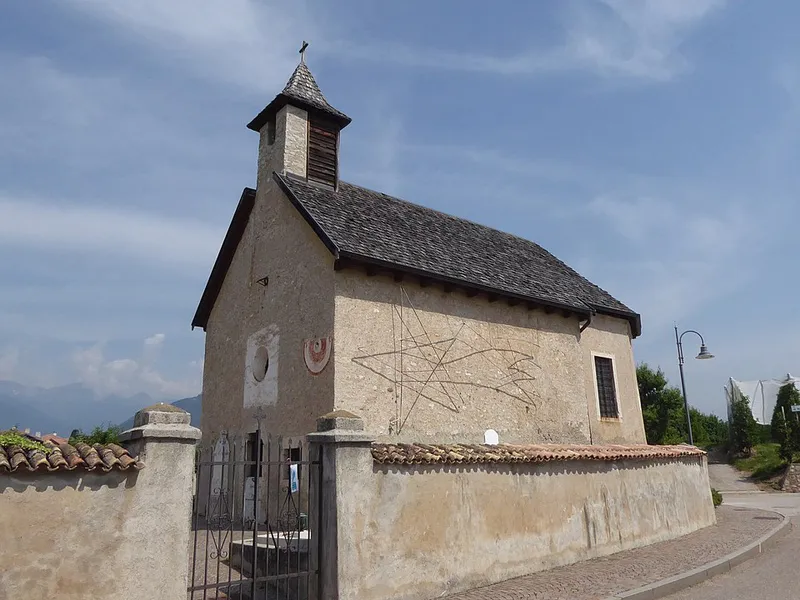
Syrio · CC BY-SA 4.0
She too, originally, belonged to Saints Fabiano and Sebastiano.
Sanzeno
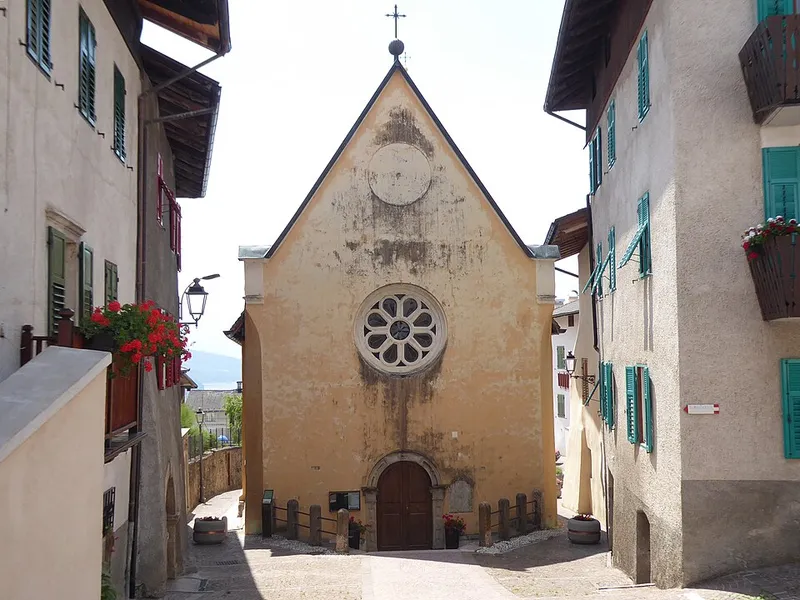
Syrio · CC BY-SA 4.0
Perhaps it is not dedicated to the Saint Valentine whom everyone celebrates.
Novella
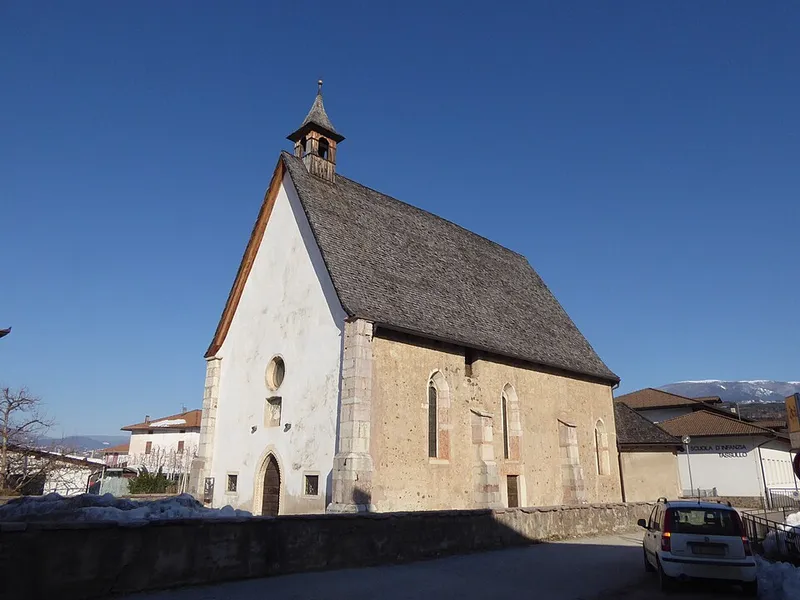
Syrio · CC BY-SA 4.0
Since 1504 it has not changed shape: only restorations.
Ville d'Anaunia
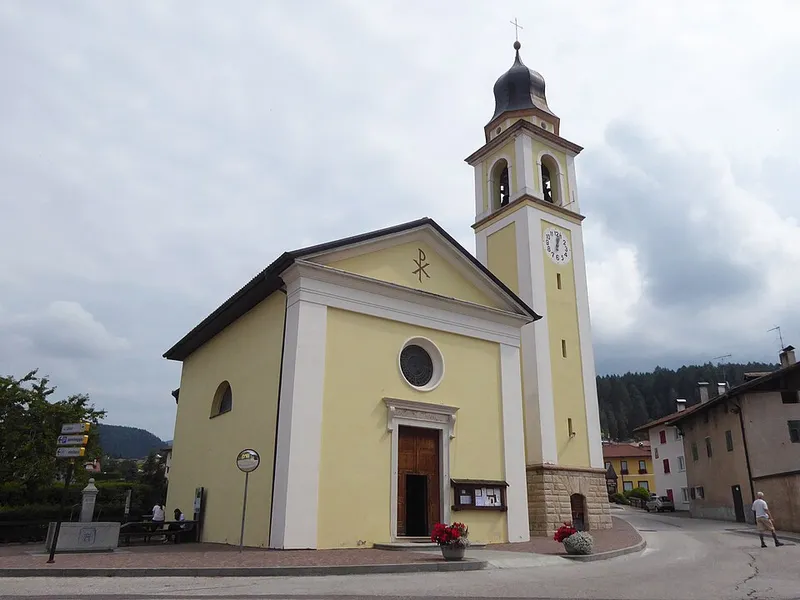
Syrio · CC BY-SA 4.0
It flooded with every rainfall, so they rebuilt it from scratch.
Amblar-Don
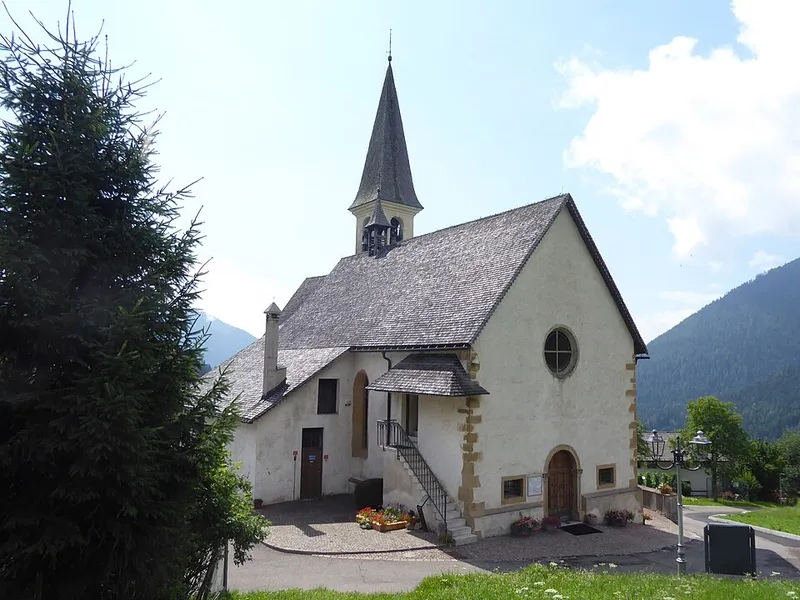
Syrio · CC BY-SA 4.0
Consecrated twice in thirty years, the second time because the altar had been moved.
Rumo
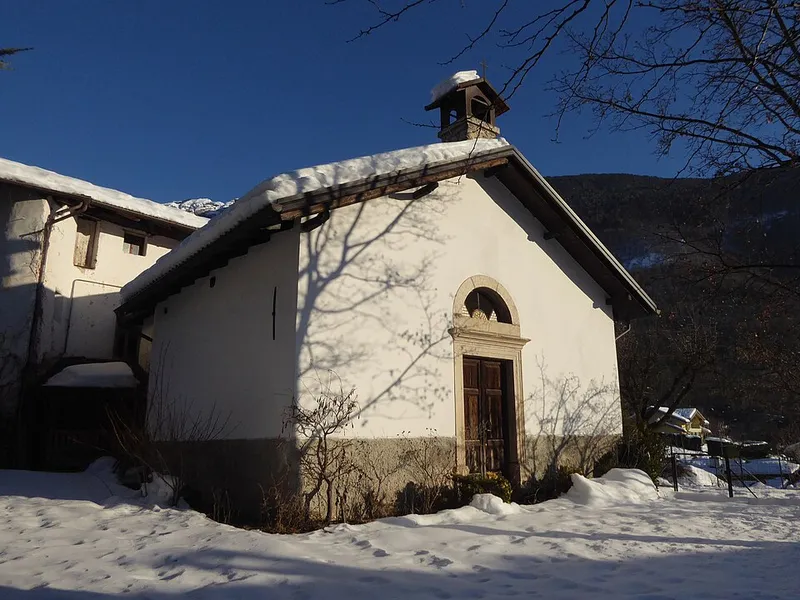
Syrio · CC BY-SA 4.0
Tradition has it founded in the fourth century; the documents begin in 1391.
Ton
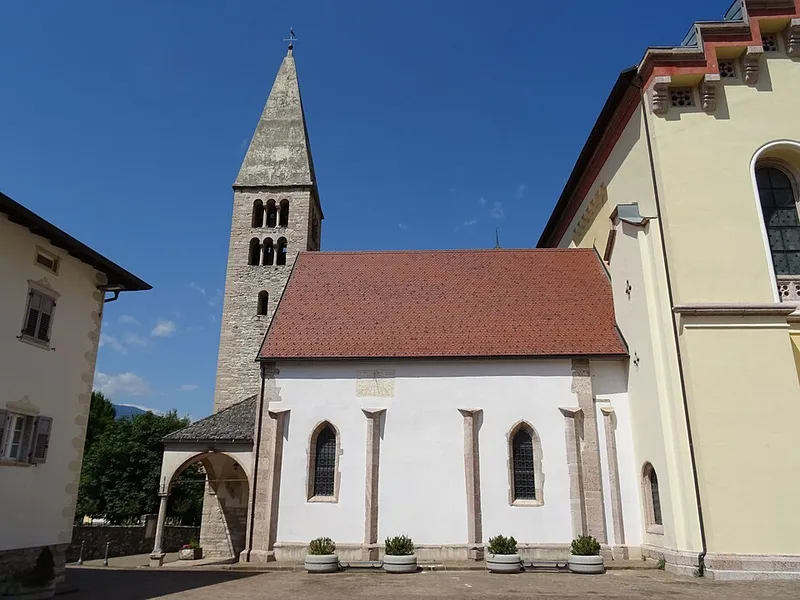
Syrio · CC BY-SA 4.0
The statue stolen in 1974 returned to its place two years later.
Spormaggiore
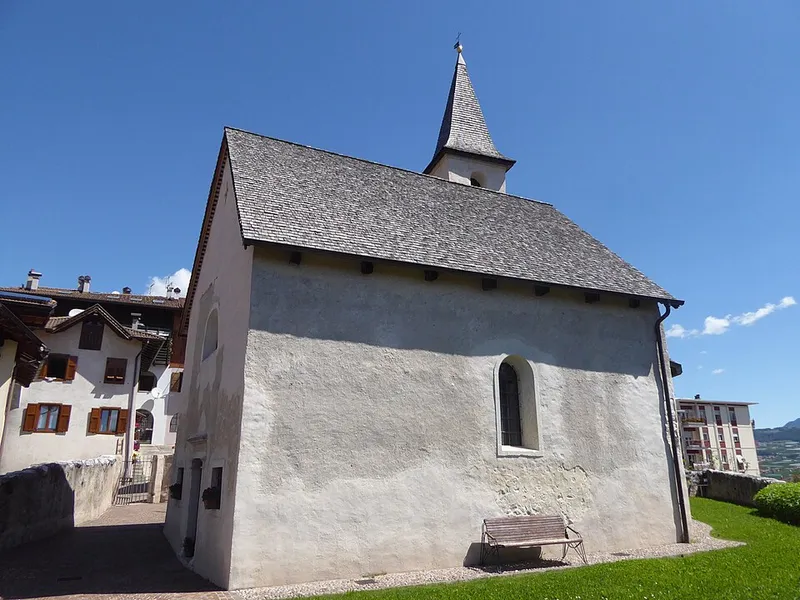
Syrio · CC BY-SA 4.0
The oldest in Cles, mentioned in a document of 1191.
Cles
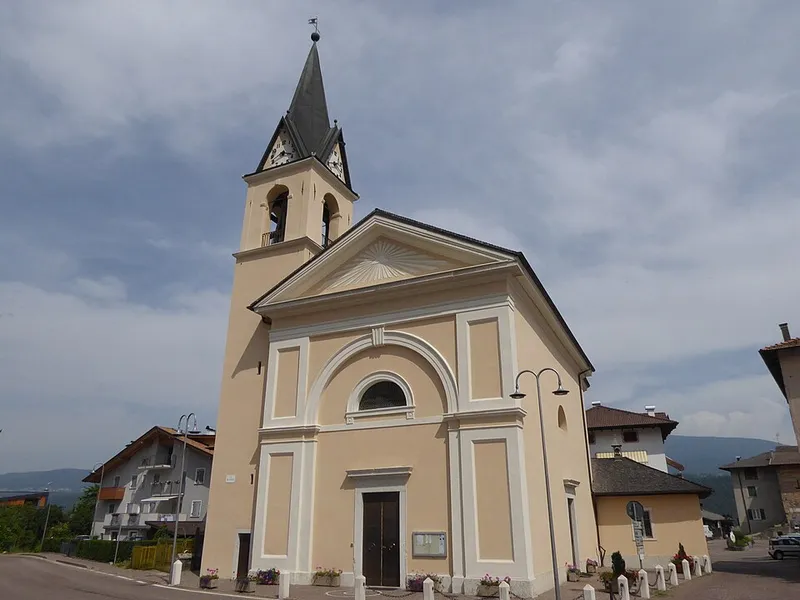
Syrio · CC BY-SA 4.0
In 1853 a fire burned part of the village, and the church with it.
Novella
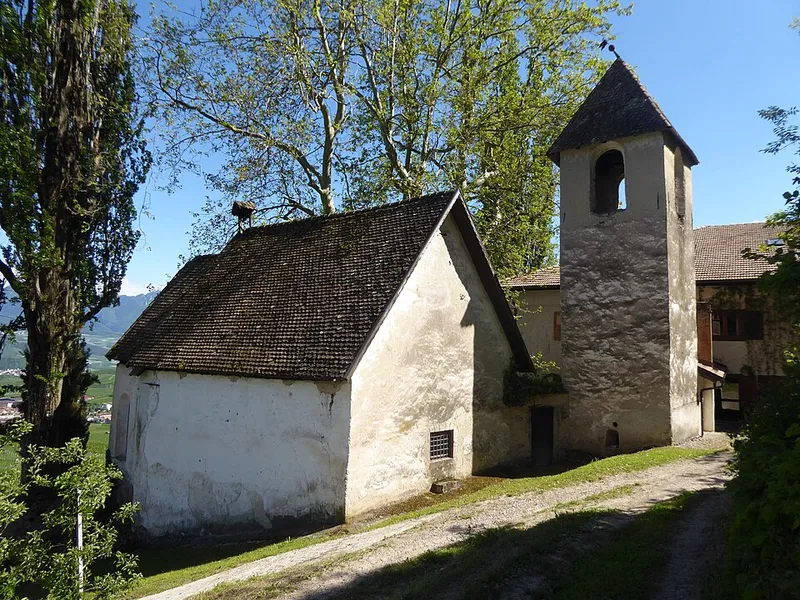
Syrio · CC BY-SA 4.0
It stands beside a maso, in the locality of San Vito alto.
Cles
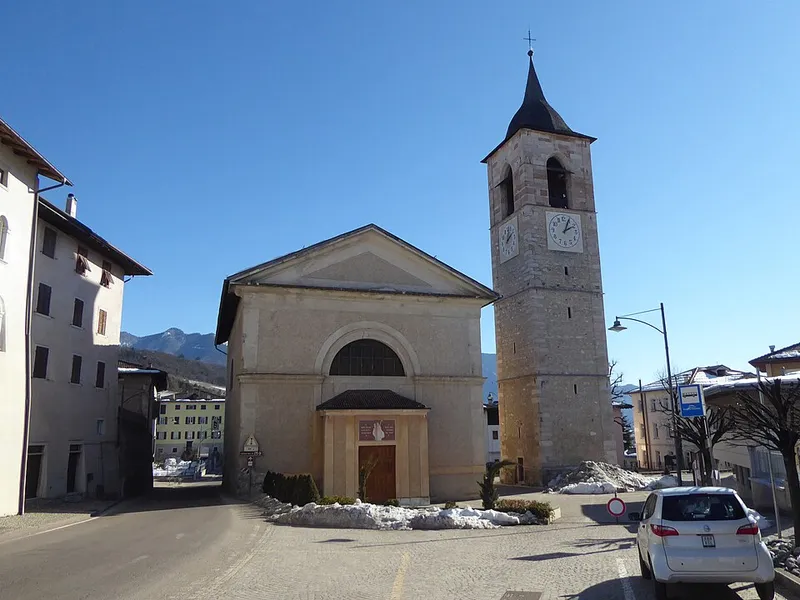
Syrio · CC BY-SA 4.0
The parish priest spent everything on the bell tower, and the church remained bare.
Predaia
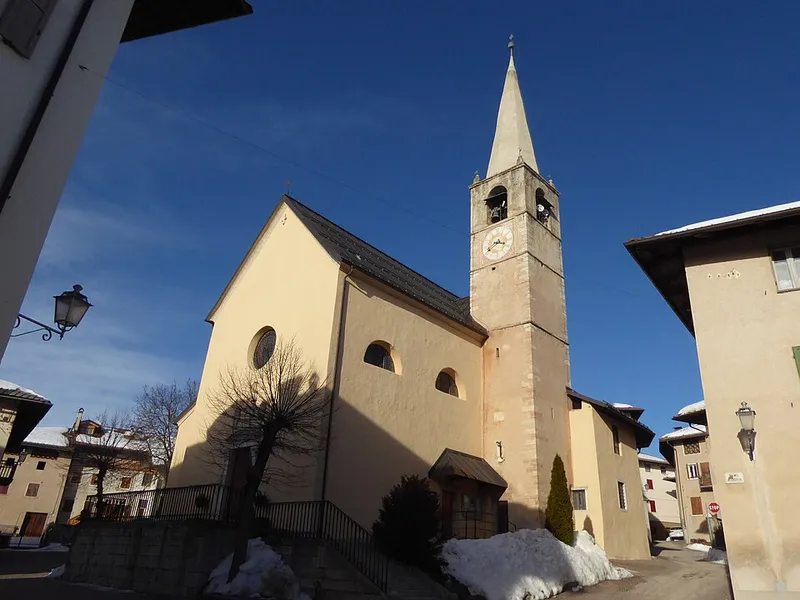
Syrio · CC BY-SA 4.0
Finished in 1744, and twenty-two years later still not consecrated.
Sfruz
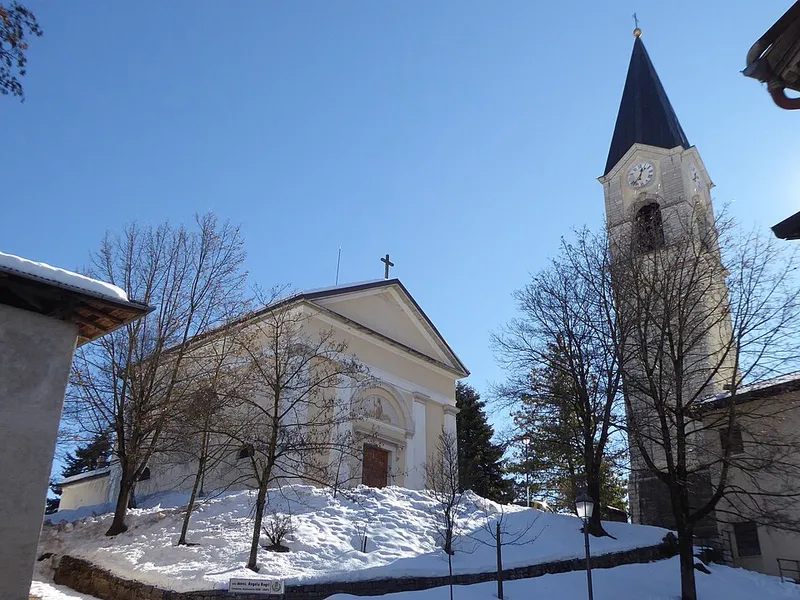
Syrio · CC BY-SA 4.0
The bells arrived before the bell tower, and stood in the middle of the village.
Predaia
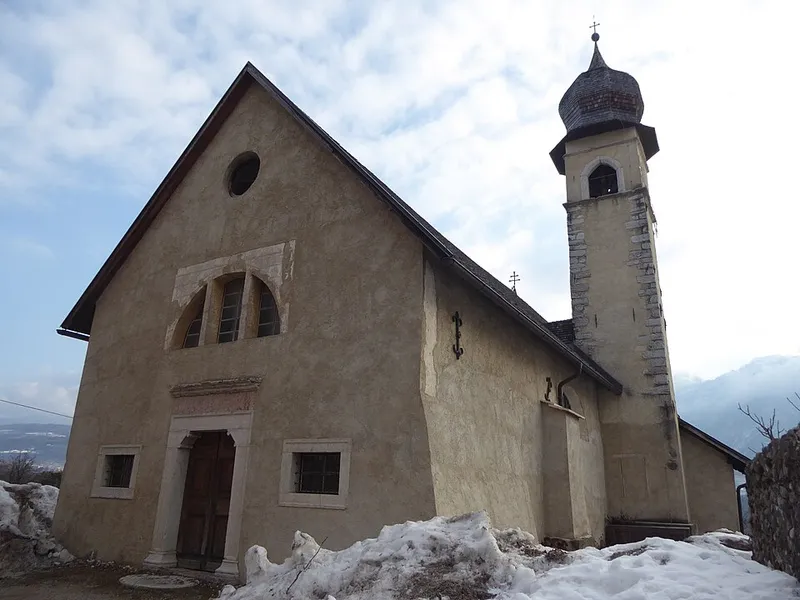
Syrio · CC BY-SA 4.0
Restored in 1975, emptied by a theft three years later.
Denno
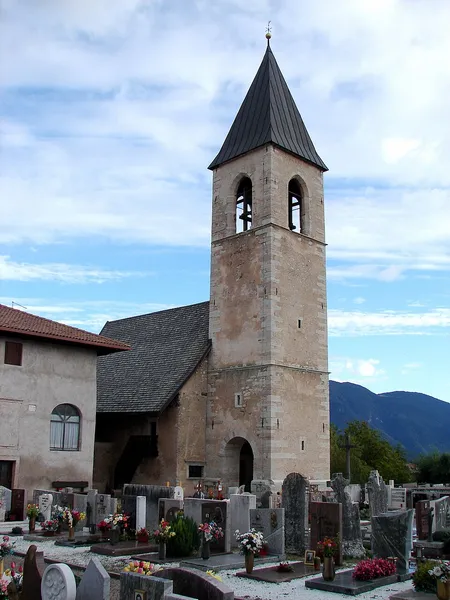
H.Helmlechner · CC BY-SA 4.0
The fifteenth-century cycle of frescoes is by the Baschenis.
Predaia
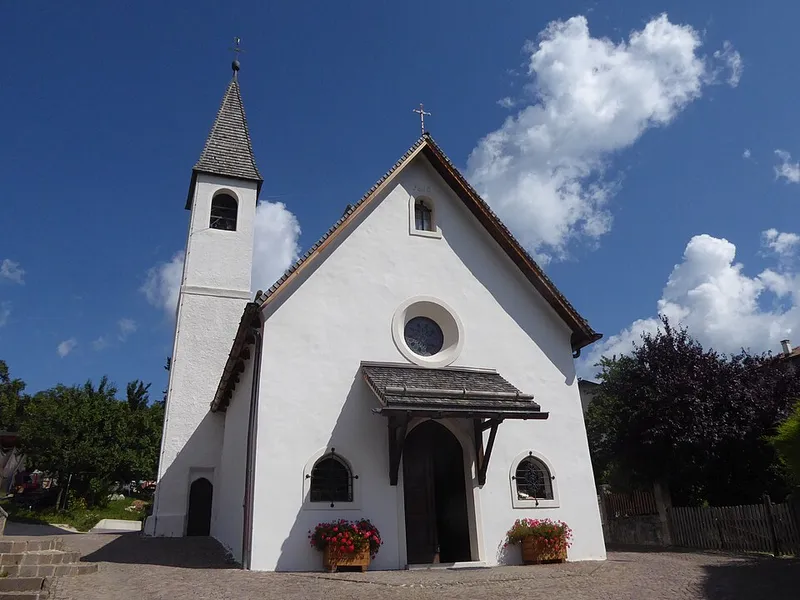
Syrio · CC BY-SA 4.0
It bore three names before becoming the church of Sant'Anna.
Borgo d'Anaunia
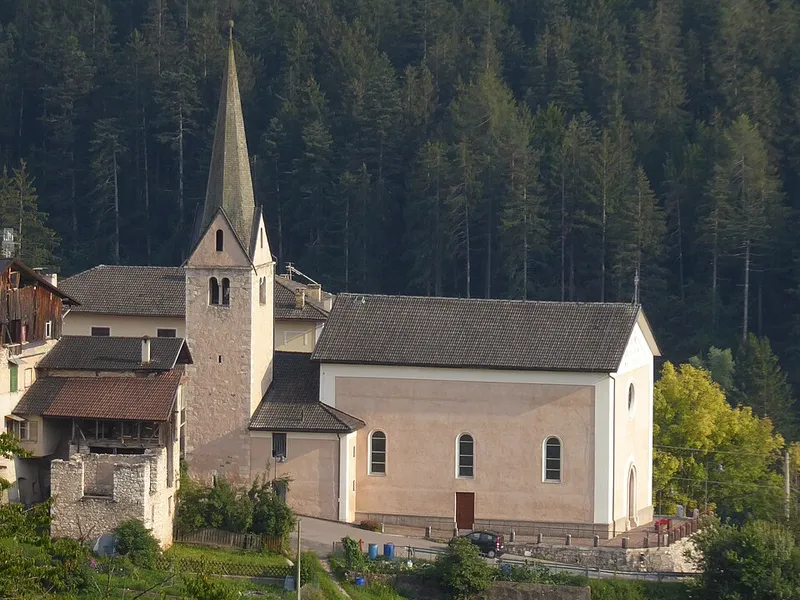
Syrio · CC BY-SA 4.0
The cemetery was built beside it, and a century later moved outside the village.
Ruffré-Mendola
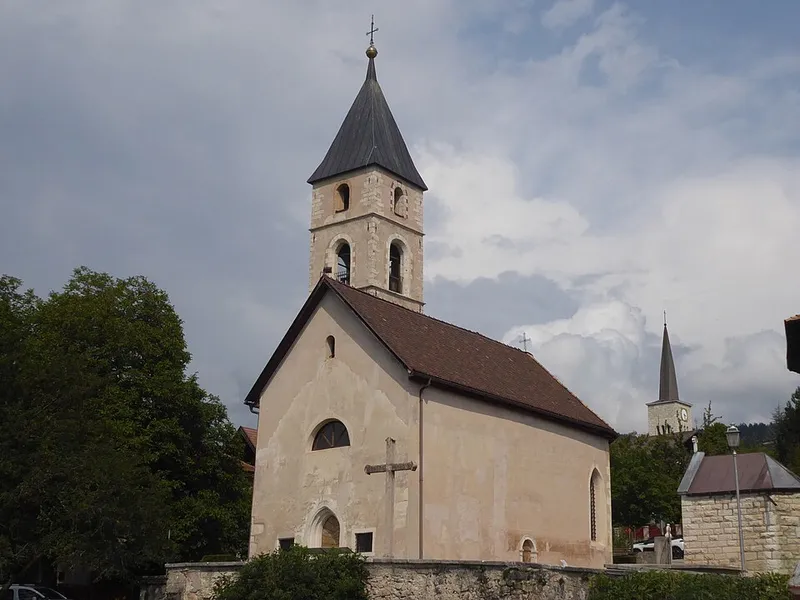
Syrio · CC BY-SA 4.0
Between the fourteenth and the nineteenth century it changed its patron saint four times.
Ronzone
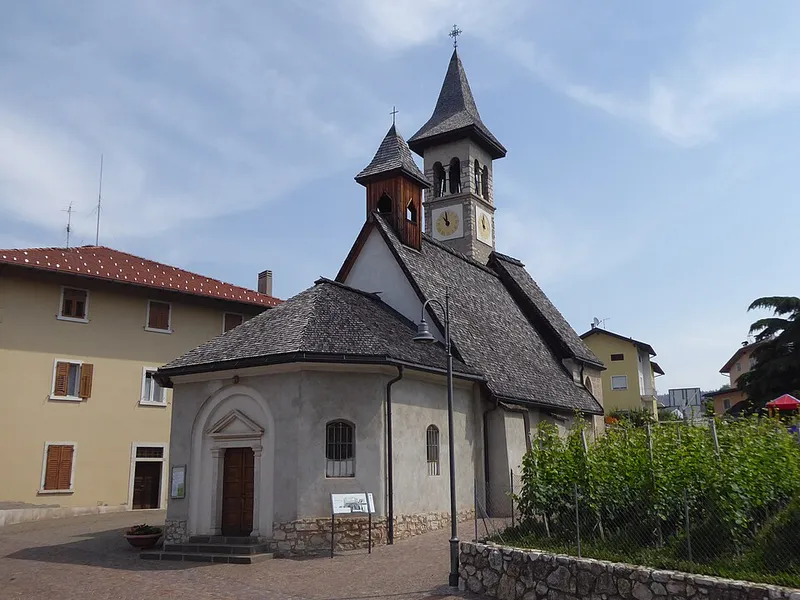
Syrio · CC BY-SA 4.0
The cemetery, too close by, filled it with damp, and it was the cemetery that was moved.
Sanzeno
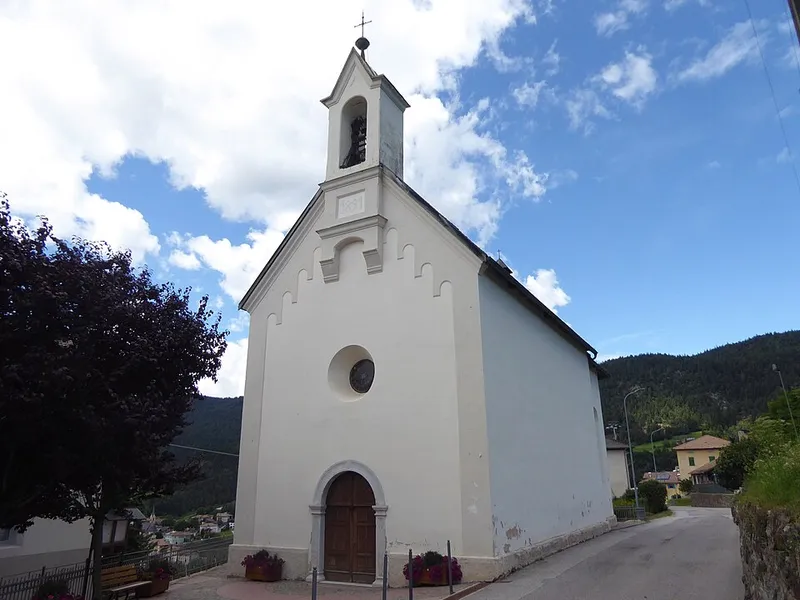
Syrio · CC BY-SA 4.0
In the 18th century, a hermit lived beside the church.
Borgo d'Anaunia
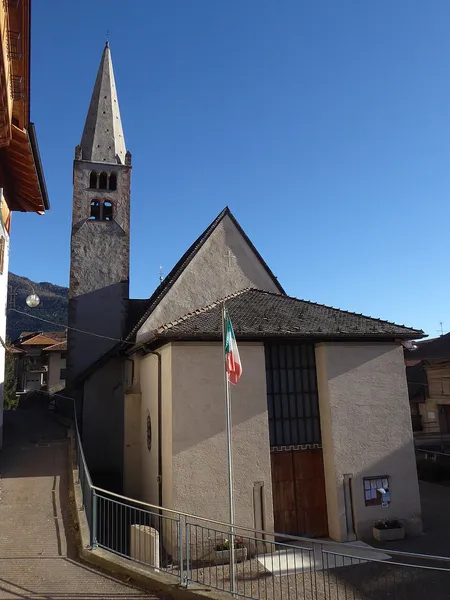
Syrio · CC BY-SA 4.0
The loggia in front of the façade is called glesiot here.
Livo
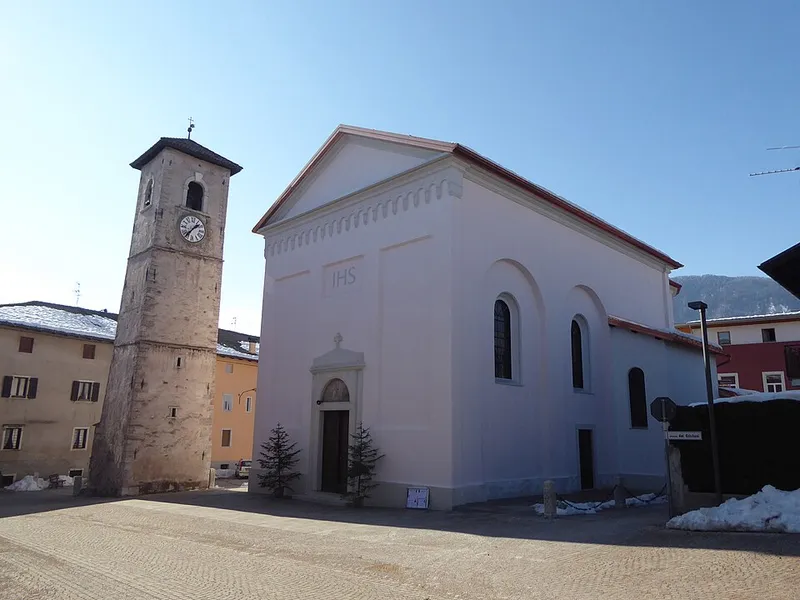
Syrio · CC BY-SA 4.0
Of the frescoes whitewashed in 1616, nothing more has been learned.
Ville d'Anaunia
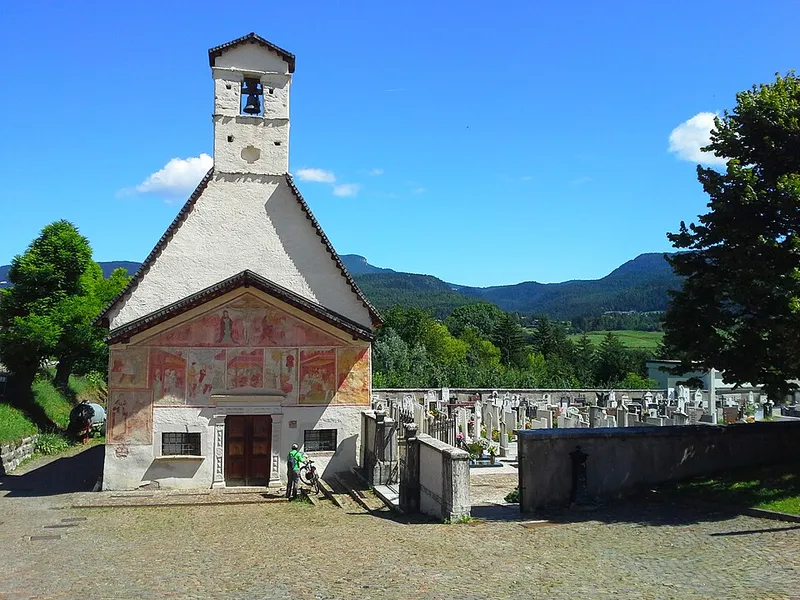
Diego Ceccato · CC BY-SA 4.0
The frescoes were not covered over by a bishop; they were ruined by a disinfection carried out against cholera.
Romeno
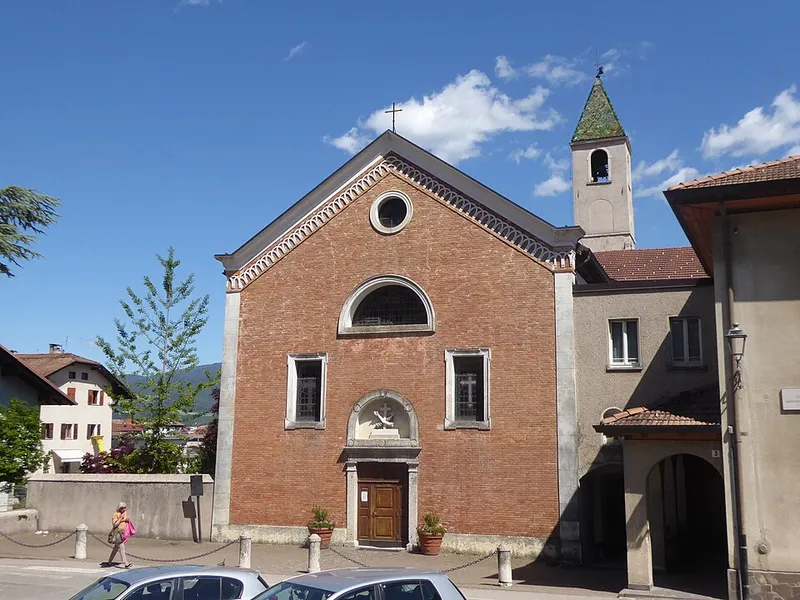
Syrio · CC BY-SA 4.0
It is the convent church that the two valleys paid for because of a vow.
Cles
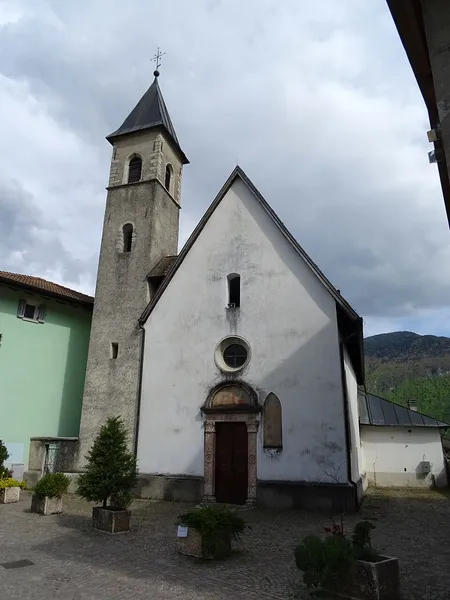
Syrio · CC BY-SA 4.0
The new name is probably linked to a local family.
Campodenno
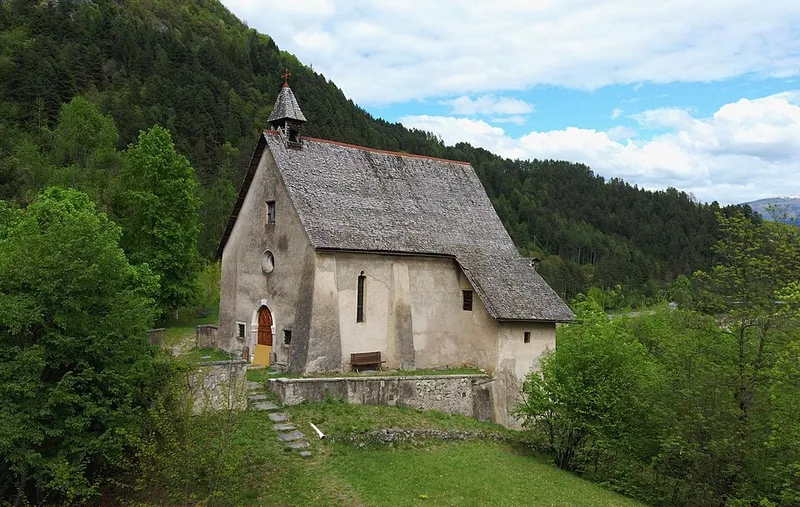
Syrio · CC BY-SA 4.0
Almost two hundred years as a hermitage at the mouth of the Val di Tovel.
Ville d'Anaunia
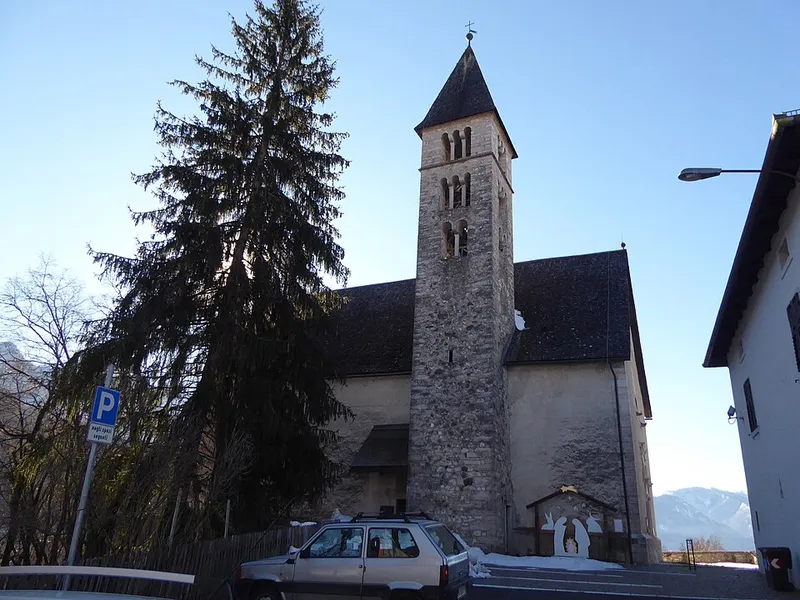
Syrio · CC BY-SA 4.0
The oldest part is the bell tower, and the cross on the roof bears the date the works were completed.
Predaia
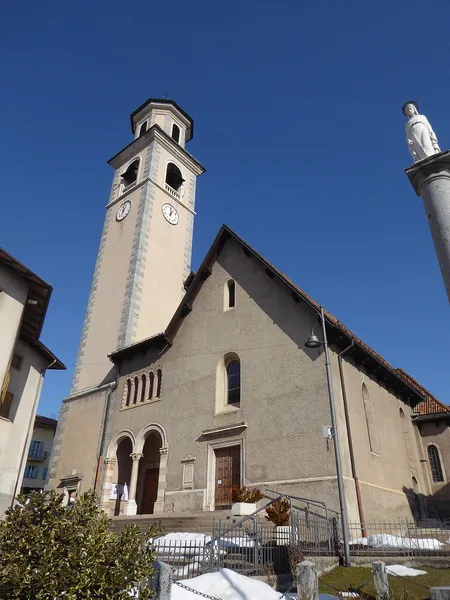
Syrio · CC BY-SA 4.0
The new church was built beside the old one, which was partly demolished.
Ville d'Anaunia
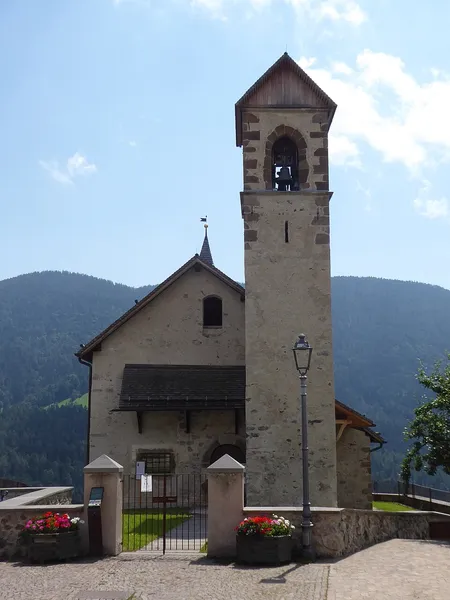
Syrio · CC BY-SA 4.0
Giovanni and Battista Baschenis frescoed it in 1471, inside and out.
Rumo
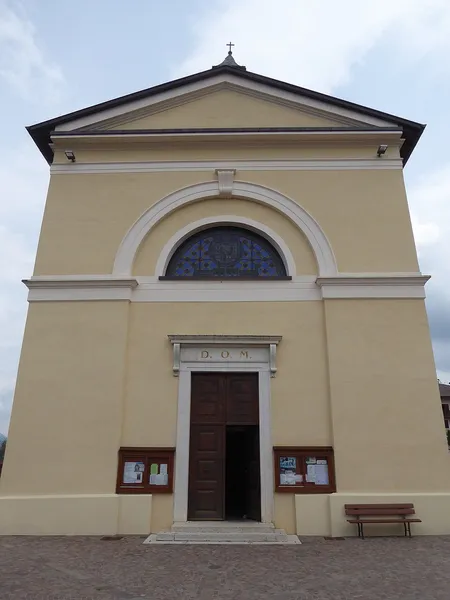
Syrio · CC BY-SA 4.0
The old church, half demolished, became the cemetery chapel.
Amblar-Don
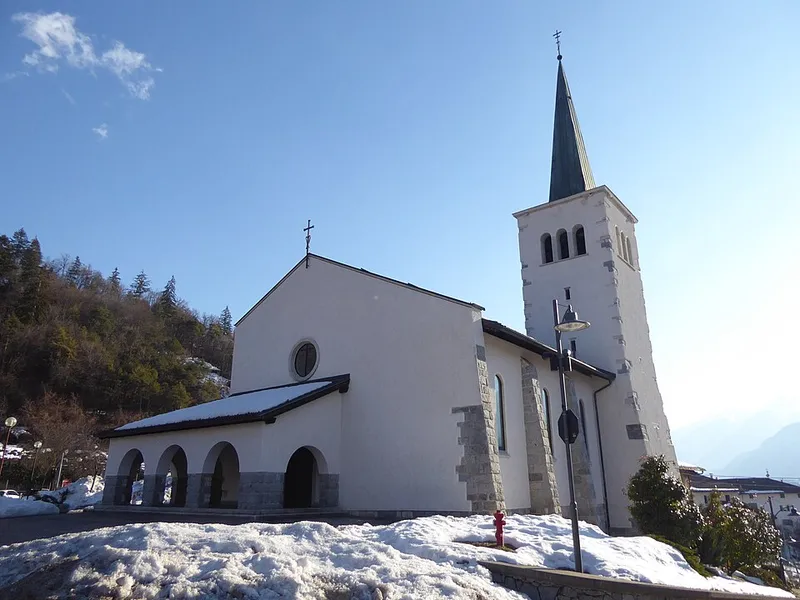
Syrio · CC BY-SA 4.0
It is the church that in 1954 took the place of the Santi Filippo e Giacomo.
Predaia
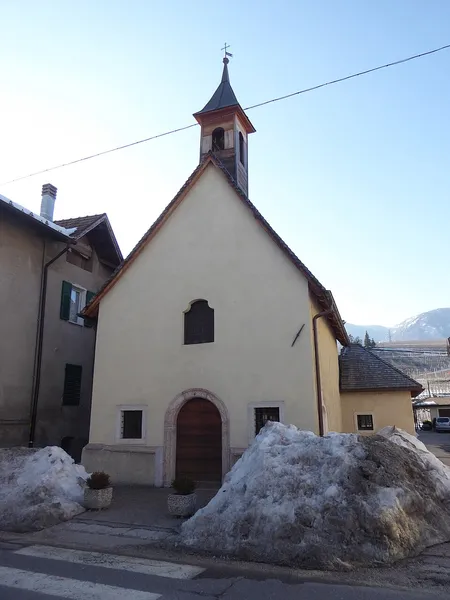
Syrio · CC BY-SA 4.0
Mentioned from 1448, and touched up in the 17th century.
Ville d'Anaunia
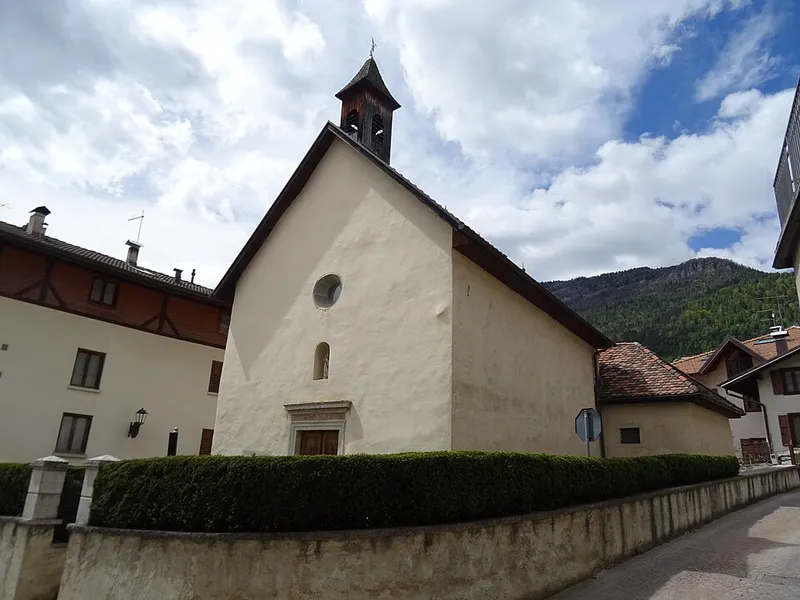
Syrio · CC BY-SA 4.0
The bell tower is a small wooden turret set on the roof.
Cles
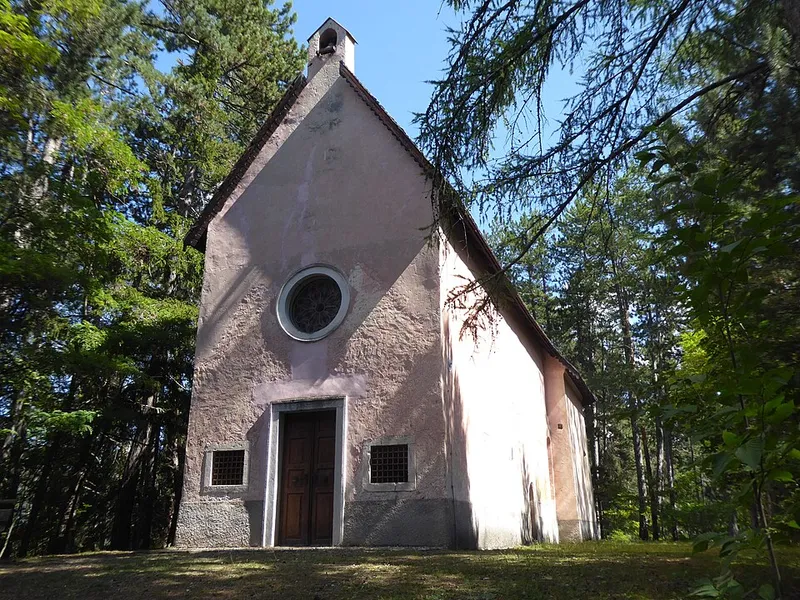
Syrio · CC BY-SA 4.0
Built on the ruins of a castle of Mainardo II of Tyrol.
Borgo d'Anaunia
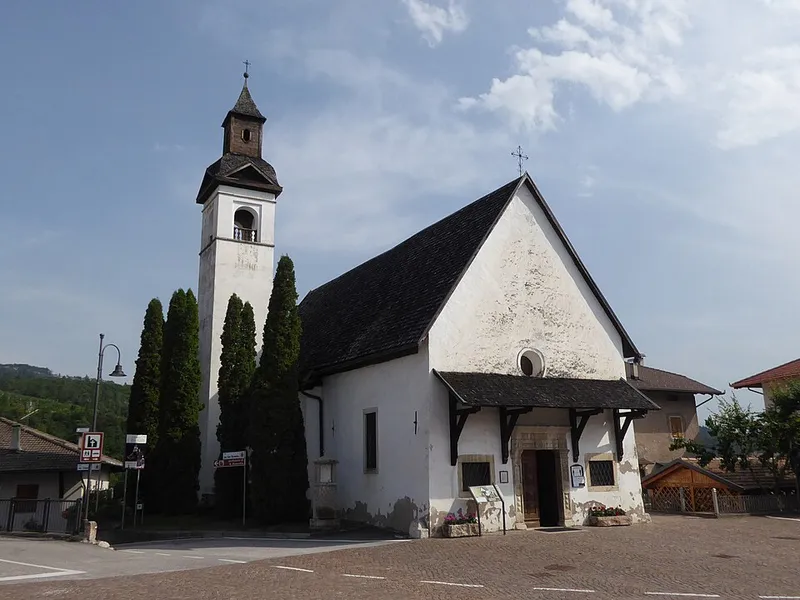
Syrio · CC BY-SA 4.0
In 1236 a bull of Gregory IX took it under papal protection.
Sanzeno
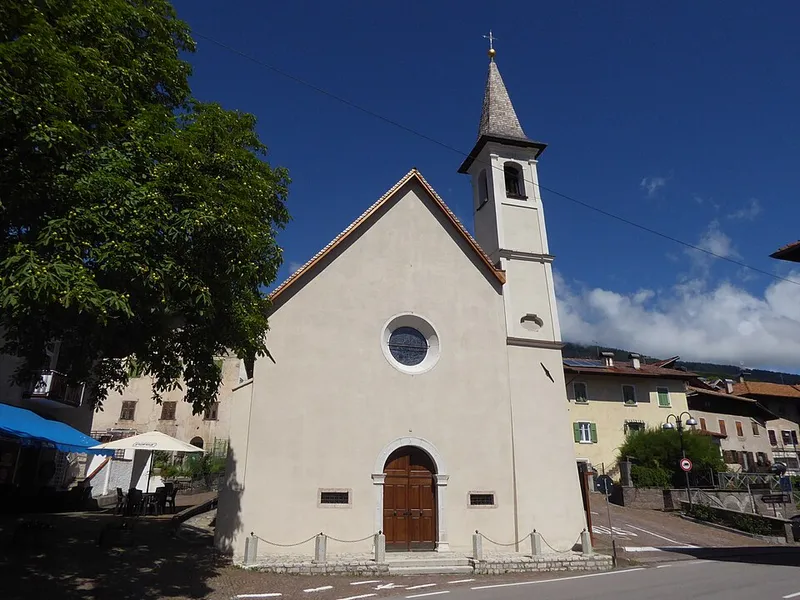
Syrio · CC BY-SA 4.0
In Cloz the two districts are also called by the names of their churches.
Novella
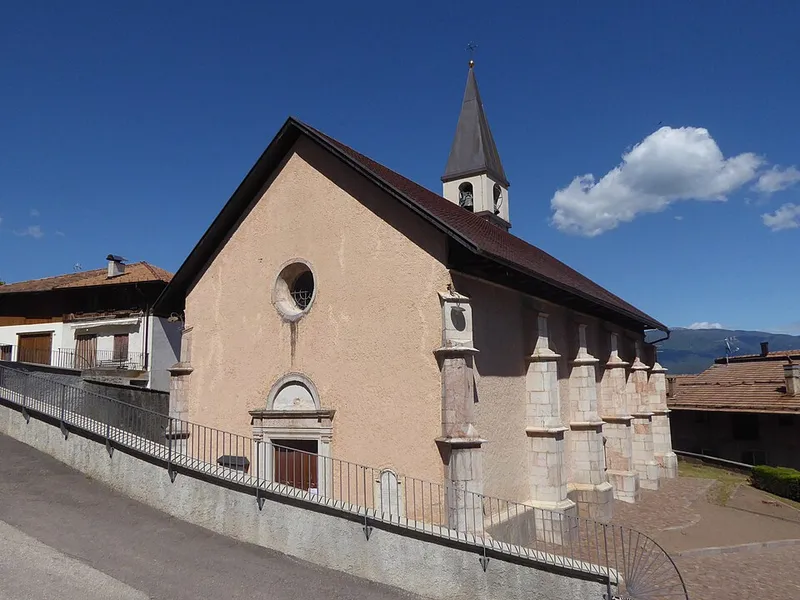
Syrio · CC BY-SA 4.0
Its first trace lay in a parchment from Castel Bragher.
Cles
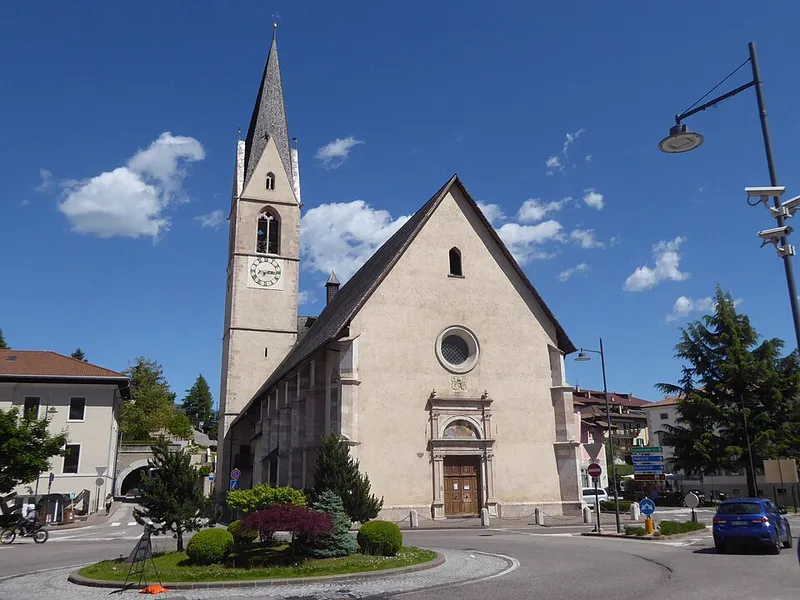
Syrio · CC BY-SA 4.0
Remains dating to at least the 4th century BC have emerged beneath the floor.
Cles
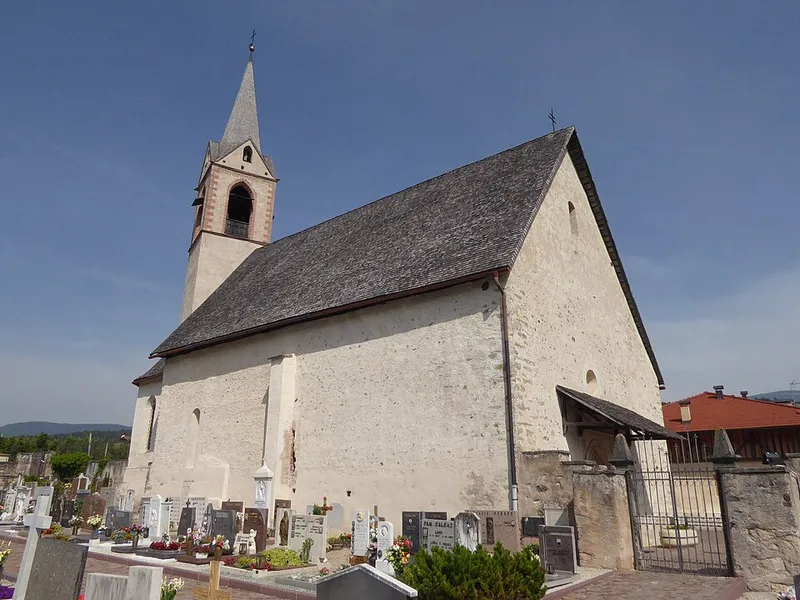
Syrio · CC BY-SA 4.0
More than four centuries pass between the first building and the bell tower.
Dambel
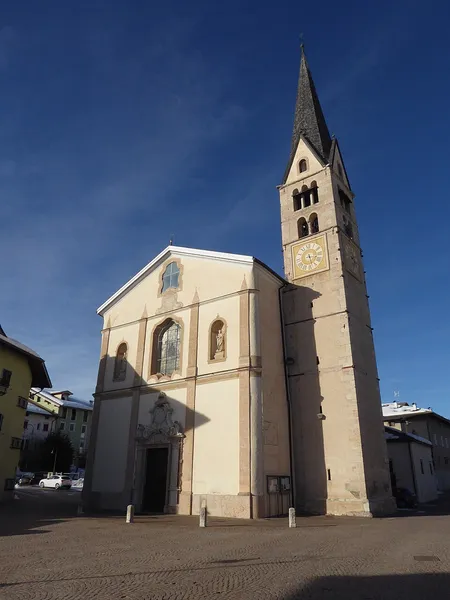
Syrio · CC BY-SA 4.0
Three fires in four and a half centuries, and each time it was put back on its feet.
Predaia
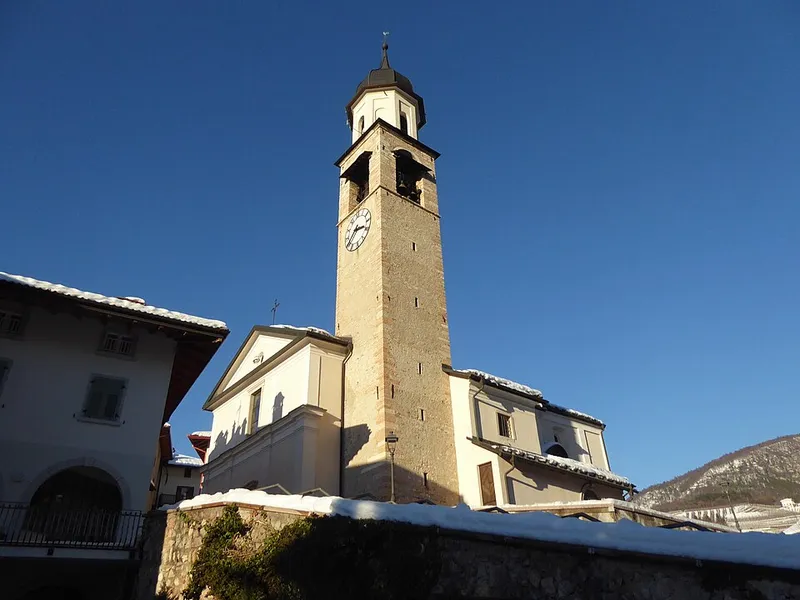
Syrio · CC BY-SA 4.0
Dardine refused to pay the tax for the restoration work.
Ton
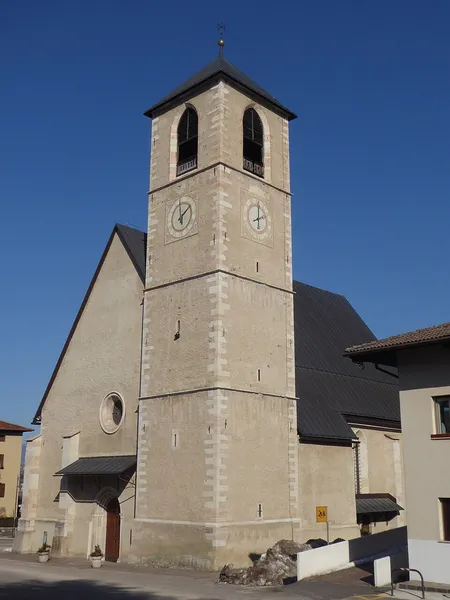
Syrio · CC BY-SA 4.0
Rebuilt in the sixteenth century on the model of the parish church of Cles.
Ville d'Anaunia
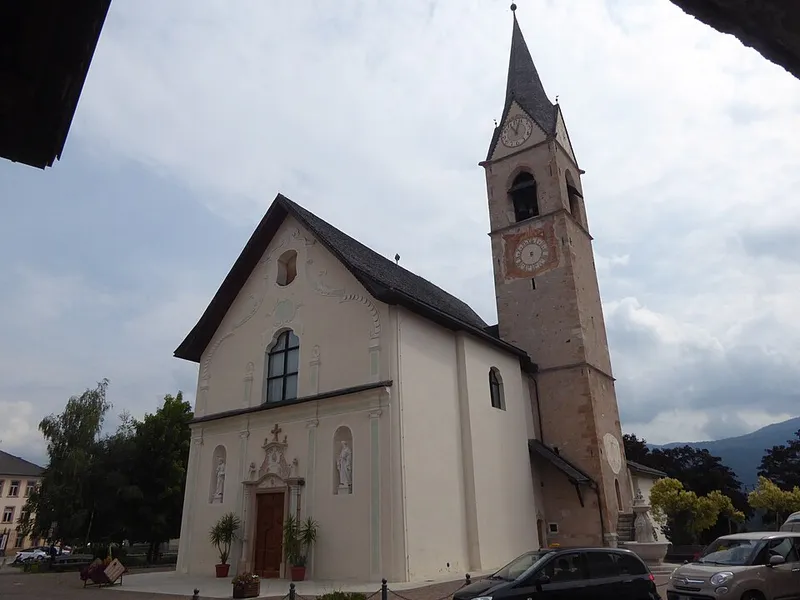
Syrio · CC BY-SA 4.0
The side altars come from a Dominican convent suppressed in Bolzano.
Romeno
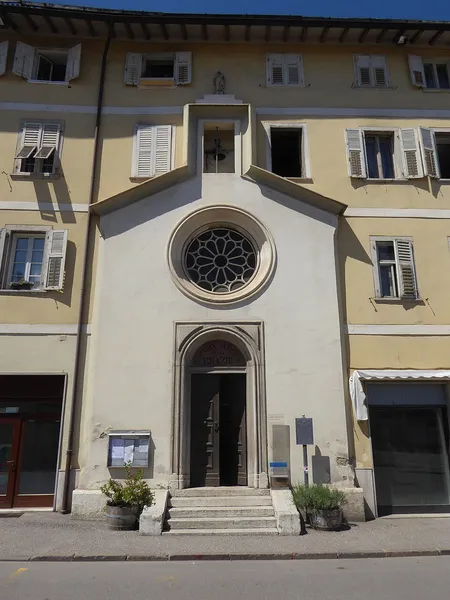
Syrio · CC BY-SA 4.0
In 1851 a hotel swallowed it up, and from the outside only the façade remains.
Cles
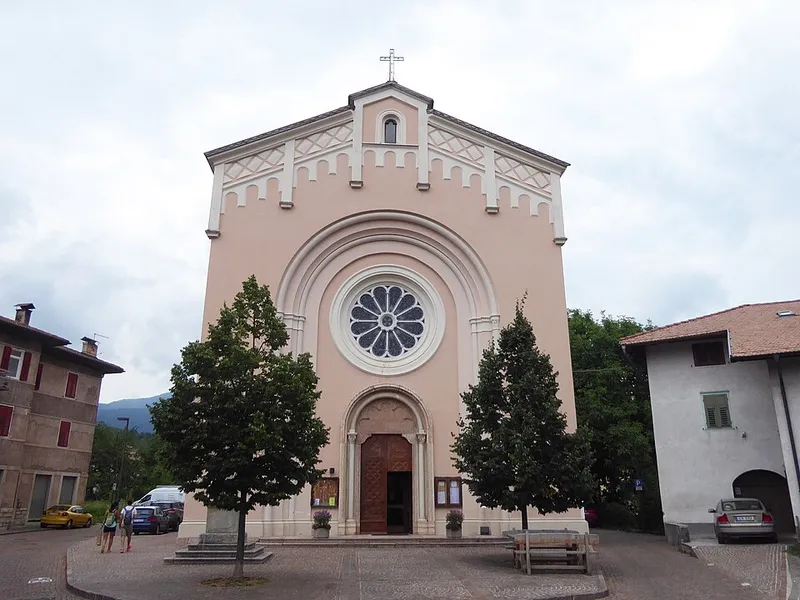
Syrio · CC BY-SA 4.0
The old parish church still stands at the other end of the square.
Cavareno
Born of a vow made on setting out for the crusade of 1241.
Contà
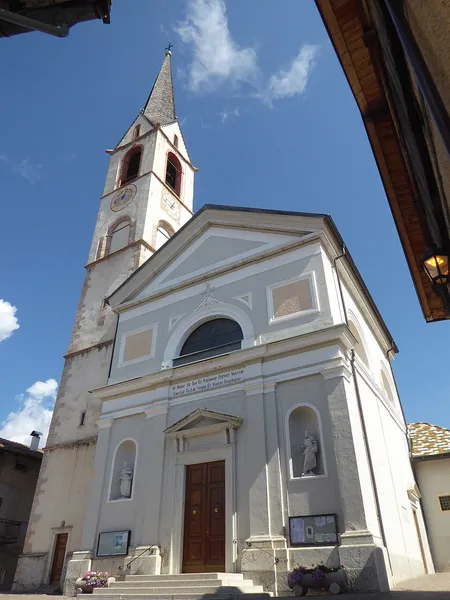
Syrio · CC BY-SA 4.0
It was still a chapel in 1538, and became a parish church only in 1919.
Borgo d'Anaunia
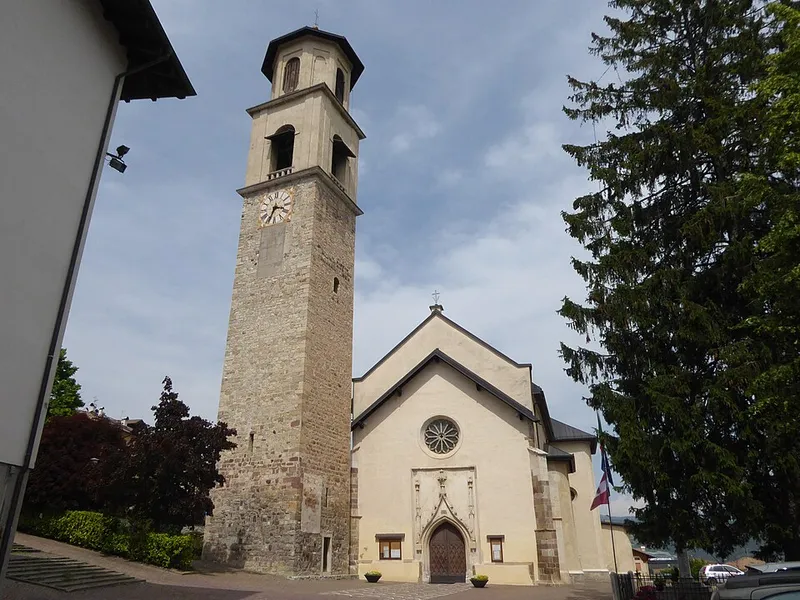
Syrio · CC BY-SA 4.0
The largest bell weighs twenty-nine quintals and is called Stefana.
Novella
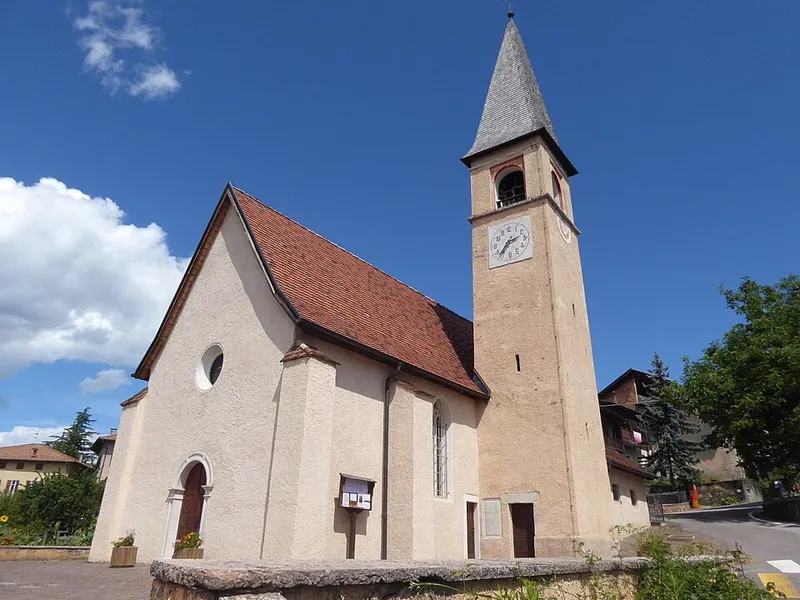
Syrio · CC BY-SA 4.0
It was consecrated in 1345 as the church of Santa Maria.
Romeno
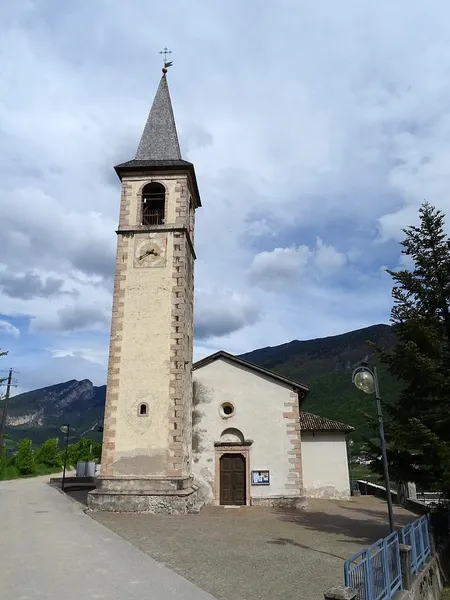
Syrio · CC BY-SA 4.0
An indulgence of 1478, requested by the lord of the castle.
Campodenno
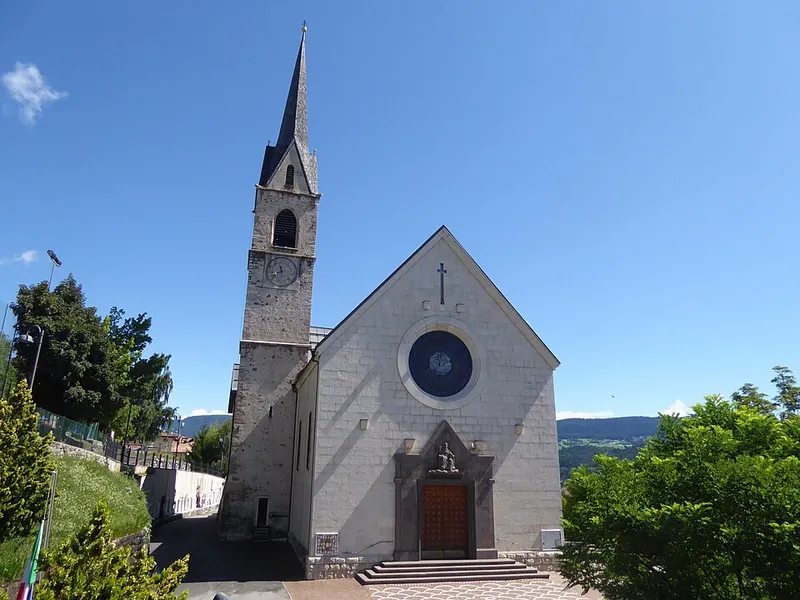
Syrio · CC BY-SA 4.0
A document of 1320 states that it already existed before 1106.
Novella
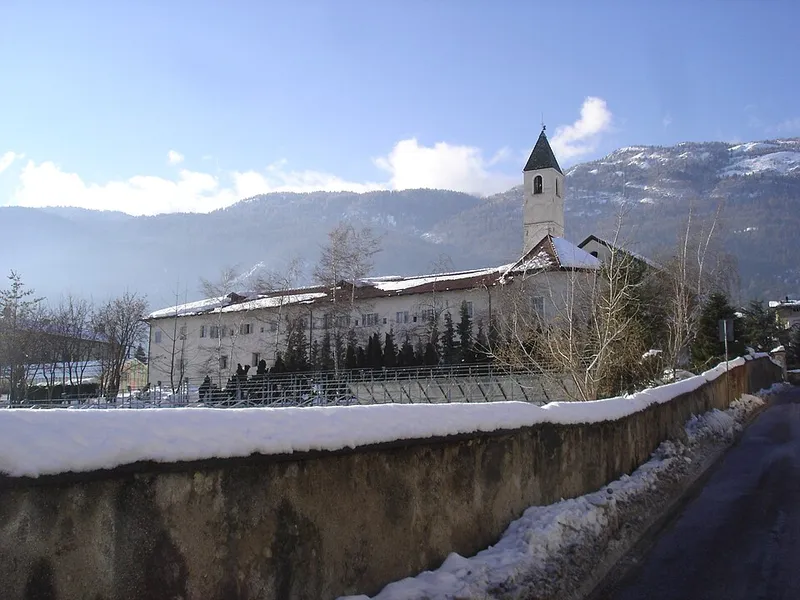
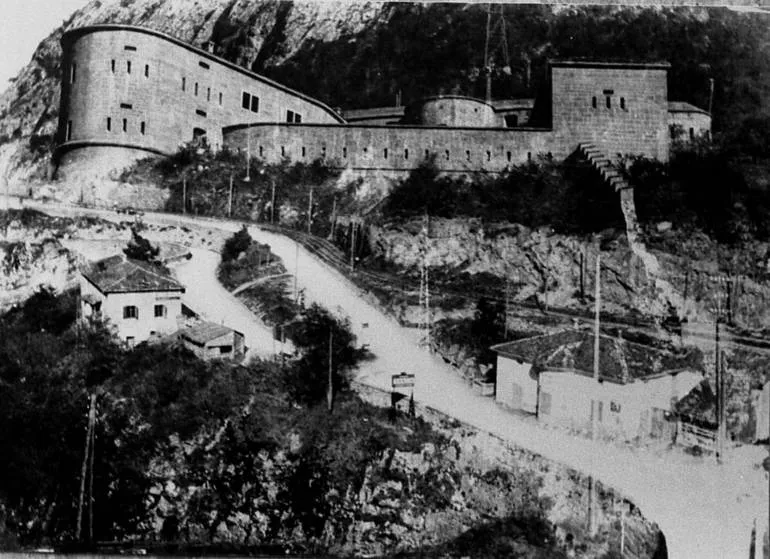
Cervogrigio at Italian Wikipedia · Public domain
It was paid for by the communities of the two valleys, to keep a vow.
Cles
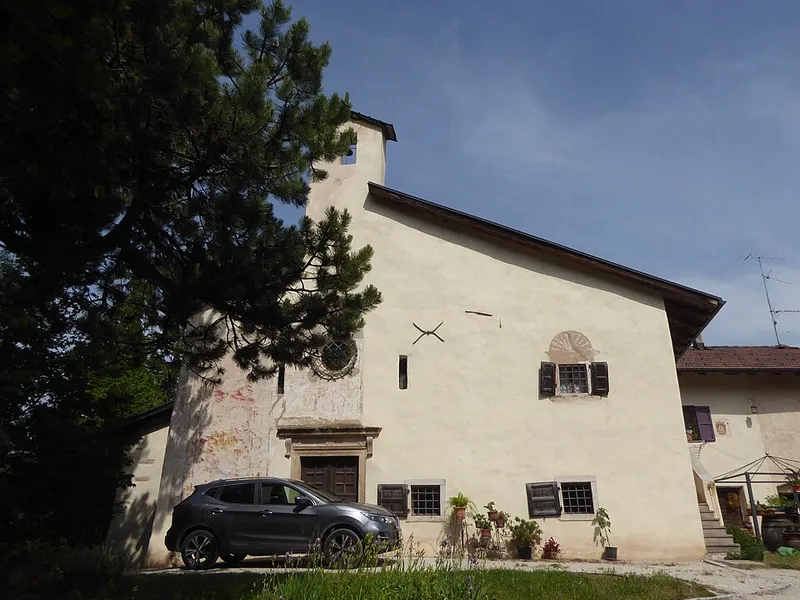
Syrio · CC BY-SA 4.0
A community dying out, counted in the documents.
Novella
The remains of the hermitage under an overhanging rock above Lake Santa Giustina, just below Cagnò
Novella
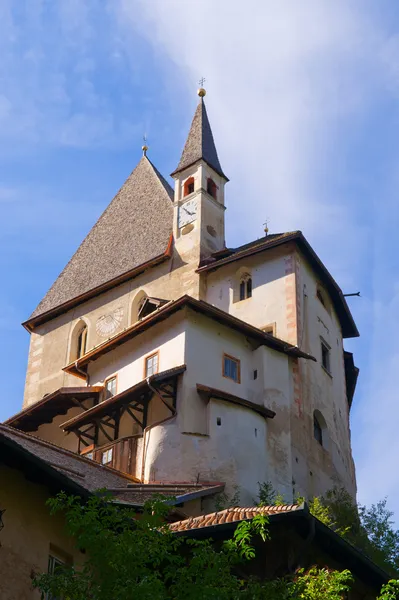
Gregorini Demetrio · CC BY-SA 3.0
Five churches balanced on the rock face, built over nine hundred years.
The late Renaissance palace of the De Maffei family in the heart of Revò, now owned by the Comune
Novella
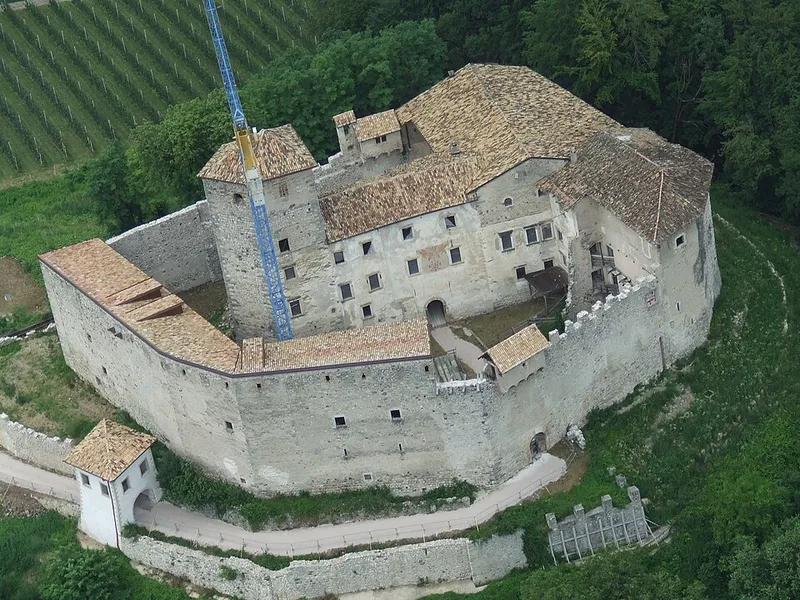
Terribile62 · CC0
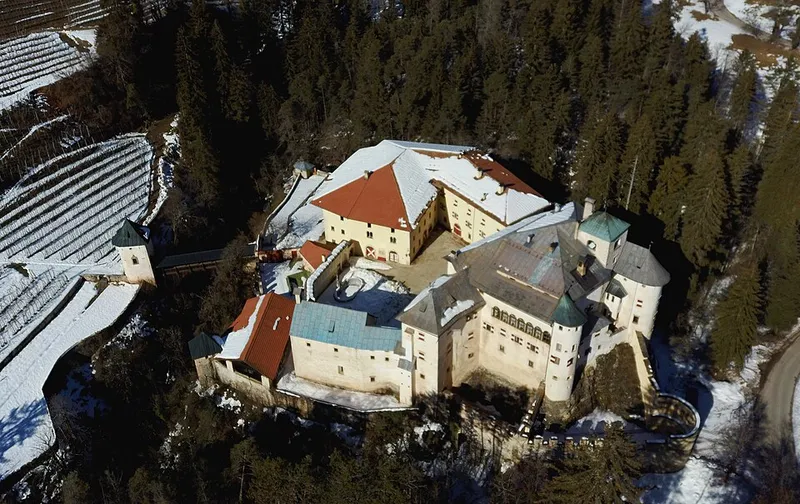
The fortress of the Khuen-Belasi, saved by the municipality and now a home for art and ecological thought.
Campodenno
Syrio · CC BY-SA 4.0
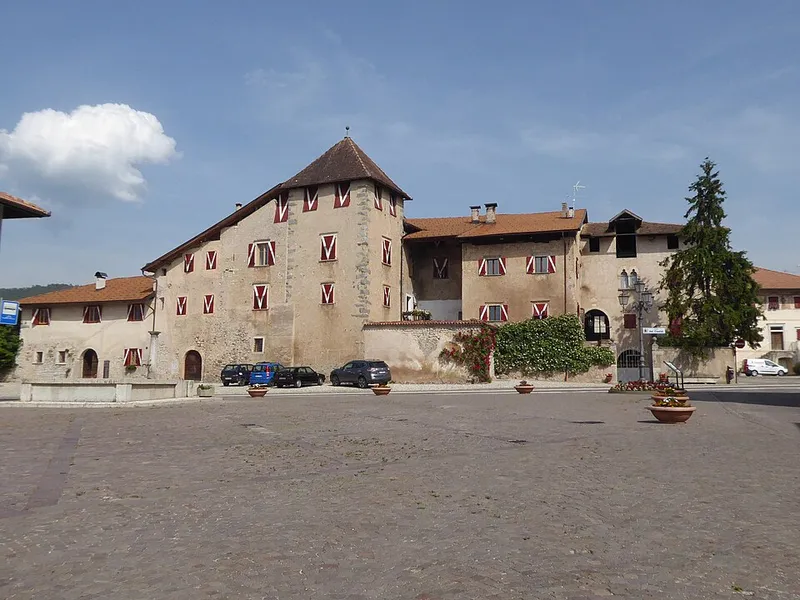
Seven centuries in the same family, on a spur between Coredo and Taio.
Predaia
Syrio · CC BY-SA 4.0
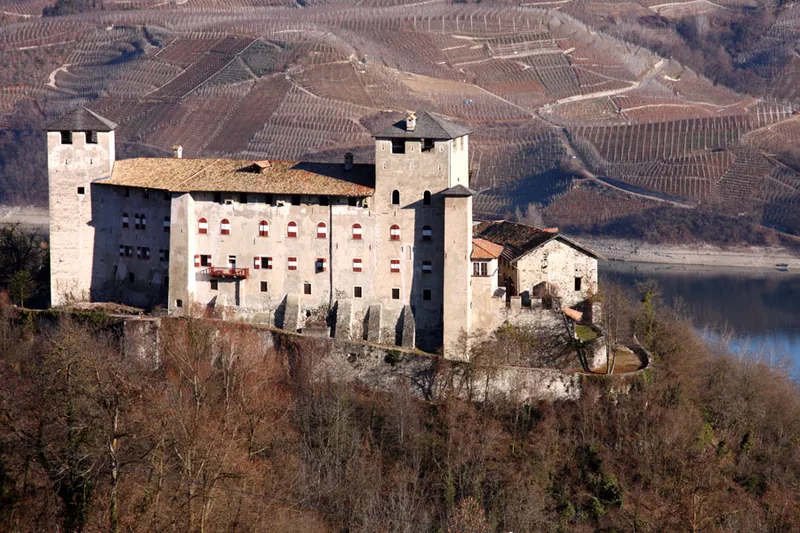
A thirteenth-century tower, the house of the Concini, and a nineteenth century that changed its face.
Sanzeno
Alessandro Vecchi · CC BY-SA 3.0
The house of the Cles family, rebuilt by Bernardo Clesio, reflected in Lake Santa Giustina.
Cles
Fam. Coreth · CC0
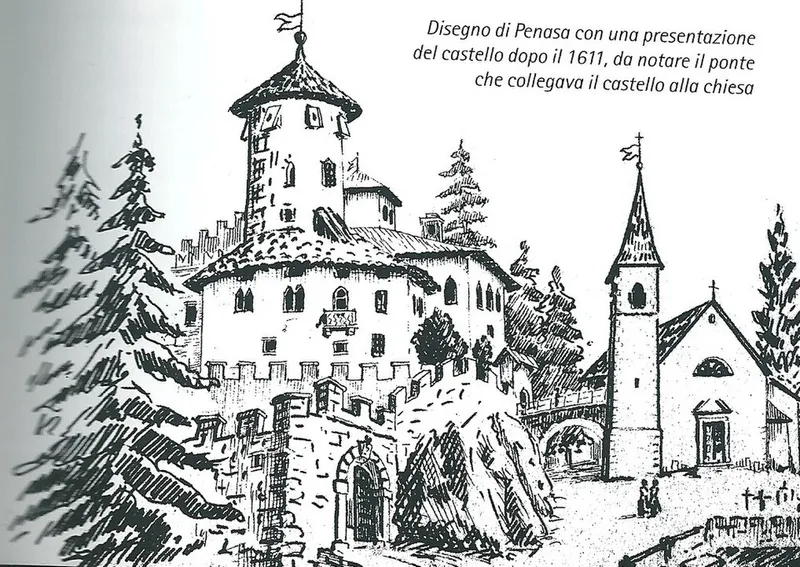
Burnt in 1611, rebuilt in 1726, reopened in 2019.
Predaia
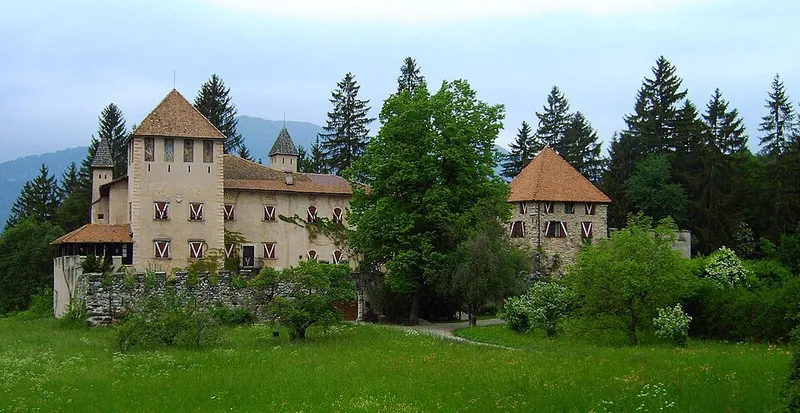
Käthe u. Bernd Limburg ( http://www.limburg-bernd.de ) · CC BY-SA 3.0 de
Half medieval fortress, half romantic residence.
Romeno
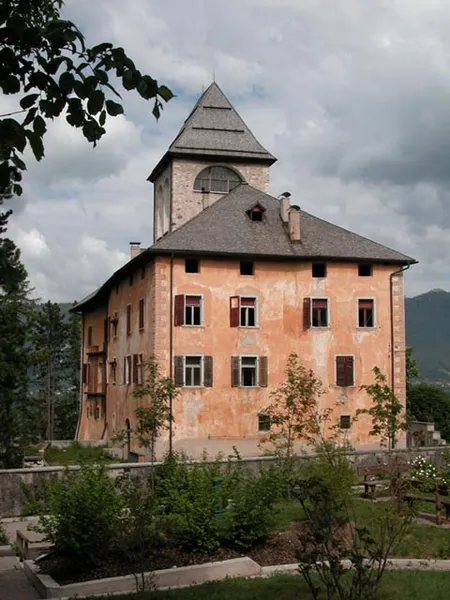
Mdanilo · Public domain
The castle of the lords of the rose, later a court of law, where Depero was born.
Borgo d'Anaunia
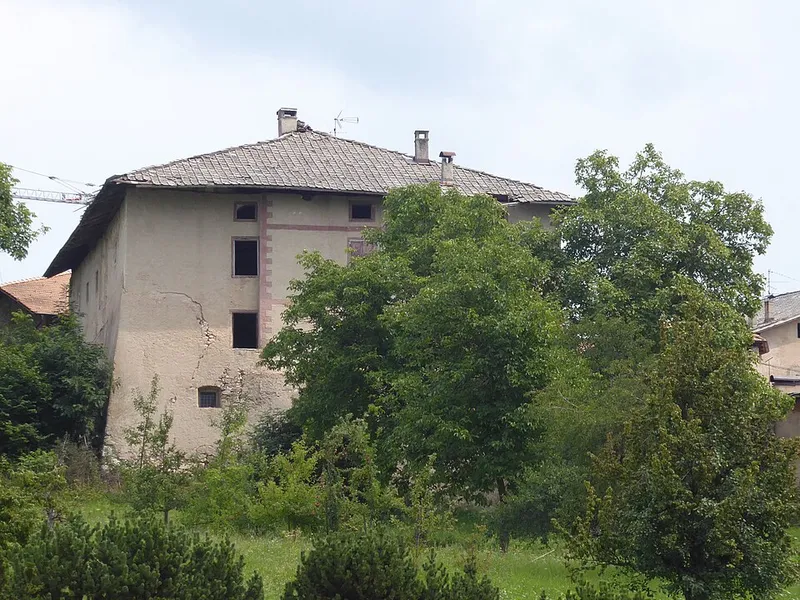
Syrio · CC BY-SA 4.0
The Mori became Morenberg, and the fortress became a home, then burned down.
Sarnonico
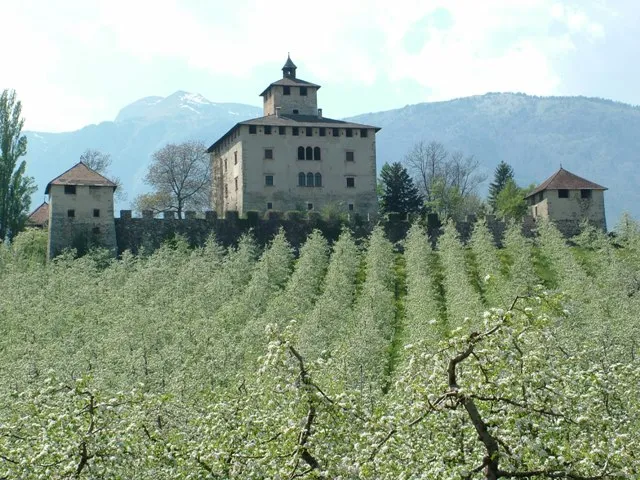
Christian Stringari · CC BY-SA 3.0
The house from which the Madruzzo family sprang, among the apple orchards of Nanno.
Ville d'Anaunia
Three palaces and a garden in 1380, a ruin in 1774, houses in the 1920s.
Rumo
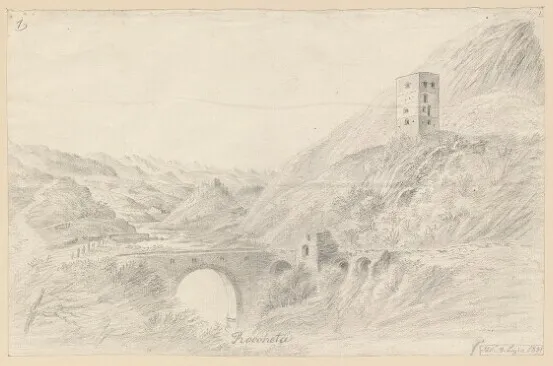
Johanna von Isser Großrubatscher · Public domain
It was demolished in 1860 to make way for the fort that can still be seen.
Ton
The ruins of the castle of the Sporo family above Sporminore, also known as Castel Sant'Anna
Sporminore
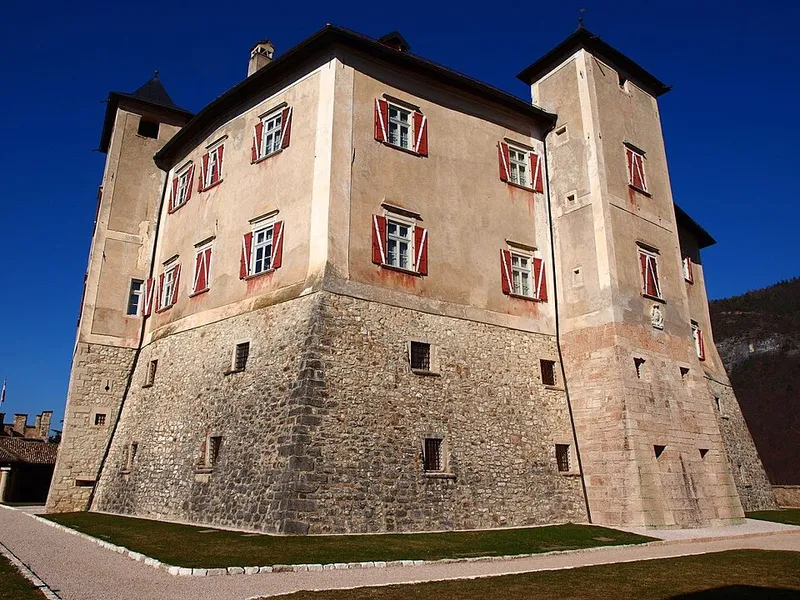
VitVit · CC BY-SA 4.0
Eighteen years of restoration to reopen the home of a European family.
Ton
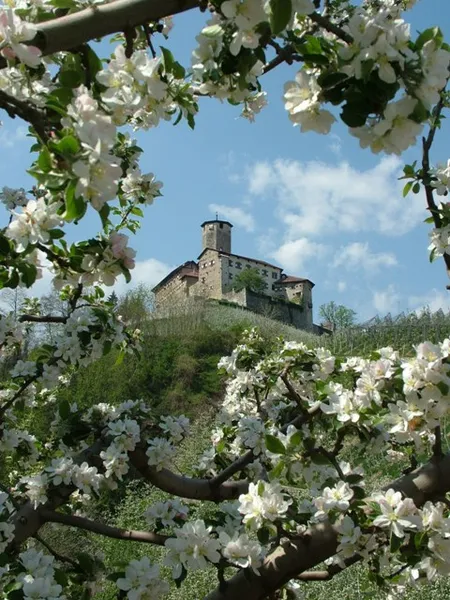
Christian Stringari · CC BY-SA 3.0
The octagonal keep, unique in the Alps, and the castle that Trento bought in 2023.
Ville d'Anaunia
The highest castle in Trentino, 1,280 metres above Baselga di Bresimo
Bresimo
The bridgehead with which the Tyrol took the Val di Non, later home to the Thun family for five centuries.
Borgo d'Anaunia
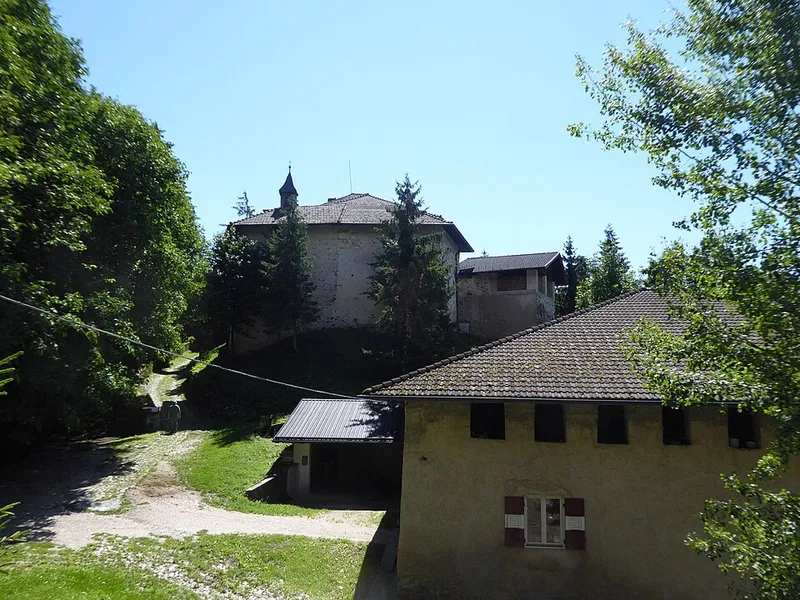
Syrio · CC BY-SA 4.0
The castle of the Arsio family, which faces Vasio across the gorge of the Novella.
Novella
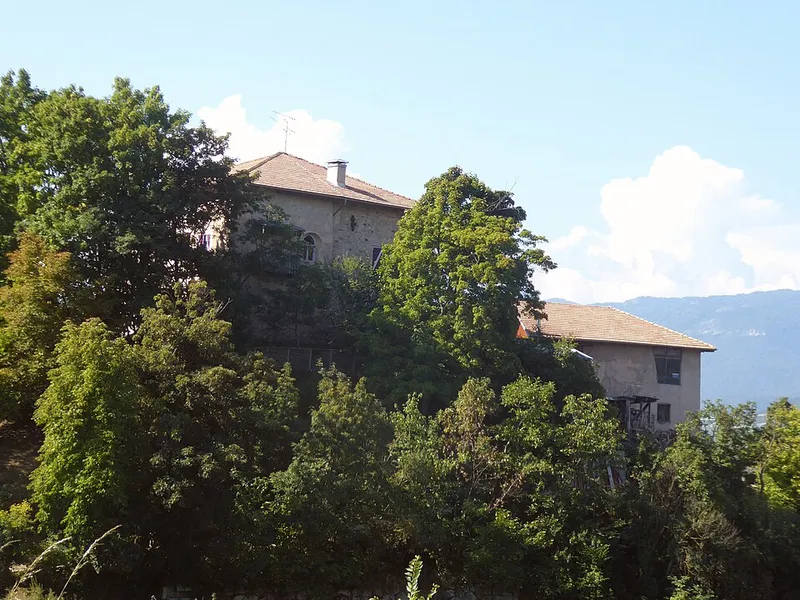
Syrio · CC BY-SA 4.0
On the gorge of the Novella, where an ancient road crossed the torrent.
Borgo d'Anaunia
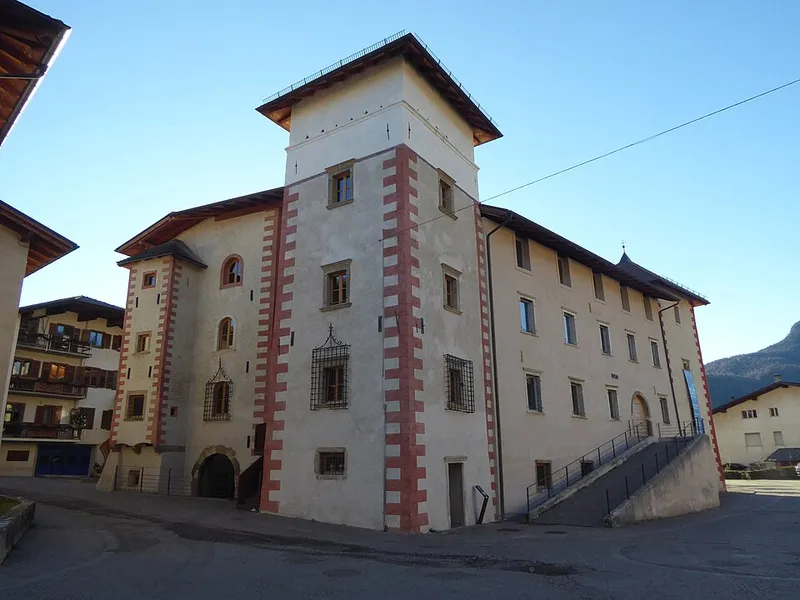
Syrio · CC BY-SA 4.0
The tower house of the Aliprandini, now Livo town hall, with the rose on its portal.
Livo
Bivouac at 2,102 metres below the summit of Monte Luco, on SAT path O133 «Aldo Bonacossa».
Bivouac at 1,846 metres in the locality of Manzar, in the mountains of Castelfondo, in the municipality of Borgo d'Anaunia.
Baita owned by the Comune di Ruffrè-Mendola at 1,390 metres, reached by a short detour from the "sentiero dei Signori".
At 2,790 metres below Cima Sassara, on the northern ridge of the Brenta, owned by the SAT since 1972.
Ville d'Anaunia
Bivouac at 1,850 metres in the municipality of Novella, near the Malga di Brez, above the Forcella di Brez.
SAT bivouac at 1,986 metres in the Val di Bresimo, in the Maddalene group, along path O115.
Malga owned by the Comune di Amblar-Don at 1,650 metres, at the foot of Monte Roen, already mentioned in 1771.
At 1,771 metres on Monte Roen: it bears the name of Romeno, but lies in the municipality of Amblar-Don.
Alpine refuge at 1,925 metres above Rumo, also known as Malga Val, renovated by the Comune di Rumo and inaugurated in 2009.
At 2,022 metres between the Val di Non and the Val di Sole, owned by the SAT of Cles.
At 1,397 metres on the Predaia plateau, a hikers' refuge born in the post-war years for those who climbed up to make hay.
Hiking refuge at 1,203 metres on the Predaia plateau, with an adventure park among the trees.
Ten hectares of peat bog protected since 1992.
Novella
Four hectares protected since 1992, in the upper Val di Non.
Novella
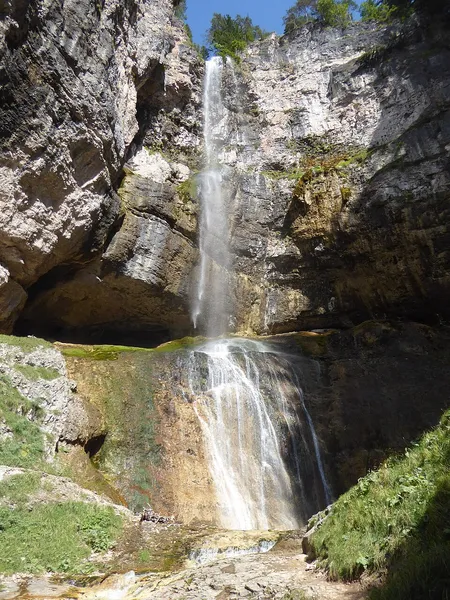
Syrio · CC BY-SA 4.0
Just outside Tret, a hamlet of Borgo d'Anaunia in the upper Val di Non, close to the border with Alto Adige.
Borgo d'Anaunia
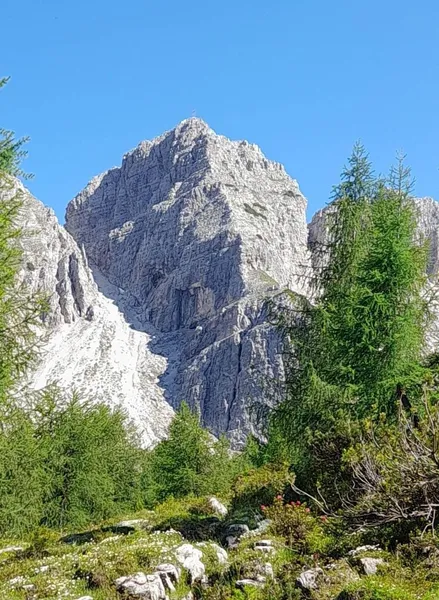
Orsodelbrenta · CC0
On the summit stands a metal cross more than nine metres tall.
Campodenno
The little lake of Coredo among the meadows and woods of the Predaia plateau, next to Lake Tavon
Predaia
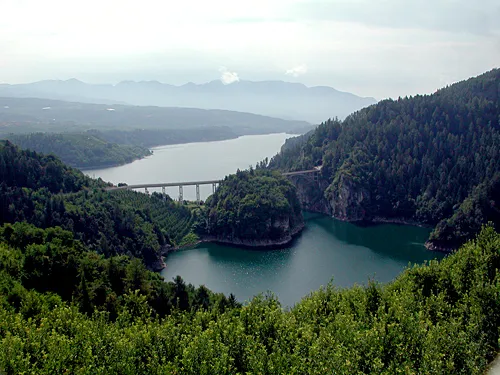
Mosco · CC BY-SA 3.0
When the water drops, the bridges that the lake submerged come back to the surface.
Sanzeno
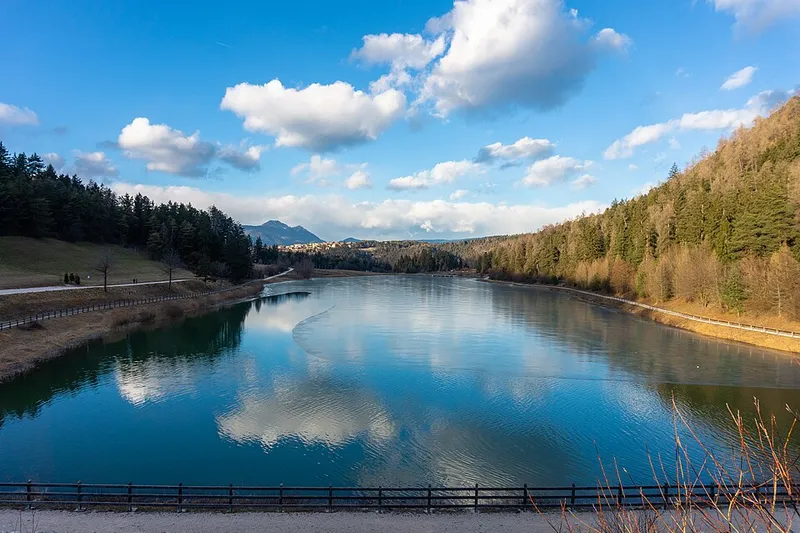
Marco Ober · CC BY-SA 4.0
Artificial lake for irrigation at 868 metres, near Tavon and Coredo, in the municipality of Predaia.
Predaia
The alpine lake at the head of the val di Tovel, at 1,177 metres, within the Parco naturale Adamello Brenta
Ville d'Anaunia
The artificial lake at Fondo, at 1001 metres, green like its name among the woods of the upper Val di Non
Borgo d'Anaunia
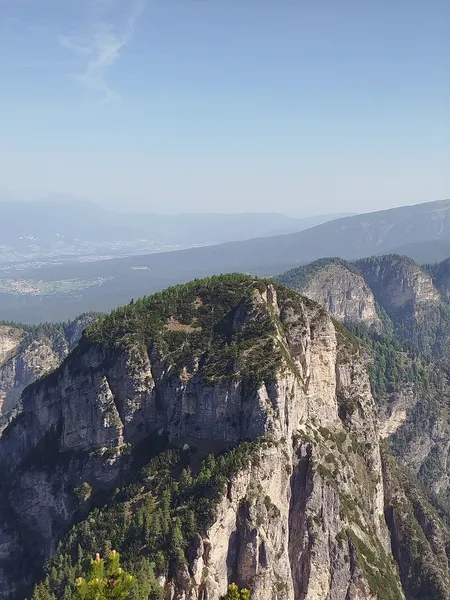
Mosis99 · CC BY-SA 3.0
A protected route to the summit, above two valleys.
Ton
Its two pistes are floodlit, and you can ski here at night too.
Ruffré-Mendola
The park of Alpine animals on the Paganella plateau: the bear above all
Spormaggiore
In a vòlto of a house in Mione, objects from the past with their names in dialect beside them.
Rumo
The rural life of the upper Anaunia, from the woods to the school, in a village above Fondo.
Ronzone
At Casa Marta, the costumes left in Coredo by the groups taking part in the Festival internazionale del folclore.
Predaia
Hand pumps from 1898, helmets and uniforms: the history of the volunteer firefighters of Taio.
Predaia
More from above
Val di Non
140 recorded routes covering 709 kilometres, including 6 vie ferrate, plus the 2 provincial cycle routes that cross it.
Provincial register of trails. © SAT.
From the Province’s open data: 21 bodies of water with a name and altitude (7 artificial); the main watercourses: Torrente Noce, Torrente Tresenica, Torrente Novella; 41 protected areas, including a park.
The lakes of Val di NonProtected areas
Registers of the Autonomous Province of Trento: waters in the public domain, protected areas CC BY 4.0.
Every place has its own page, with its entry, the photo with its author and the verified facts. Places without an entry still have a position and sources: the story is written one at a time.