
Churches and sanctuaries · Sarnonico · Val di Non
Chiesa di San Giorgio
Rebuilt twice in two centuries, and consecrated in 1558 like the others here.
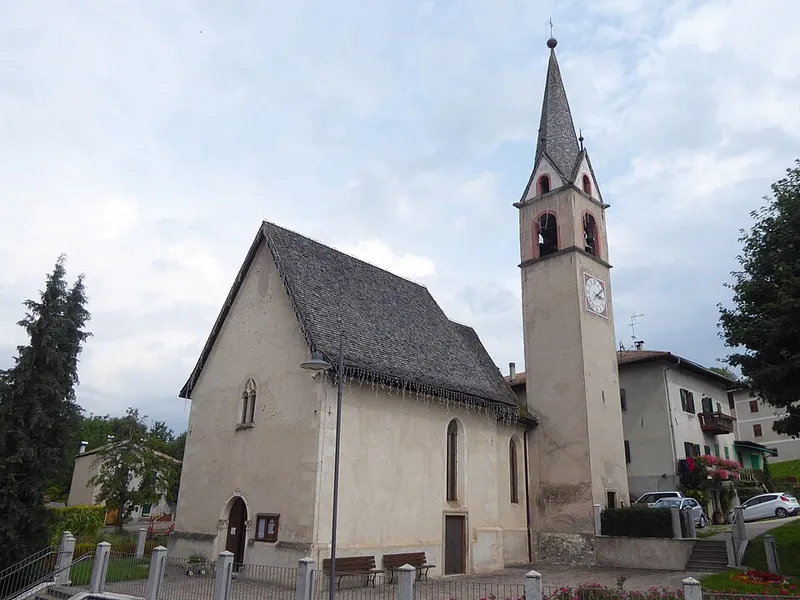

The church of Seio was built in its first form probably in the fourteenth century, or perhaps in the previous century, given that it was almost certainly rebuilt around 1390. In the second half of the sixteenth century it was remade again, taking on the general appearance it has today, and the consecration dates from 1558, celebrated by the suffragan bishop Mariano Manno: the same year and the same bishop as the church of the Beata Maria Vergine, not far away.
The bell tower was built in 1773 and restored about a century later. In the twentieth century there followed various works, starting in 1911, when the masonry was reinforced, the floor was relaid and the large windows were replaced.
From 1985 to 2013 the most recent cycle of works took place, which redid the roofing, damp-proofed the foundations against moisture seepage and brought the systems up to standard.
- Rebuilt
- around 1390
- Consecrated
- 1558
- Bell tower
- 1773
- Dedicated to
- Saint George
- Protection
- Italian cultural heritage