
Castles and residences · Ton · Val di Non
Castel Thun
Eighteen years of restoration to reopen the home of a European family.
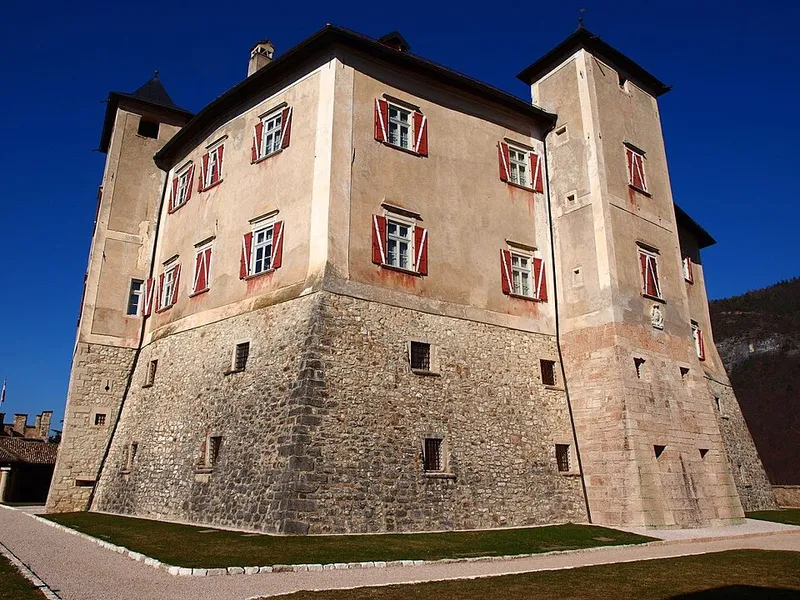

It stands at the top of the hill above Vigo di Ton, in a panoramic position over the whole of the Val di Non, and is among the best preserved medieval complexes in Trentino. It was originally called Castel Belvesino, after the name of the knoll on which it had been built; it later took the name of the family that held it, the Tono, who Germanized their surname into Thun.
The Thun came into possession of it through an investiture by the prince-bishops of Trento in 1267 and established their seat there around the middle of the thirteenth century. From there they extended their domains over a large part of the valleys of the Noce, incorporating castles and jurisdictions, and split into many branches: one took root in Bohemia and in 1629 obtained for the whole house the predicate of Thun-Hohenstein and the title of counts of the empire. The castle suffered several fires, and in the one of 1569 Sigismondo Thun, imperial orator at the Council of Trent, died.
Its present appearance, with towers, walls, bastions and moat, comes from the alterations of the sixteenth and seventeenth centuries. The Porta Spagnola, in Moorish style, dates from 1566; through it one reaches the drawbridge and the first courtyard: it is said that Giorgio Thun wanted it this way after a journey to Spain. The most famous room is the seventeenth-century Stanza del Vescovo, entirely lined with Swiss stone pine wood, with a coffered ceiling and a majolica stove.
The Thun lived in the castle until 1982, the year of the death of Count Zdenko Franz Thun Hohenstein. After eighteen years of restoration work it has been open to visitors since 17 April 2010.
- To the Thun
- since 1267
- Open to the public
- since 17 April 2010
- Restoration
- 18 years