Syrio · CC BY-SA 4.0
Chiesa dei Santi Fabiano e Sebastiano
It burned down twice in forty years, the first time along with the whole village.
Vermiglio
This page was translated automatically and we are reviewing it. Read the original in Italian
 Valli del Noce
Val di Sole
The valleys
La valle del Noce fra il Parco Nazionale dello Stelvio e le Dolomiti di Brenta.
86 places listed, 86 of them with a written entry
Municipalities: Caldes, Cavizzana, Commezzadura, Croviana, Dimaro Folgarida, Malé, Mezzana, Ossana, Pellizzano, Terzolas, Vermiglio

From above
Val di Sole
Syrio · CC BY-SA 4.0
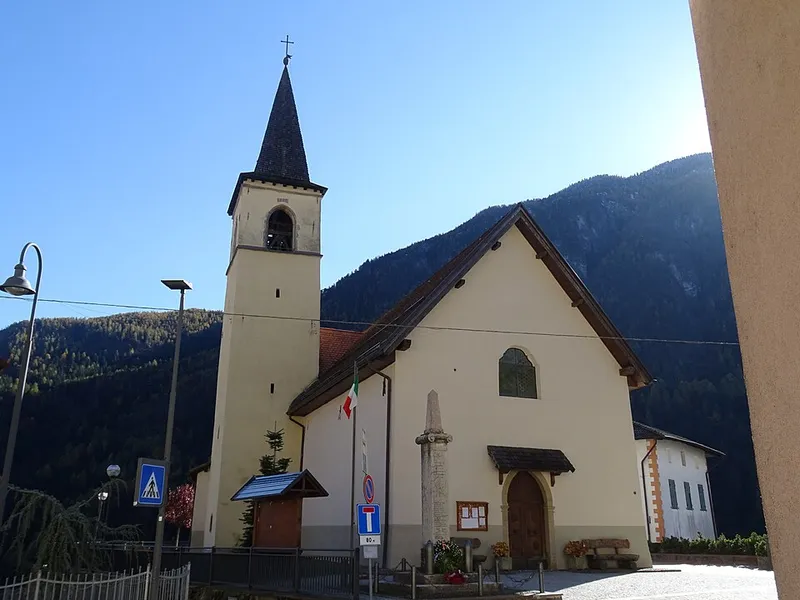
It burned down twice in forty years, the first time along with the whole village.
Vermiglio
Syrio · CC BY-SA 4.0
The date of the rebuilding is written above the window of the bell tower.
Caldes
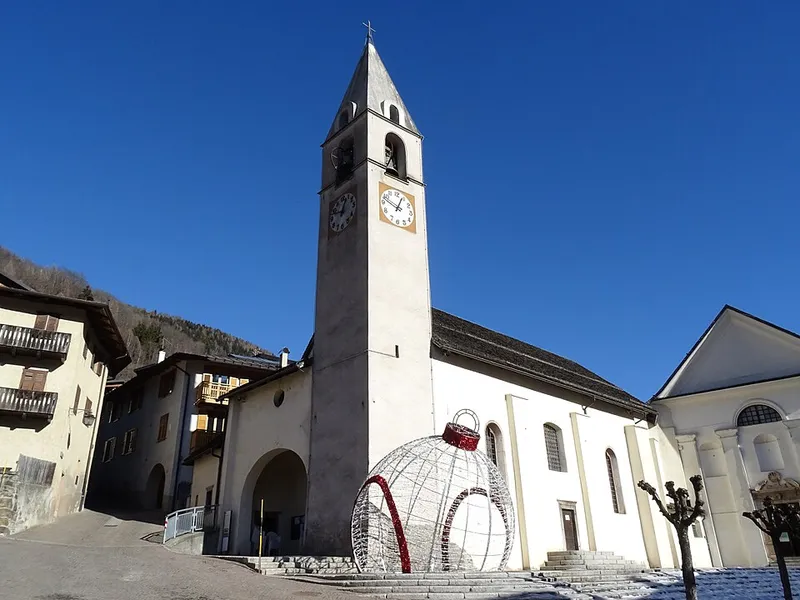
Syrio · CC BY-SA 4.0
The Gothic vaults of 1536 were raised by Lombard craftsmen.
Mezzana
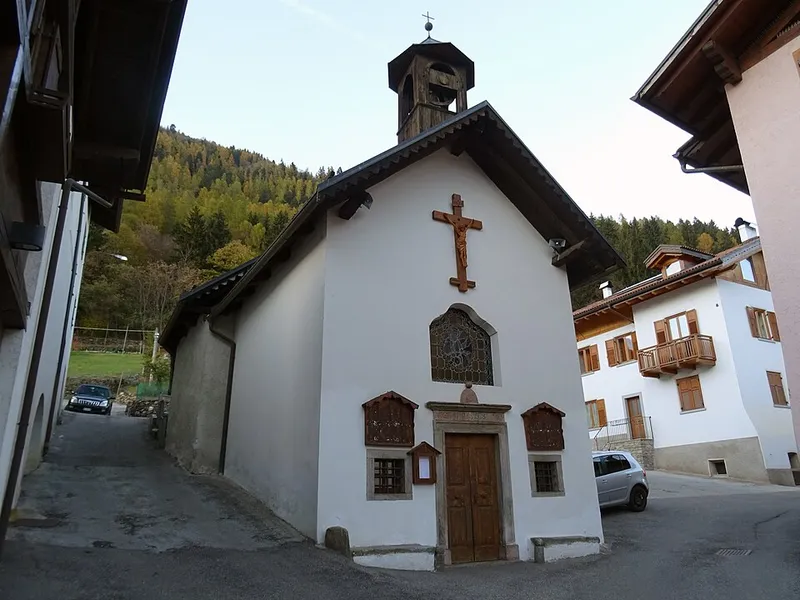
Syrio · CC BY-SA 4.0
The date of its construction is unknown, but not that of its consecration: 1628.
Malé
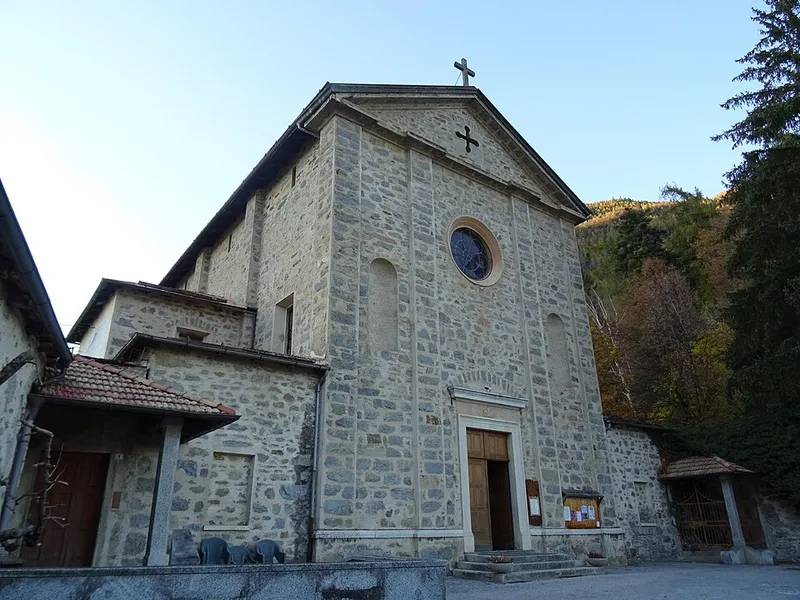
Syrio · CC BY-SA 4.0
It came into being together with the Capuchin convent, in the 1890s.
Terzolas
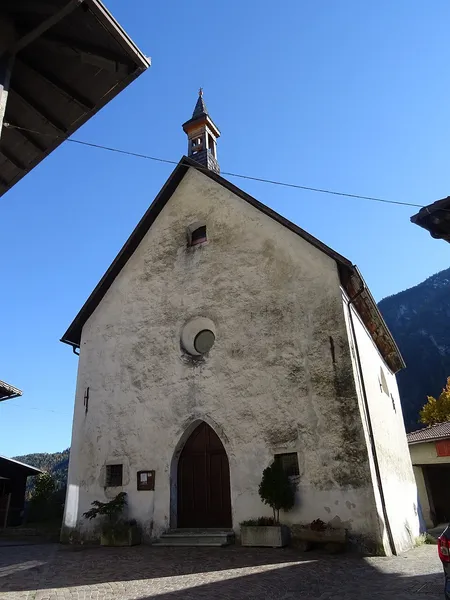
Syrio · CC BY-SA 4.0
The 1976 earthquake damaged it, and two years later it had been put right.
Caldes
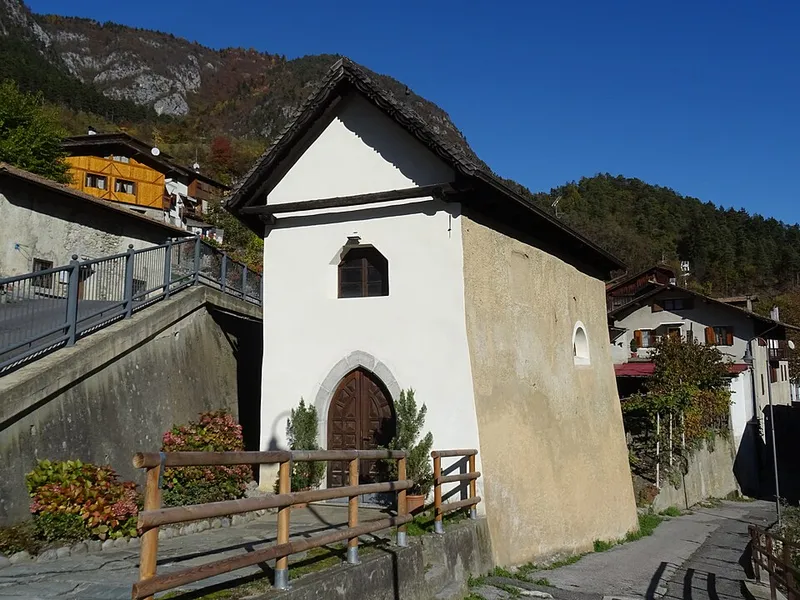
Syrio · CC BY-SA 4.0
Perhaps it took the place of a private building.
Caldes
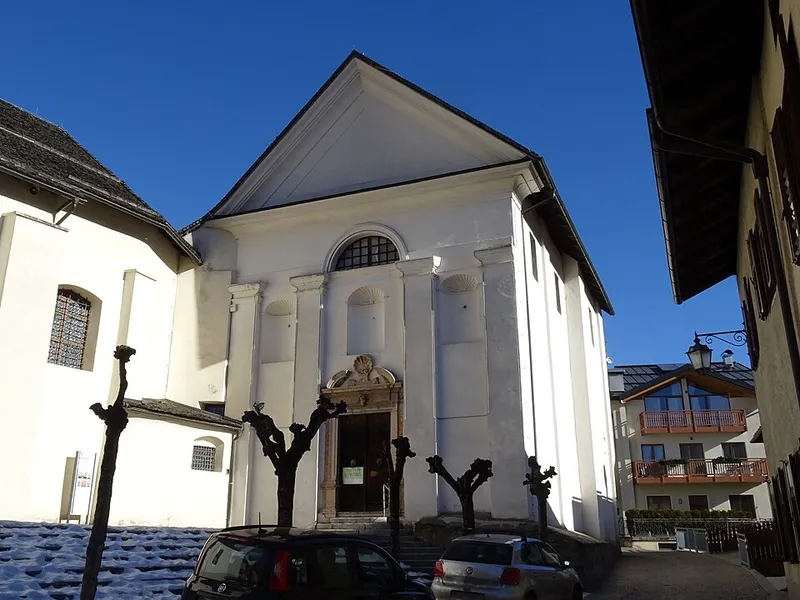
Syrio · CC BY-SA 4.0
After the war it was reduced to a storeroom, and it took eleven years to reopen it.
Mezzana
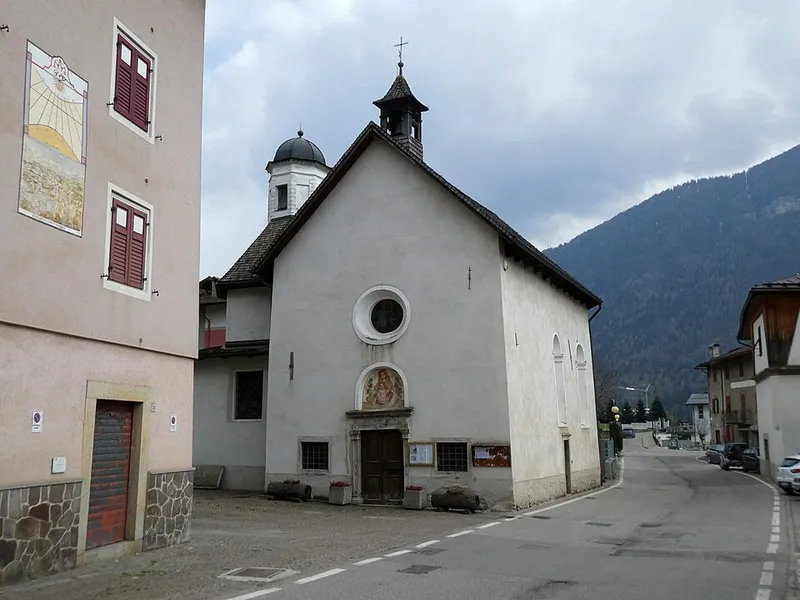
Syrio · CC BY-SA 4.0
It was consecrated in 1672 by a prince-bishop of the Thun family.
Dimaro Folgarida
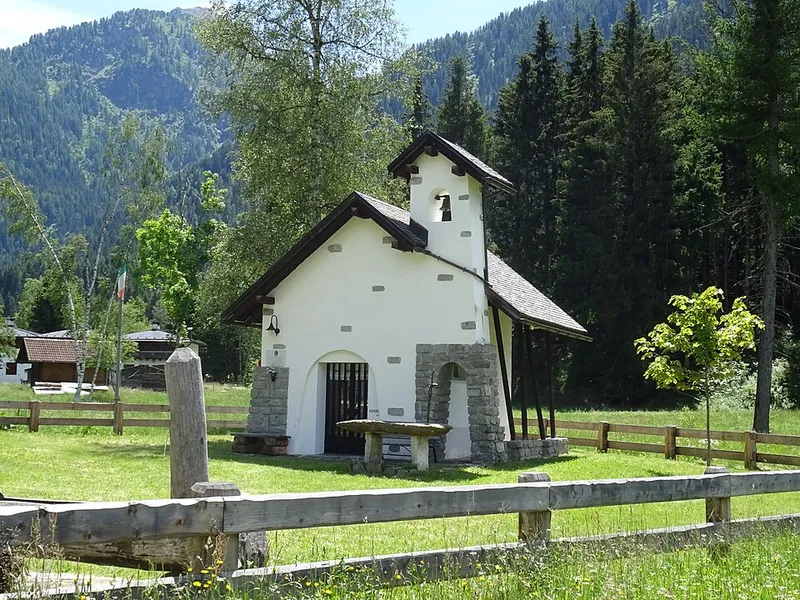
Syrio · CC BY-SA 4.0
Built at Fazzon between 1961 and 1964.
Pellizzano
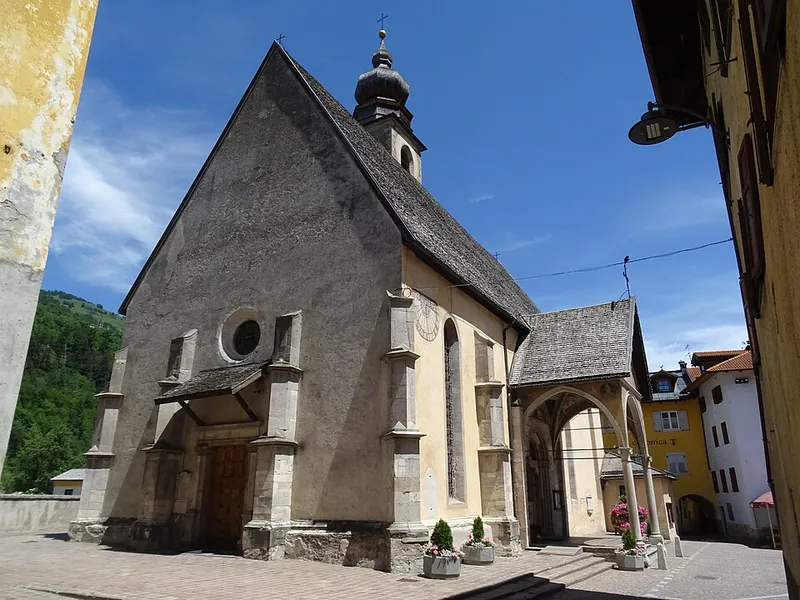
Syrio · CC BY-SA 4.0
The porch frescoed by Simone Baschenis in 1533.
Pellizzano
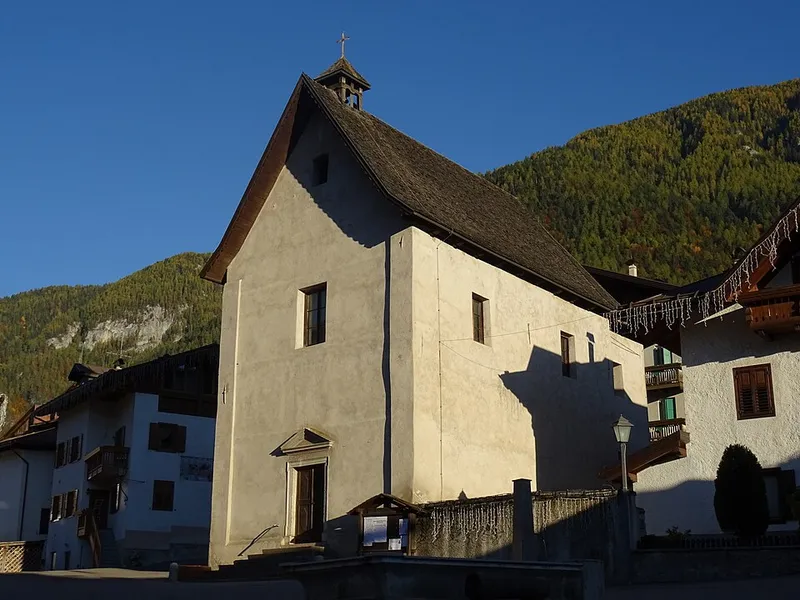
Syrio · CC BY-SA 4.0
The old church was sold and put to other use.
Dimaro Folgarida
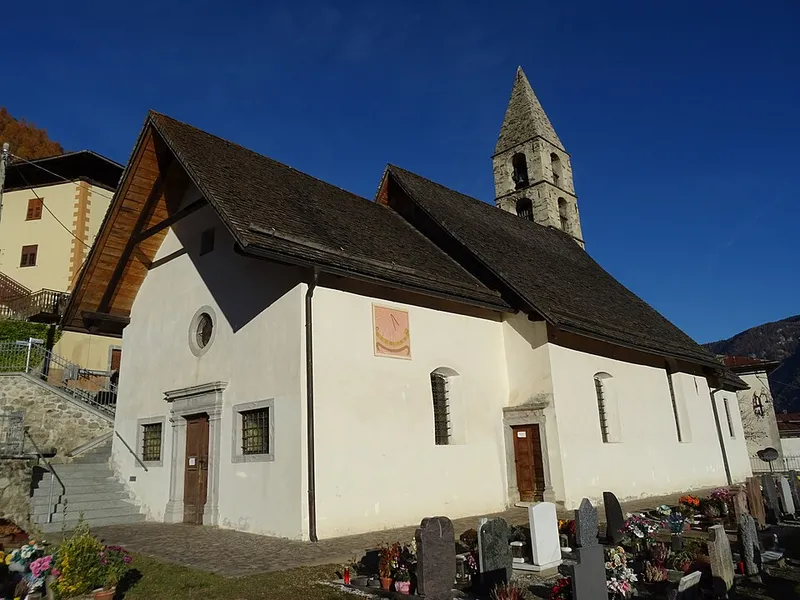
Syrio · CC BY-SA 4.0
Built in six years, and reinforced a few years later.
Commezzadura
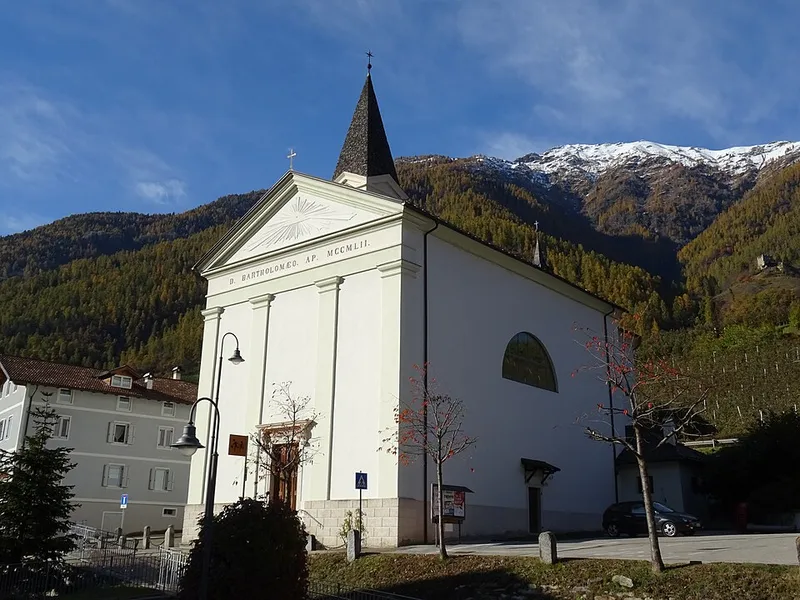
Syrio · CC BY-SA 4.0
The bell tower was blessed by a cardinal of Palermo, a son of Caldes.
Caldes
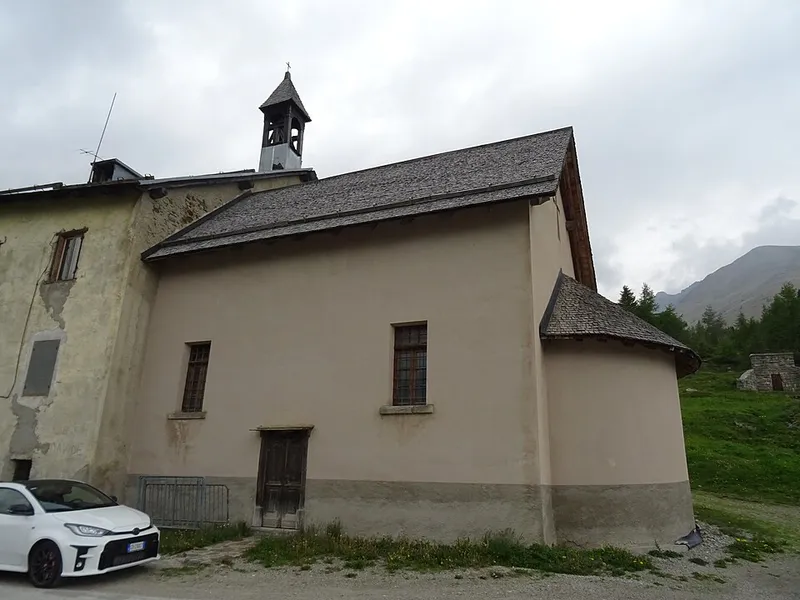
Syrio · CC BY-SA 4.0
It was founded in 1127 as a hospice for those crossing the Tonale.
Vermiglio
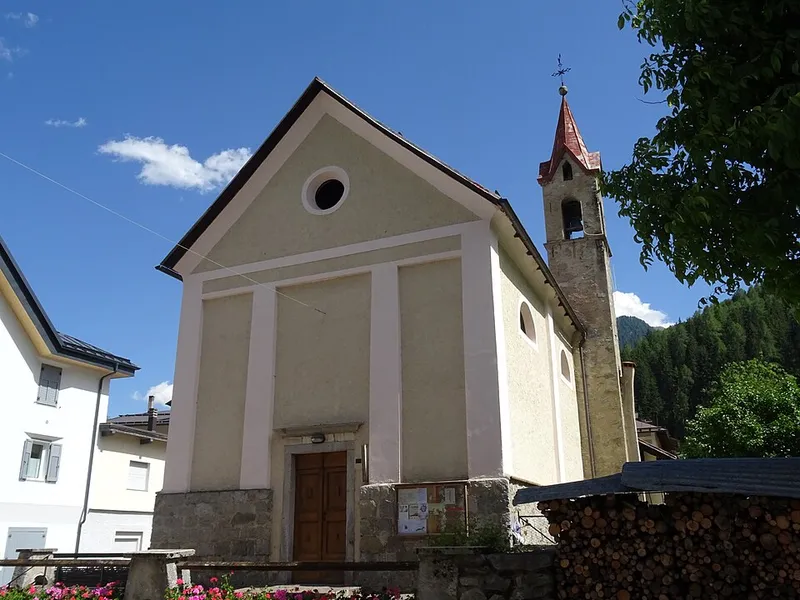
Syrio · CC BY-SA 4.0
The torrent swept it away, so they rebuilt it higher up.
Ossana
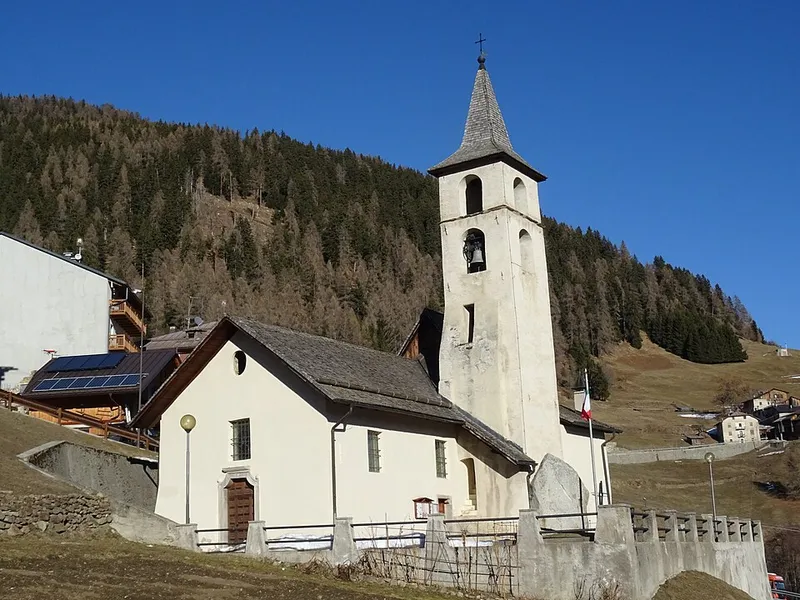
Syrio · CC BY-SA 4.0
Painted by the Baschenis, and in 1617 an order was given to cover everything.
Mezzana
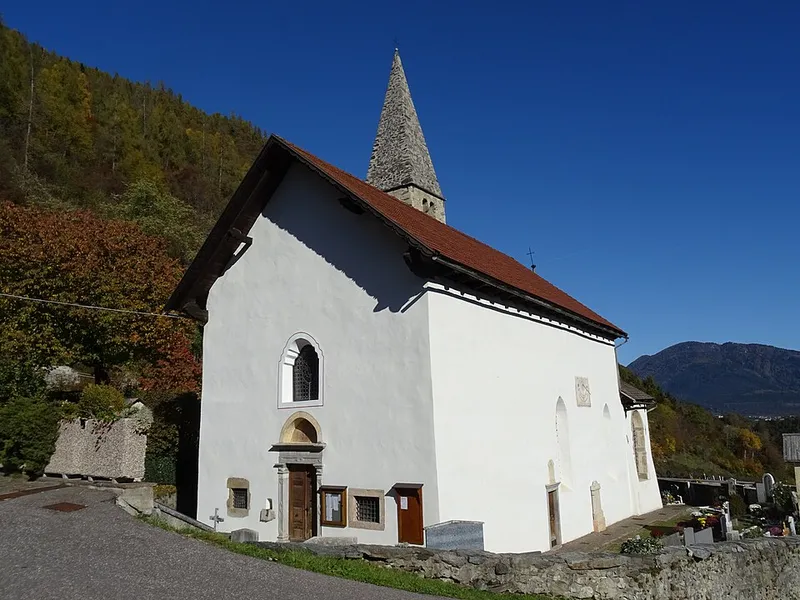
Syrio · CC BY-SA 4.0
The village was called Solasna, and took its name from the saint of its church.
Caldes
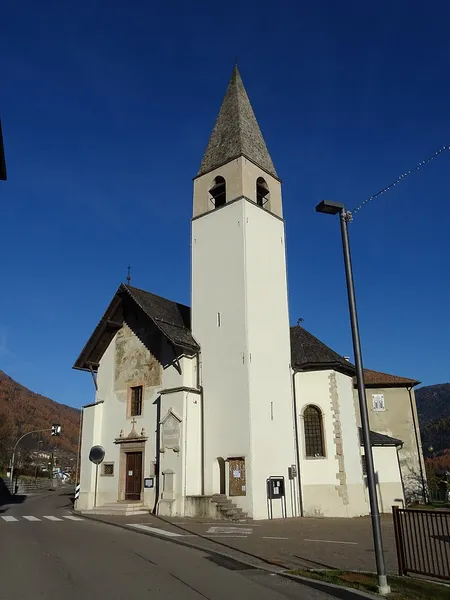
Syrio · CC BY-SA 4.0
An amended will left the village without daily Mass.
Croviana
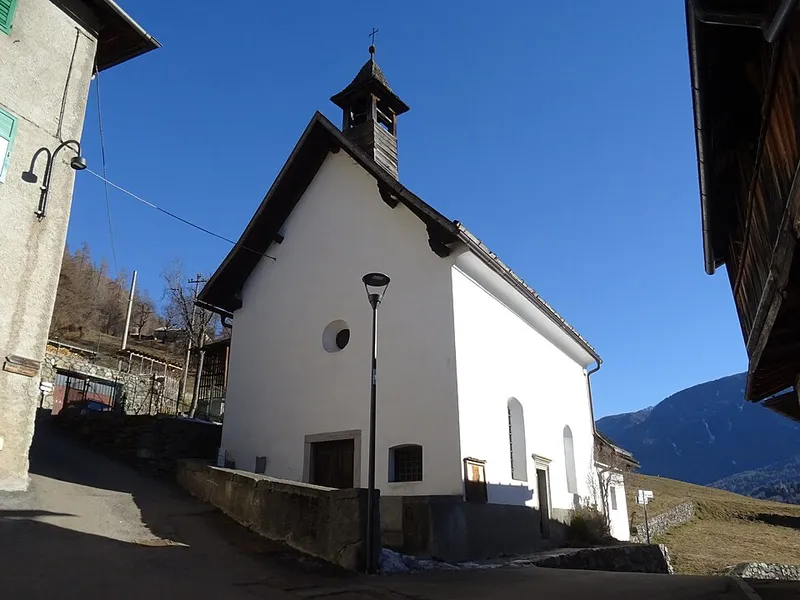
Syrio · CC BY-SA 4.0
A will of 1610 brought it into being, and in 1986 an avalanche struck it.
Commezzadura
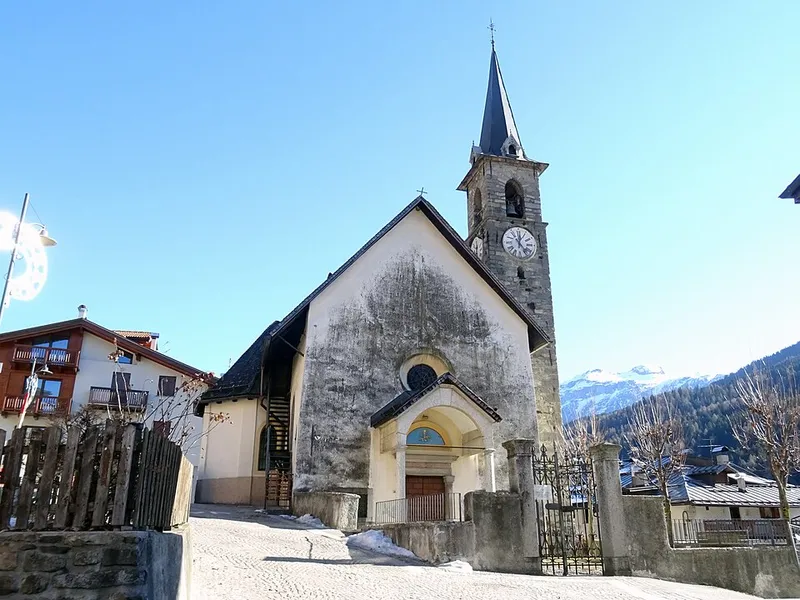
Syrio · CC BY-SA 4.0
The second church that the Rossi di Piano family gave to this valley.
Commezzadura
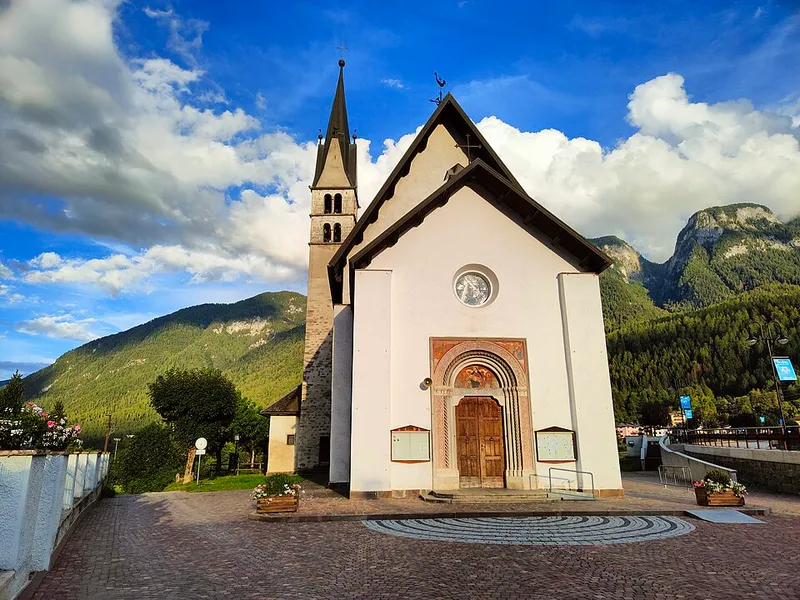
Jumk18 · CC BY-SA 4.0
A fragment of Carolingian fresco dates it back to the ninth century.
Dimaro Folgarida
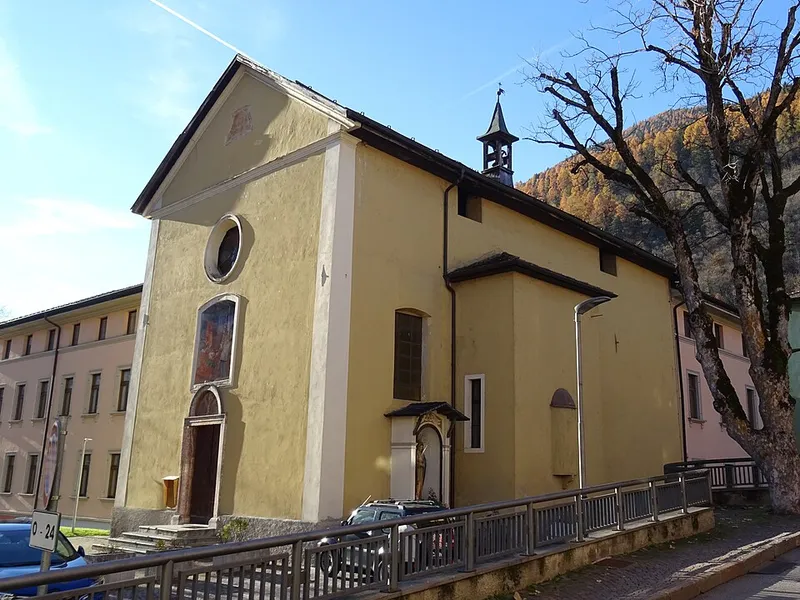
Syrio · CC BY-SA 4.0
The convent became a school, and the church took the patron saint of students.
Malé
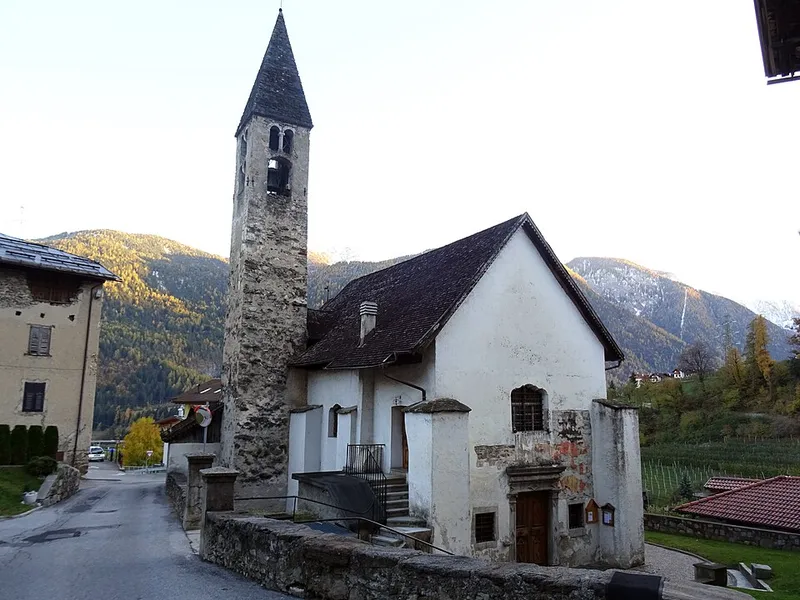
Syrio · CC BY-SA 4.0
In 1464 a will called it San Zili, Egidio in Solandro.
Malé
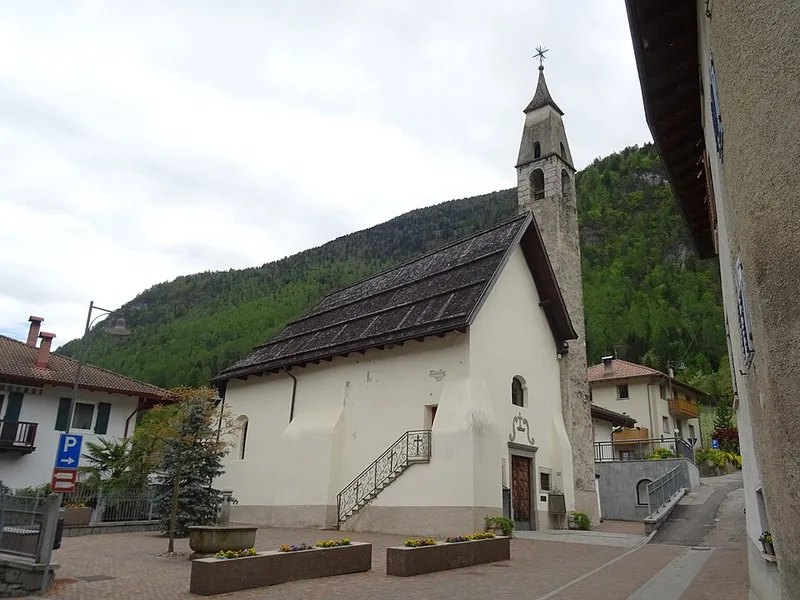
Syrio · CC BY-SA 4.0
The fifteenth-century chapel can still be read in the right flank of the façade.
Cavizzana
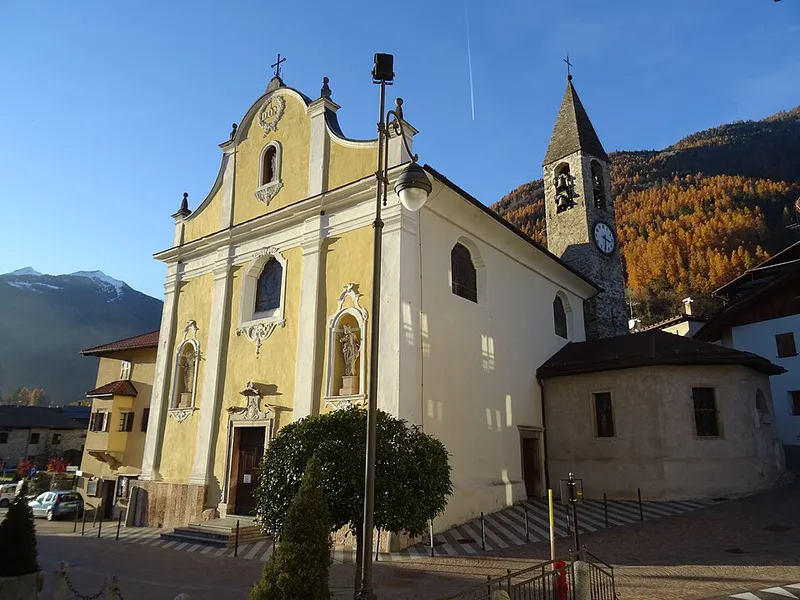
Syrio · CC BY-SA 4.0
Rebuilt from scratch in seventeen years, keeping the old bell tower.
Terzolas
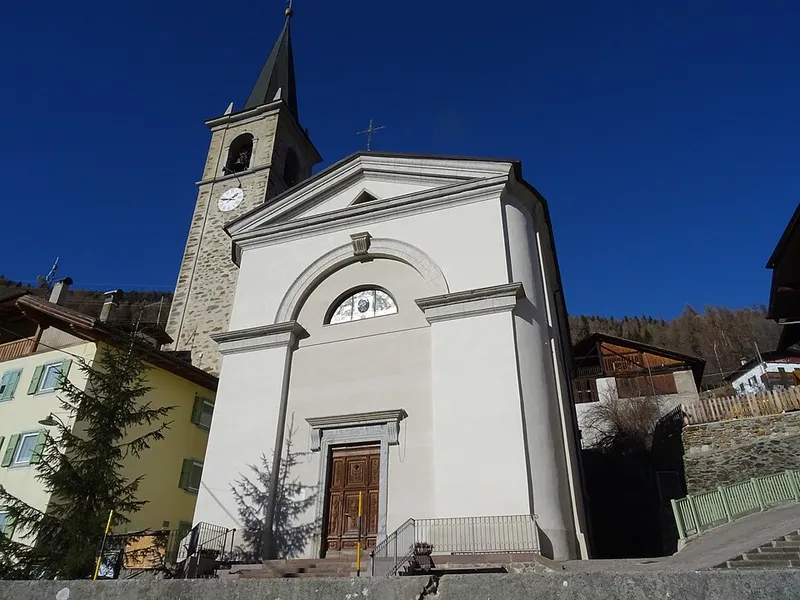
Syrio · CC BY-SA 4.0
The Austrians used the bell tower as an observation post.
Pellizzano
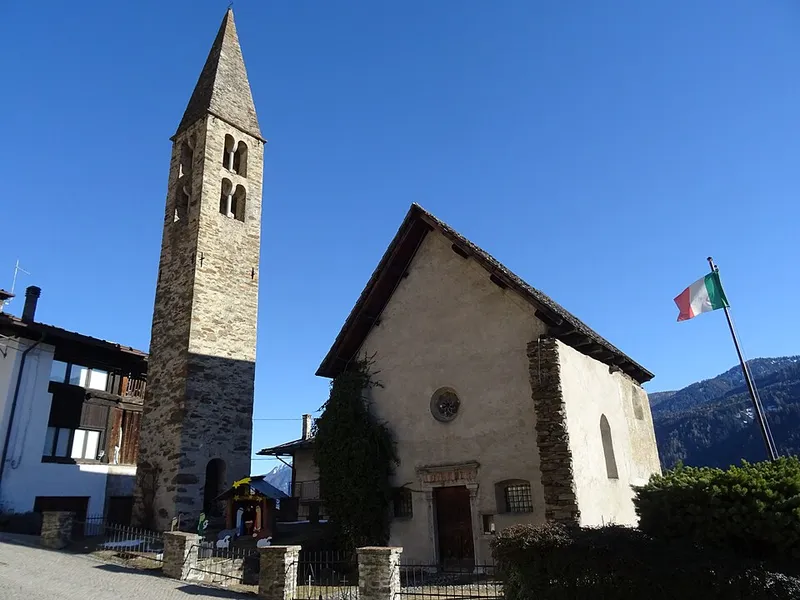
Syrio · CC BY-SA 4.0
To widen the road, they pulled down its façade.
Pellizzano
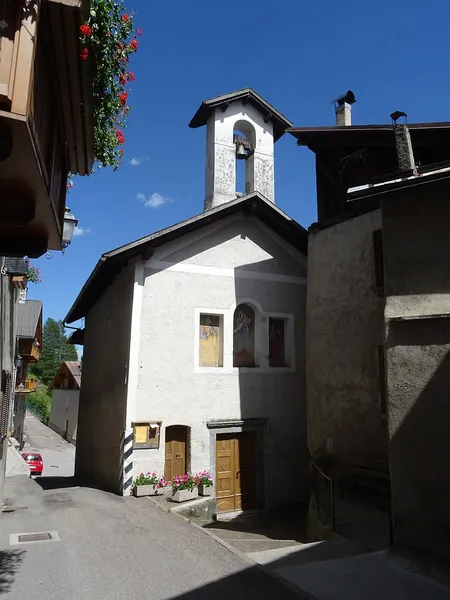
Syrio · CC BY-SA 4.0
She too burned twice, and the second time it was the war.
Vermiglio
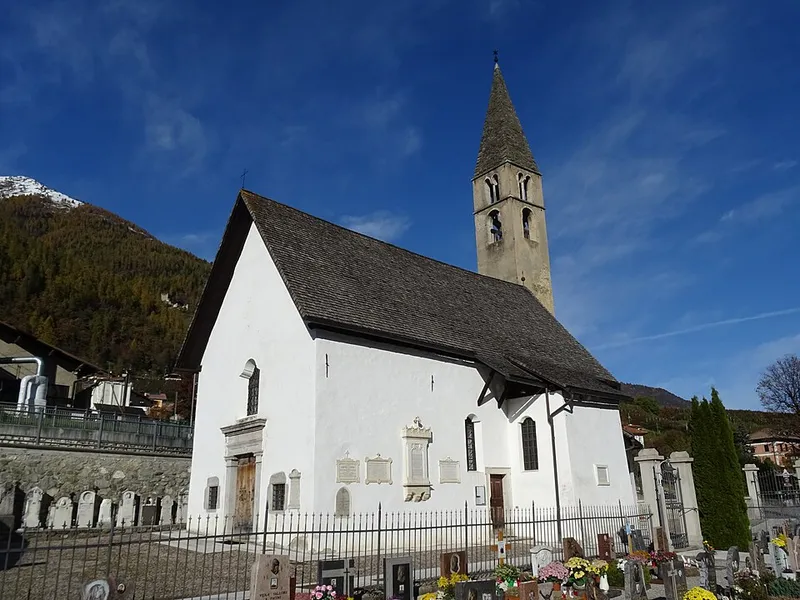
Syrio · CC BY-SA 4.0
It was founded by a nobleman who survived the plague of 1510.
Caldes
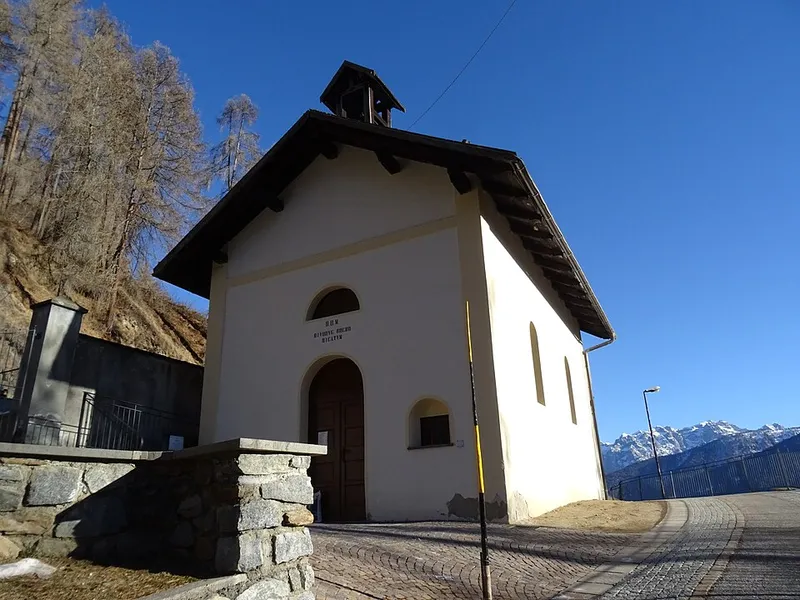
Syrio · CC BY-SA 4.0
Five centuries of service, then the replacement.
Mezzana
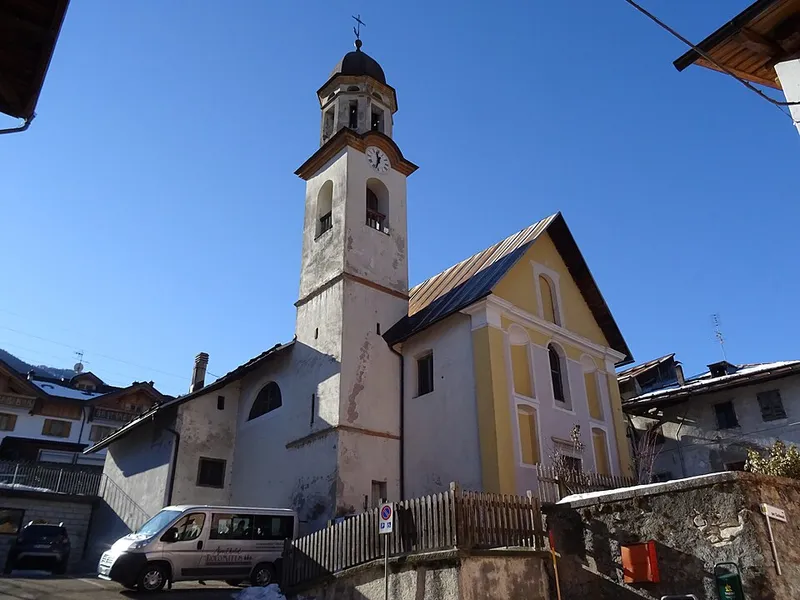
Syrio · CC BY-SA 4.0
Born of a popular vow against the plague, it burned down twice in six years.
Commezzadura
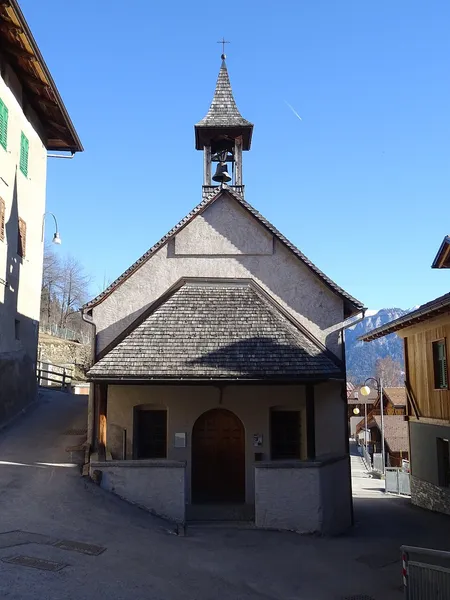
Syrio · CC BY-SA 4.0
Of the seventeenth-century decoration, only one fresco remains.
Mezzana
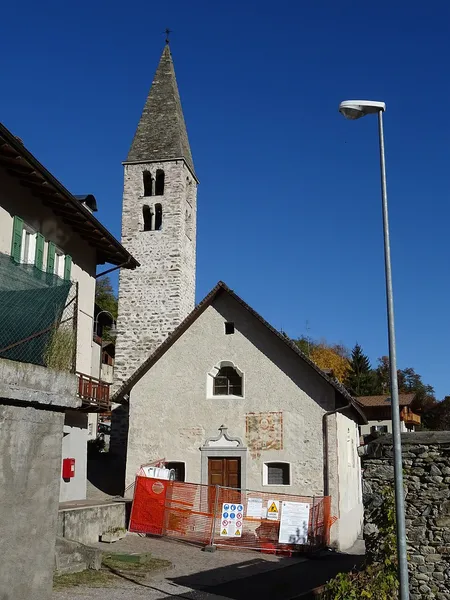
Syrio · CC BY-SA 4.0
To enlarge it in 1617, its original apse was demolished.
Caldes
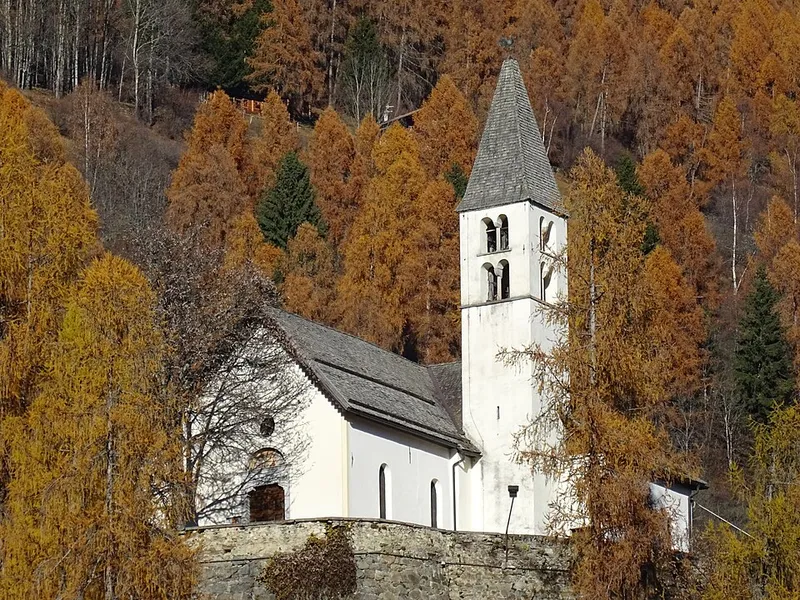
Syrio · CC BY-SA 4.0
The first document to mention it, in 1348, is a bequest of oil.
Malé
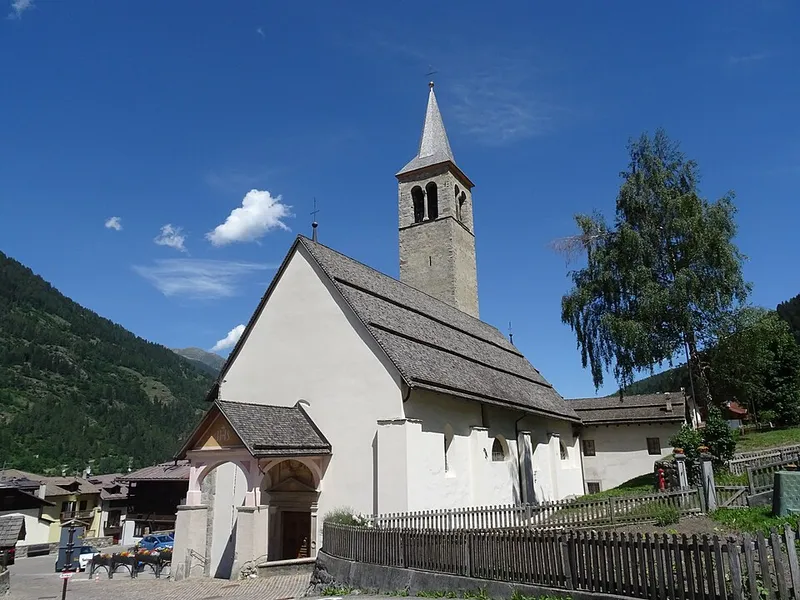
Syrio · CC BY-SA 4.0
The pieve on which half-churches of the upper Val di Sole depended.
Ossana
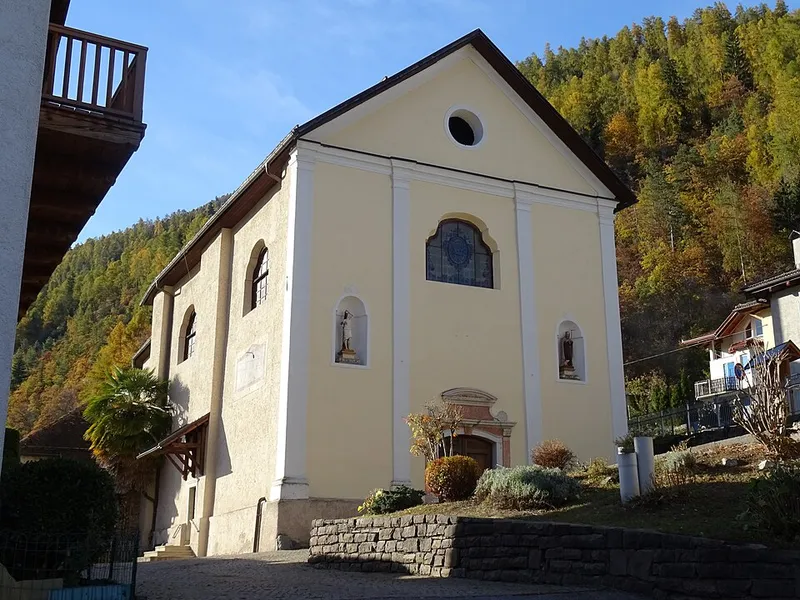
Syrio · CC BY-SA 4.0
In 1824 the old church was replaced on the same site.
Caldes
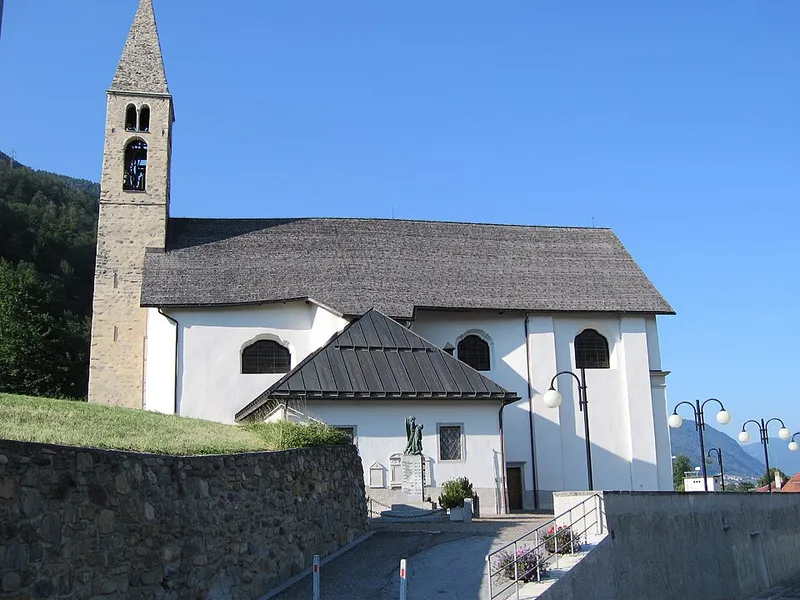
Pierantonio at Italian Wikipedia · CC BY-SA 3.0
It first appears in the documents because of a boundary dispute.
Dimaro Folgarida
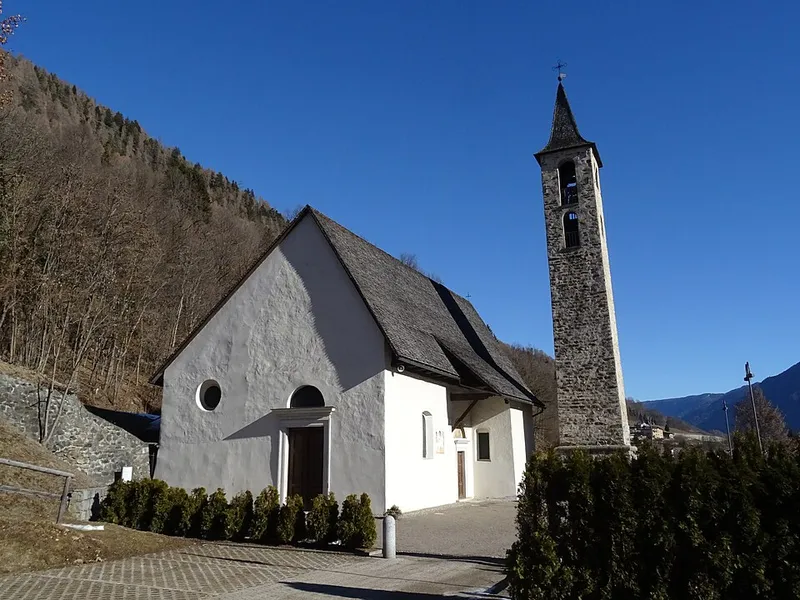
Syrio · CC BY-SA 4.0
A fresco left half finished, completed by a Baschenis two generations later.
Commezzadura
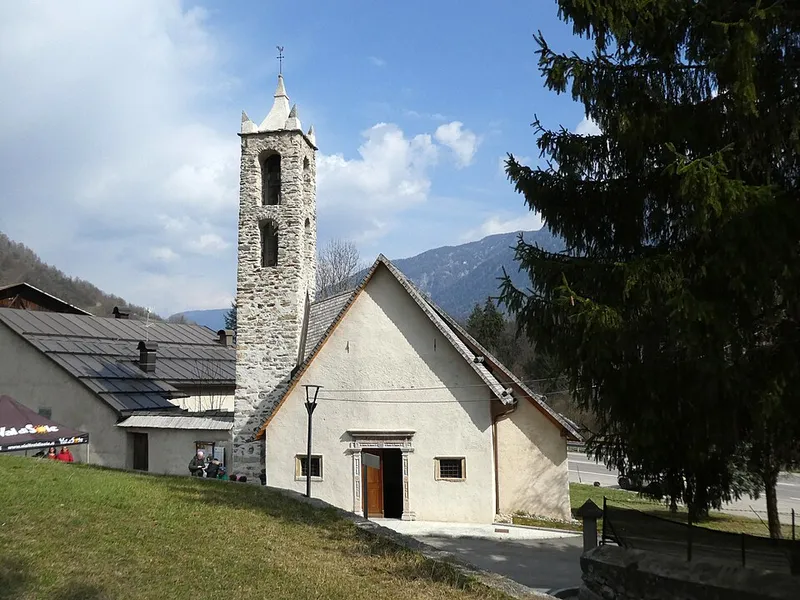
Syrio · CC BY-SA 4.0
A landslide blocked its façade, and they built another.
Commezzadura
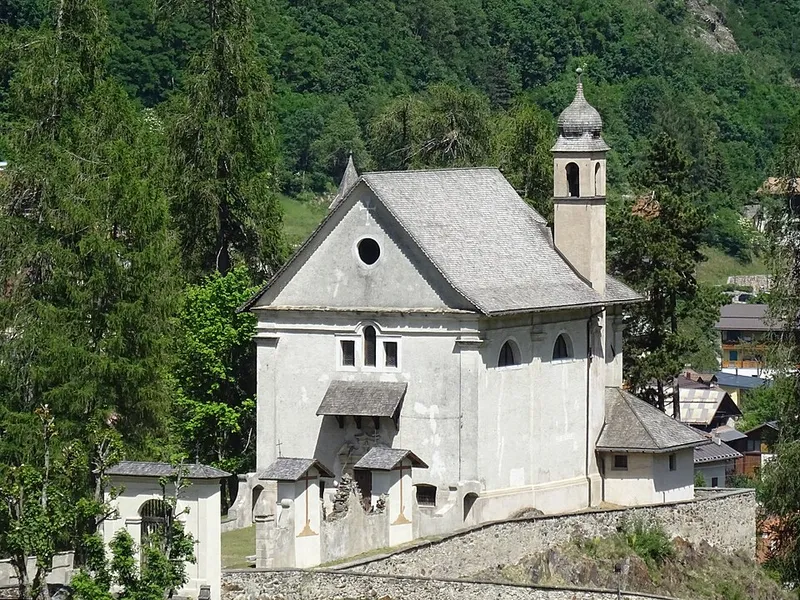
Syrio · CC BY-SA 4.0
Thirty-two years of building work, and a painter from Mezzana.
Ossana
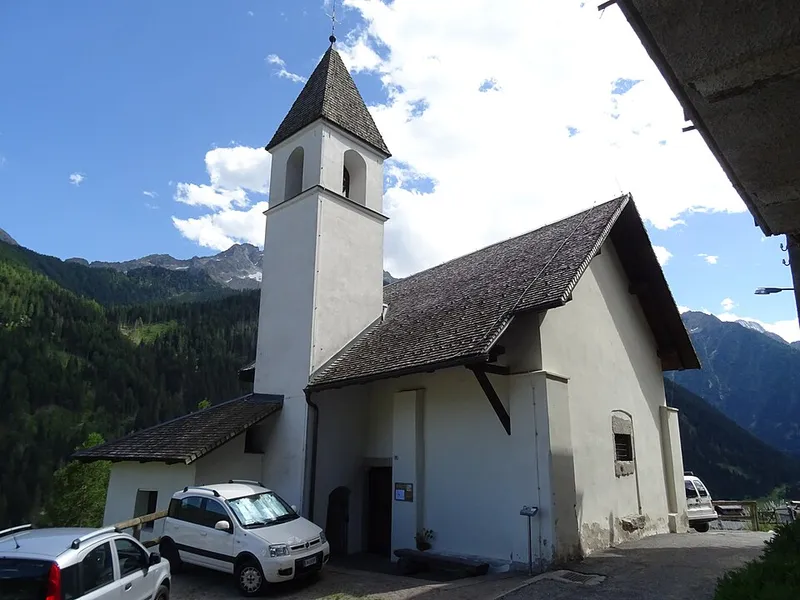
Syrio · CC BY-SA 4.0
The apse was painted by Simone Baschenis in the mid-sixteenth century.
Vermiglio
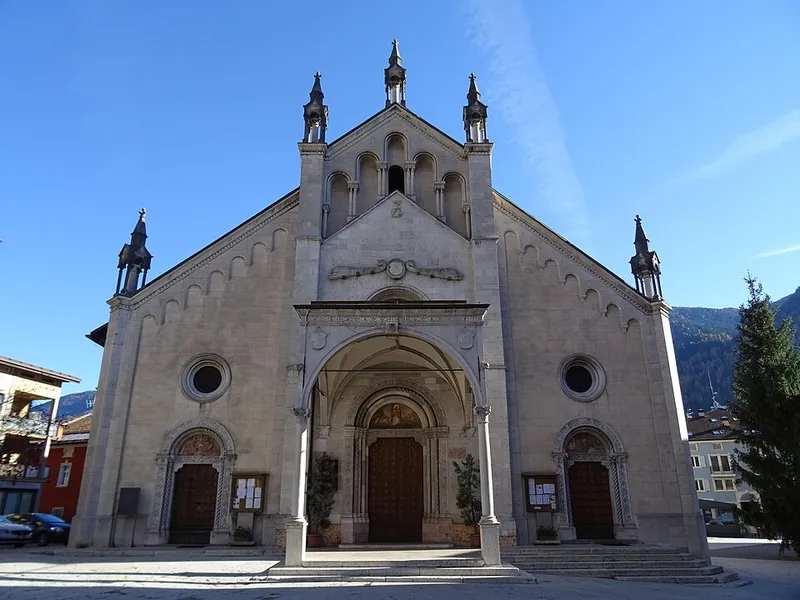
Syrio · CC BY-SA 4.0
The pieve appears in a lease contract of 1178.
Malé
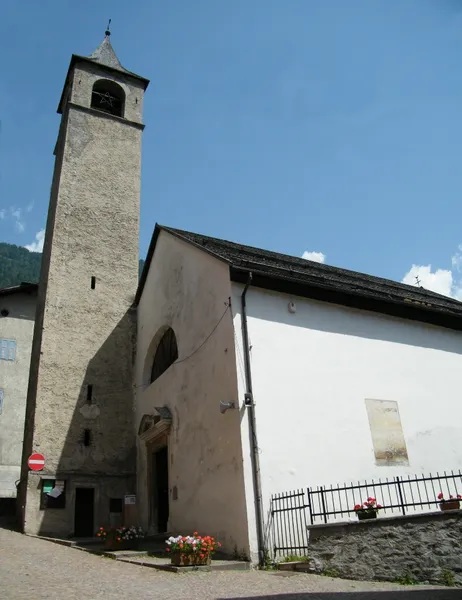
Luca Giarelli · CC BY-SA 3.0
The Baschenis painted all of it, and in 1617 an order was given to remove every image.
Ossana
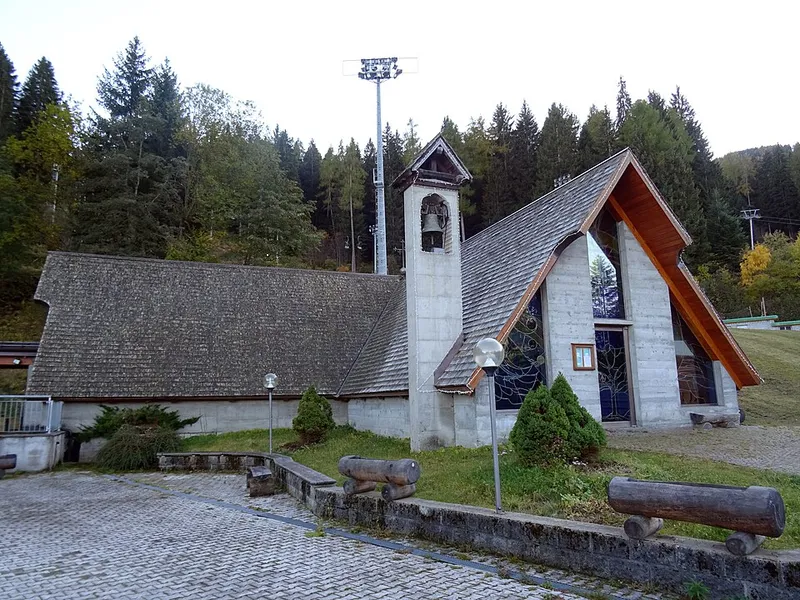
Syrio · CC BY-SA 4.0
From 1965, and it is the church of a ski resort.
Dimaro Folgarida
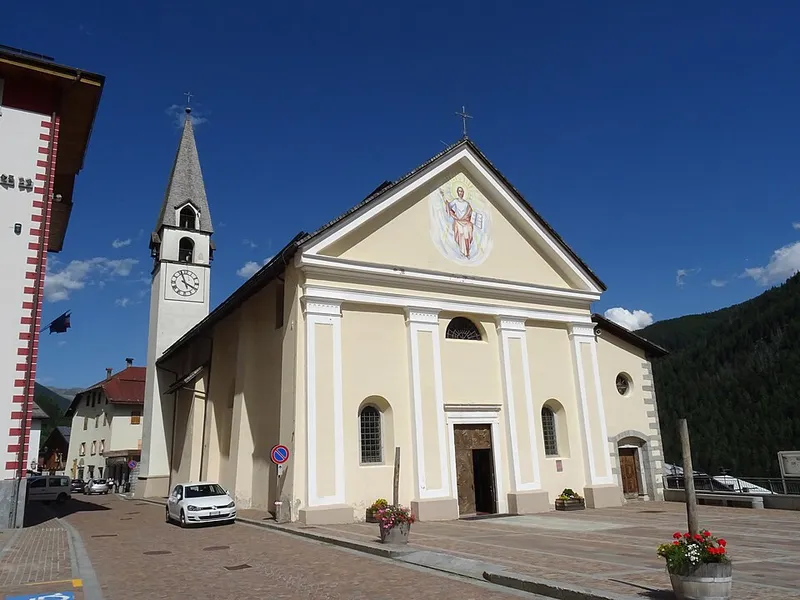
Syrio · CC BY-SA 4.0
The floor of the hall is made of stone taken from the Tonale area.
Vermiglio
At 2,006 metres in the Val Baselga, above the Lago dei Caprioli: a spartan shelter in the old malga.
Pellizzano
At 2,365 metres in Pra Castron, below Sasso Rosso and Cima Nana.
Dimaro Folgarida
At 2,075 metres just below the Cimon di Bolentina, above Malé: the only bivouac hut in the Vegaia-Tremenesca group.
At 2,480 metres in the upper Val di Bon, above Ossana, belonging to the CAI of Canzo since 1976.
At 2,735 metres in the Presena basin, above the Passo del Tonale, close to what remains of the glacier.
At 1,910 metres above Pracorno di Rabbi, the malga of the ASUC of Arnago at the foot of the Maddalene.
Malé
At 3,040 metres, below the Passo della Lobbia Alta: the highest on these pages.
Vermiglio
At 1,856 metres in Malghet Aut, above Folgarida, where some ski lifts start and finish.
At 2,156 metres, just below Monte Vigo, among the lifts that climb from Daolasa, Folgarida and Marilleva.
At 2,052 metres in Prà del Lago, above Daolasa, near the arrival point of the cable car from the Val di Sole.
At 2,298 metres at the foot of the Presanella, with a small lake in front, since 1899.
In Malé, an interactive museum trail dedicated to wood, set up inside a working carpentry workshop.
Malé
In the old rectory of Ossana, an 18th-century room panelled in carved Swiss pine, set on fire in 1918 and rebuilt.
Ossana
In Monclassico and Presson, hamlets of Dimaro Folgarida, almost sixty artists' sundials on the houses and in the squares.
Dimaro Folgarida
Water mill in the hamlet of Cortina, in Vermiglio, powered by the Rio Cortina and restored in 2016.
Vermiglio
On the edge of Dimaro, along the road to Madonna di Campiglio, a water-powered sawmill that remained in operation until 1960.
Dimaro Folgarida
In the locality of Molini di Malé, a "Venetian-style" sawmill built in 1774 and working again.
Malé
Water-powered sawmill between Ortisè and Menas, hamlets of Mezzana, on the north bank of the Rio Valletta, rebuilt and in working order.
Mezzana
In the Malga Bassa di Fazzon, above Pellizzano, a few hundred metres from the Lago dei Caprioli.
Pellizzano
Matteo Ianeselli · CC BY-SA 3.0
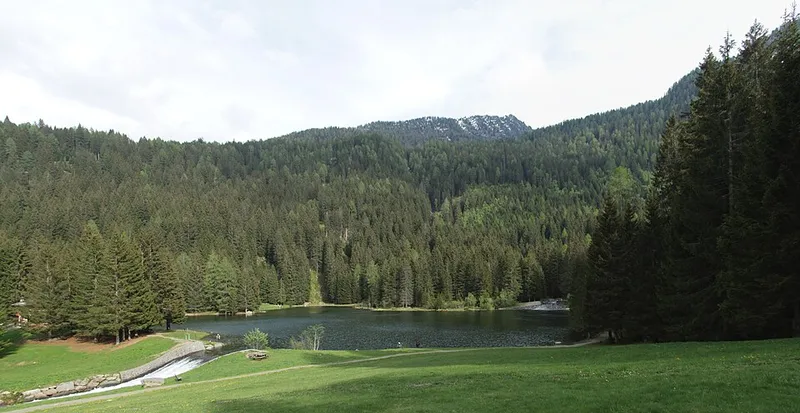
An artificial lake at 1,280 metres, in the locality of Fazzon.
Pellizzano
Pdp1063 · CC BY-SA 4.0
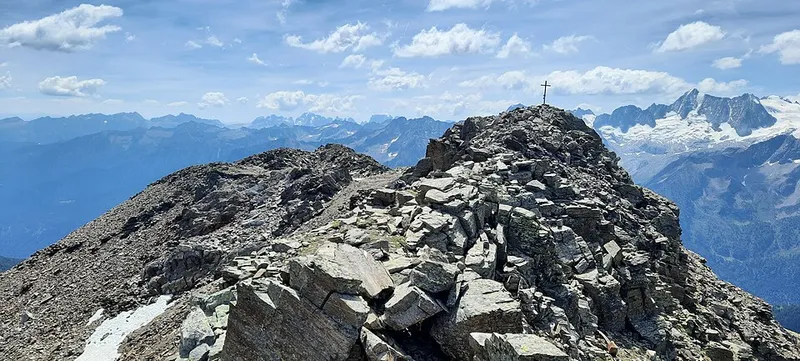
A peak of 2,973 metres in the Ortles-Cevedale group, on the ridge that closes the Vermiglio valley to the north.
Vermiglio
Damp woodland along the Noce between Croviana and Monclassico, a special area of conservation in the Natura 2000 network.
Croviana
A network of reserves created in 2015 to protect the Noce and its tributaries in the Val di Sole.
Malé
Above Arnago, a hamlet of Malé, dry meadows and woods protected by the Natura 2000 network at the entrance to the Val di Rabbi.
Malé
The Fosinace of Dimaro: in the sixteenth century twenty-eight forge hammers worked here, using iron from Comasine.
Dimaro Folgarida
The museum of Solandra civilisation and the frescoed houses of the centre.
In the old water mill of Croviana, a museum devoted to bees and mountain beekeeping.
Croviana
Life in the Val di Sole as it was: fields, dairy, woodland, workshops, and the plates of the abbot Bresadola.
Malé
At the Polo culturale di Vermiglio, the collection of the relic hunter Emilio Serra on the White War on the Tonale front.
Vermiglio
Jumk18 · CC BY-SA 4.0
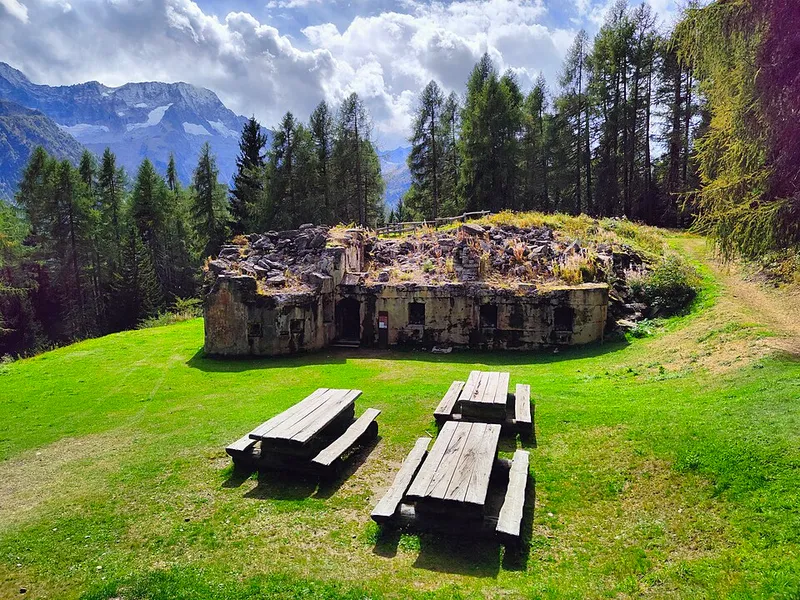
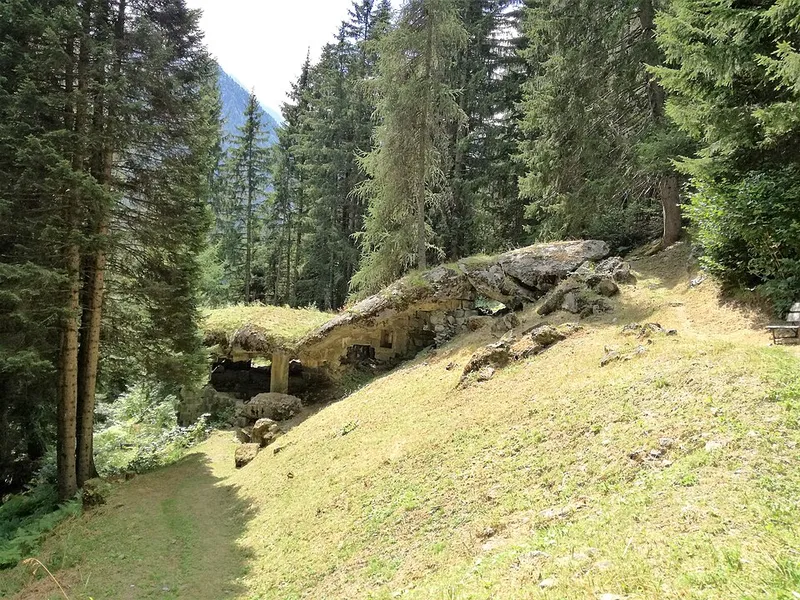
The connecting work of the Tonale barrier, armed only with machine guns.
Vermiglio
anonymous photographer during World War I · Public domain
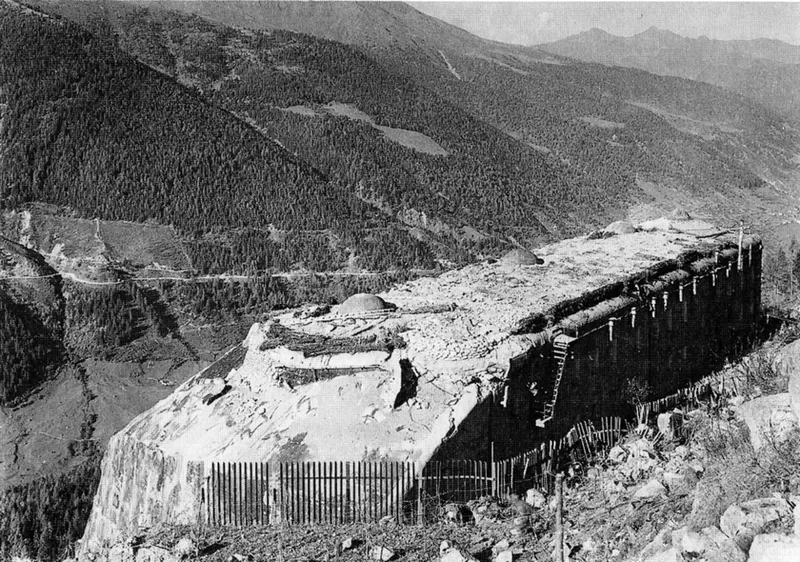
The Pozzi Alti fort, at one thousand eight hundred and eighty metres above the Tonale road.
Vermiglio
Austrian fort of 1860-1861 along the Tonale road, between Vermiglio and the pass, at 1,538 metres.
Vermiglio
Robertk9410 · CC BY-SA 4.0
The small fort that defended the Strino at close quarters, later the telephone exchange of the Tonale forts.
Vermiglio
At the Passo Paradiso, at 2,573 metres above the Tonale, a First World War tunnel dug into the granite.
Vermiglio
Linked to Campiglio, the skiing gateway to the Val di Sole.
Una ventina di vie dal 5c al 7a vicino al rifugio Stavel «Francesco Denza», sotto la Presanella.
Vermiglio
Climbing crag on the Doss di Santa Brigida, in the municipality of Dimaro Folgarida, about twenty minutes on foot from Folgarida.
Dimaro Folgarida
Al Passo del Tonale, una quarantina di vie dal 4b all'8a su pareti alte fino a 120 metri.
Vermiglio
More from above
Val di Sole
44 recorded routes covering 240 kilometres, including 4 vie ferrate, plus the provincial cycle route that crosses it.
Provincial register of trails. © SAT.
From the Province’s open data: 30 bodies of water with a name and altitude (6 artificial); the main watercourses: Torrente Noce, Torrente Rabbies, Torrente Vermigliana; 21 protected areas, including a park.
The lakes of Val di SoleProtected areas
Registers of the Autonomous Province of Trento: waters in the public domain, protected areas CC BY 4.0.
Every place has its own page, with its entry, the photo with its author and the verified facts. Places without an entry still have a position and sources: the story is written one at a time.